How to Declutter When You're Overwhelmed (Start Here)
Overwhelmed by clutter? Start with one drawer, use the four-box method, work in 15-minute sessions, and get donations out fast. A calm, doable plan.
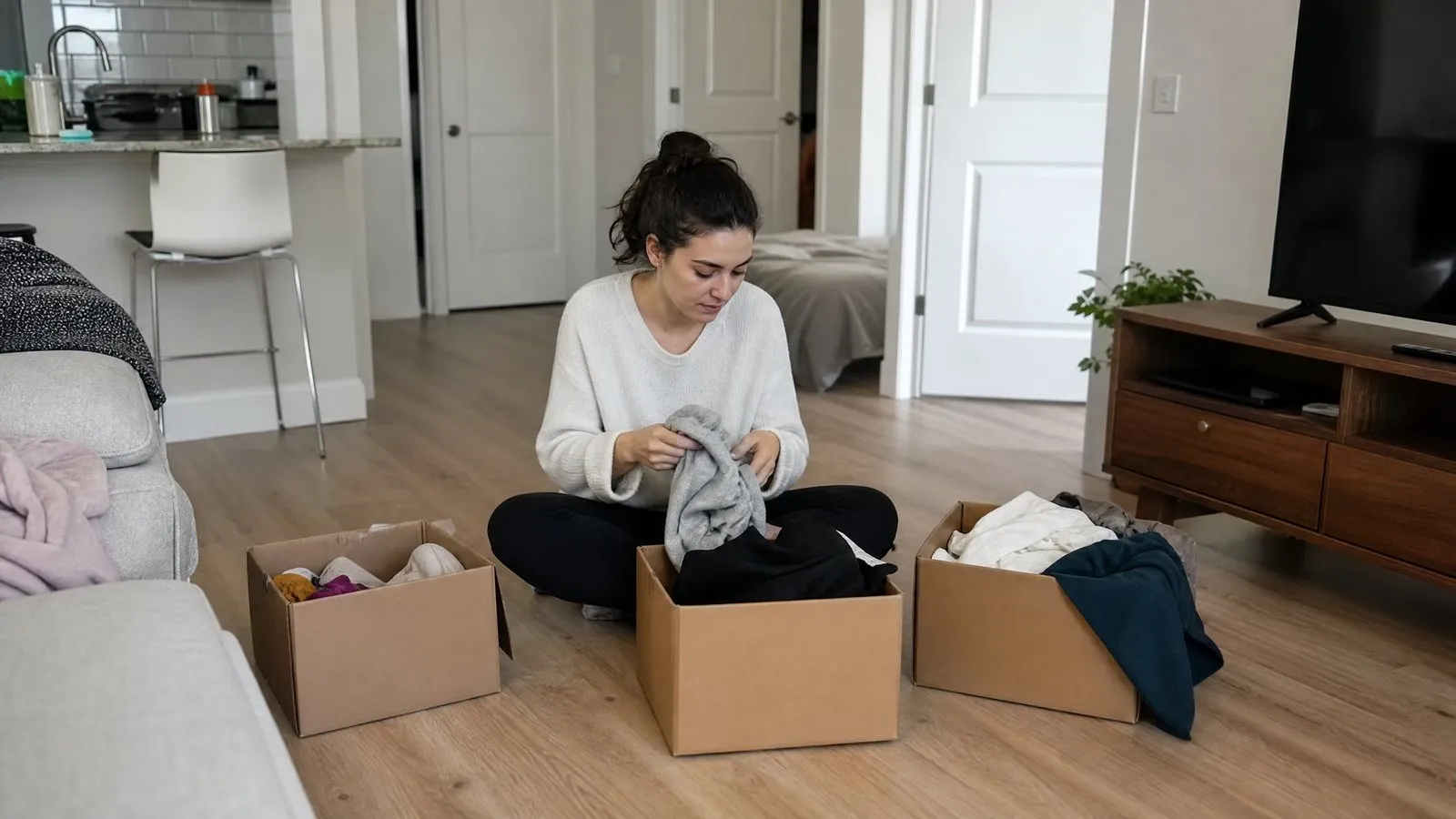
Start with one drawer or one surface — not the whole room, not the whole house. Set a timer for 15 minutes, grab four containers labeled keep, donate, trash, and relocate, and sort what’s in front of you. When the timer goes off, you can stop. That’s the entire method, and it works precisely because it’s small enough to actually begin.
Clutter feels overwhelming because your brain tries to process the whole house at once. You don’t have to. You just have to clear one spot today.
Why “start small” actually works
When a task feels huge, most of us freeze. Decluttering an entire bedroom is a huge task. Clearing one nightstand drawer is not. The trick is to shrink the job until it stops feeling scary, then repeat.
Small wins also build momentum. A single tidy drawer gives you visible proof that progress is possible, which makes the next session easier. You’re not trying to transform your home in a weekend. You’re building a habit that chips away at the mess a little at a time.
So before you do anything else, pick one of these:
- One drawer (junk drawer, nightstand, bathroom vanity)
- One shelf
- One flat surface (a counter, the coffee table, a windowsill)
- One small zone (the area beside your front door)
That’s your whole project for today.
The four-box method
The four-box method keeps decisions simple. Every item you pick up goes into exactly one of four places. Set up four containers before you start — boxes, laundry baskets, grocery bags, whatever you have.
| Box | What goes in it | What to do with it |
|---|---|---|
| Keep | Things you use and want, that belong in this spot | Put them back neatly when you’re done |
| Donate | Usable items you no longer need | Bag them and get them out of the house fast |
| Trash | Broken, expired, or genuinely useless items | Bin or recycle immediately |
| Relocate | Things that belong somewhere else in your home | Carry them to their real home at the end |
The power of the system is that it removes the “I’ll decide later” option. Later is how clutter happens. Each item gets a decision now.
One rule for the relocate box: don’t wander off mid-session to put things away. If you carry one hairbrush to the bathroom, you’ll get distracted and the timer will run out. Keep sorting, and deal with the relocate pile all at once at the end.
Work in 15-minute sessions
Fifteen minutes is long enough to clear a real space and short enough that you won’t dread it. Use a phone timer. When it rings, you’re done — even if the drawer isn’t perfect.
A realistic pace for most people:
- One drawer: 10–15 minutes
- One shelf or surface: 15 minutes
- A small cabinet: 15–20 minutes, or split across two sessions
- A closet: several 15-minute sessions over a few days
If you’ve got energy and want to keep going, do a second 15-minute block after a short break. But never let the first session balloon into a three-hour marathon that leaves you exhausted and dreading the next one. Short and repeatable beats long and miserable.
Doing one session a day adds up fast. Fifteen minutes a day is more than seven hours a month — enough to work through most small homes.
Decision rules that stop the dithering
The slowest part of decluttering is deciding. These simple rules cut through the fog so you’re not holding a spatula for five minutes wondering about its future.
The one-year rule. Have you used it in the last year? If no, it’s a strong candidate to donate or toss. For seasonal items (coats, holiday gear), think “last two seasons” instead.
The “would I buy it again?” test. If you saw it in a store today at full price, would you buy it? If not, you probably don’t need to keep storing it.
The duplicate rule. How many do you actually use? Most of us need one vegetable peeler, not three. Keep the best, donate the rest.
The broken rule. If it’s broken and you haven’t fixed it in six months, you’re not going to. Bin it or recycle it.
The “someday” check. “I might need this someday” is the phrase that fills every cluttered home. Ask: do I have a specific, realistic plan to use it? If not, let it go.
The guilt check. You don’t have to keep a gift you don’t use just because someone gave it to you. The kind thought already happened. The object is not the relationship.
When you genuinely can’t decide, put the item in a “maybe” box, label it with today’s date, and store it out of sight. If you haven’t reached for anything in it after three months, donate the box without reopening it.
Save sentimental items for last
Do not start with the shoebox of old photos, letters, or your grandmother’s things. Sentimental items are the hardest decisions you’ll make, and starting there is the fastest way to get overwhelmed and quit.
Start with the easy, low-emotion stuff: expired pantry items, the junk drawer, worn-out socks, the bathroom cabinet, old paperwork. These build your decision-making muscle. By the time you reach sentimental things — weeks from now, maybe — you’ll be far better at it.
When you do tackle sentimental items:
- Handle them in short sessions; they’re emotionally tiring.
- Keep the most meaningful few, not all of them. A handful of your child’s best drawings matters more than a crate of every scrap.
- Photograph bulky sentimental items (a trophy, a kid’s craft) so you keep the memory without the shelf space.
- Give yourself permission to keep things that genuinely bring you joy. Decluttering isn’t about owning as little as possible. It’s about keeping what matters and clearing what doesn’t.
Get donations out of the house — fast
This is the step people skip, and it’s why decluttering often fails. A bag of donations sitting in the hallway for three weeks is just clutter in a new shape. Worse, you’ll start “rescuing” things from it.
Make leaving the house the last step of every session:
- Bag it and seal it as soon as a session ends. Don’t leave an open box you can pick back through.
- Put it in your car tonight, by the front door, or wherever you’ll trip over it on the way out.
- Set a drop-off deadline within a few days. Many charity shops and thrift stores accept clean, usable clothing, kitchenware, books, and small household goods. Some offer free pickup for larger items — check locally.
- Trash goes out with the next collection. Don’t let a full trash bag become part of the scenery.
A quick note on what not to donate: charities can’t use broken, stained, or unsafe items, and sorting them costs them money. If it’s genuinely unusable, recycle it or bin it. Check your local recycling rules for textiles and electronics, which often can’t go in regular recycling.
A simple one-week starter plan
If you want a track to follow, here’s a gentle week of 15-minute sessions. Adjust the order to whatever’s bugging you most.
| Day | 15-minute target |
|---|---|
| Mon | The junk drawer |
| Tue | Bathroom cabinet or vanity |
| Wed | One kitchen counter |
| Thu | Nightstand and its drawer |
| Fri | Entryway / where shoes and bags pile up |
| Sat | One shelf of a bookcase or closet |
| Sun | Rest, or empty your maybe box |
Do this for a few weeks and the cumulative effect is real. You’ll also notice cleaning gets easier, because there’s less stuff to clean around. If you want to pair decluttering with light upkeep, a short routine like a weekly cleaning schedule that takes 20 minutes a day fits neatly alongside it.
Keep it from piling back up
Decluttering once is pointless if the clutter rushes back in. A few habits keep spaces clear:
- One in, one out. When something new comes in, something similar goes out.
- A 30-second reset. At the end of the day, spend 30 seconds returning the surfaces you cleared to empty. Small, daily tidying habits do more than occasional big purges.
- A donate bag on standby. Keep a bag in a closet. When you spot something you don’t use, drop it in. When it’s full, it goes.
- Give things a home. Clutter is often just homeless objects. Once you’ve cleared space, finding smarter places to keep things helps — our guides on small apartment storage and organizing a small closet are good next steps.
If you share your home with children, clutter builds faster, and the approach shifts a little. Our guide on keeping a home organized with kids has realistic systems for that.
When it’s more than clutter
For most people, clutter is a habit and a time problem, and this method fixes it. But if the thought of discarding anything causes you real distress, if items are stacked to the point of blocking exits or creating a safety or hygiene hazard, or if clutter is seriously affecting your health or relationships, that’s worth taking seriously. Hoarding disorder is a recognized mental health condition, and talking to your doctor or a mental health professional is the right move — not more willpower. There’s no shame in asking for help.
FAQ
How long should I spend decluttering each day?
Fifteen minutes a day is enough for most small homes and apartments. It’s short enough to do consistently and long enough to clear a drawer or surface. If you want to do two blocks with a break between, that’s fine — just avoid long marathons that leave you too burned out to continue tomorrow.
What’s the difference between decluttering and organizing?
Decluttering is deciding what to keep and removing the rest. Organizing is arranging what you’ve kept so it’s easy to find and put away. Always declutter first — there’s no point buying bins and organizing things you don’t actually need. Organize only what survives the keep pile.
How do I declutter sentimental items without feeling guilty?
Leave them until last, keep the most meaningful few rather than everything, and photograph bulky items so you keep the memory without the object. Remind yourself that letting go of a gift doesn’t erase the thought behind it. Work in short sessions, since these decisions are tiring.
What should I do with items I can’t decide on?
Put them in a “maybe” box, label it with today’s date, and store it out of sight. If you haven’t reached for anything in it after three months, donate the box without reopening it. Not opening it is the point — if you didn’t miss the contents, you don’t need them.
Where can I donate things quickly?
Many local charity shops and thrift stores accept clean, usable clothing, kitchenware, books, and small household goods, and some offer free pickup for larger furniture. Only donate items in usable condition; broken, stained, or unsafe things should be recycled or binned. Check your area’s rules for textiles and electronics, which often need special recycling.