A Weekly Cleaning Schedule That Takes 20 Minutes a Day
A weekly cleaning schedule that takes just 20 minutes a day, with a day-by-day table, daily resets, and easy ways to adapt for kids and pets.
The simplest way to keep a small home clean is to give each day one 15–25 minute job and add a short daily reset. Monday kitchen, Tuesday bathroom, Wednesday floors, Thursday dust and surfaces, Friday laundry — then a quick tidy every evening. That’s it. You never face a huge cleaning day, and nothing gets out of control.
Here’s the full schedule, plus how to adapt it for kids, pets, and shared homes.
The daily reset (5–10 minutes, every day)
Before the day-by-day tasks, there’s one habit that does most of the heavy lifting: a short reset each evening. It keeps mess from piling up so your 20-minute task stays at 20 minutes.
Each evening, do these in order:
- Clear and wash (or load) the dishes — sink empty, counters clear.
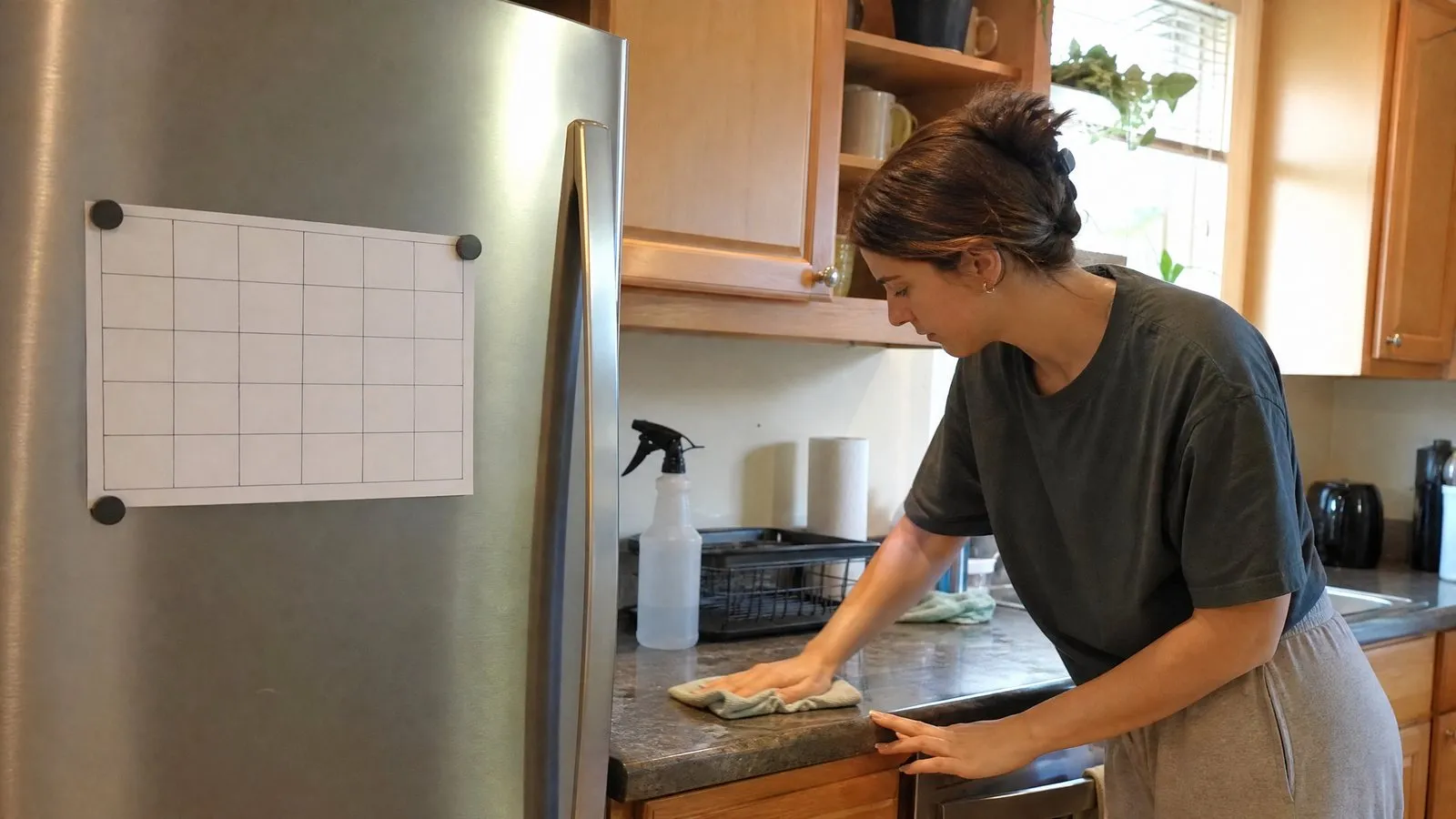
- Wipe down kitchen counters and the stovetop — one damp cloth, one minute.
- Quick tidy of the main living space — put stray items back where they belong, straighten cushions, clear the coffee table. Set a 5-minute timer and stop when it goes off.
If you do nothing else on a busy day, do the reset. A home with clear counters and no dish pile reads as clean even when it isn’t spotless. For more on this, see our guide to 10 daily habits that keep a home clean without cleaning days.
The weekly schedule at a glance
Pick a day for each zone and stick to it. The order below works well because it spreads wet jobs (kitchen, bathroom) and dry jobs (dusting, floors) across the week. Adjust the days to fit your life — the zones matter more than the names.
| Day | Focus | Tasks (15–25 min) |
|---|---|---|
| Monday | Kitchen | Wipe appliance fronts and the microwave inside, clean the sink, wipe cabinet handles, take out trash and recycling, quick sweep |
| Tuesday | Bathroom | Scrub toilet, wipe sink and taps, spray and wipe the shower/tub, clean the mirror, swap hand towels |
| Wednesday | Floors | Vacuum carpets and rugs, sweep or vacuum hard floors, mop the kitchen and bathroom |
| Thursday | Dust & surfaces | Dust shelves, sills, and electronics, wipe light switches and door handles, tidy one surface that collects clutter |
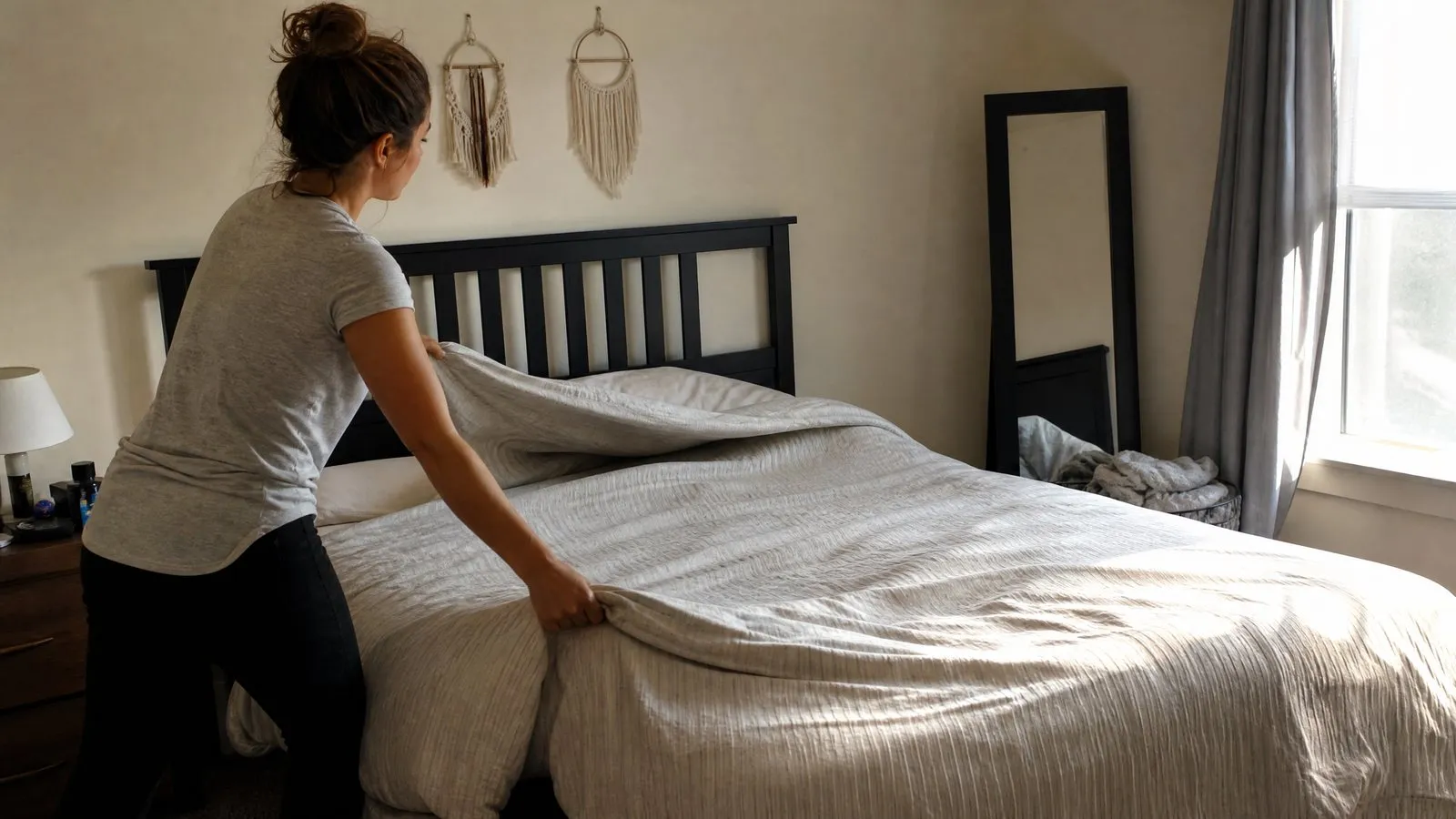
| Friday | Laundry & linens | Run one or two loads, change bed sheets, wash towels, fold and put away |
| Saturday | Catch-up / flex | Tackle one monthly task, or finish anything you missed. Skip guilt-free if the week went well |
| Sunday | Rest & plan | Quick 10-minute tidy, check supplies, plan the week. No big cleaning |
That’s roughly 20 minutes a day on weekdays, a short flex session on Saturday, and genuine rest on Sunday. Over a week it adds up to a fully cleaned home without a single exhausting cleaning day.
Want the schedule tailored to your home and saved so you can tick tasks off? Build one in a couple of minutes with our free Weekly Cleaning Plan tool.
A note on timing
Fifteen to twenty-five minutes is a range, not a promise. A studio bathroom might take 12 minutes; a family bathroom with a tub and two sinks might take 25. If a task consistently runs long, split it across two days or move part of it to your Saturday flex slot. The goal is a sustainable rhythm, not a stopwatch you dread.
What each day actually looks like
Monday — Kitchen
Start at the sink and work outward. Clear the counters, wipe down appliance fronts and handles, and do the inside of the microwave (a bowl of water heated for two minutes loosens splatters so they wipe off). Clean and shine the sink, empty the trash and recycling, and give the floor a quick sweep. Leave deep jobs like the oven and the inside of the fridge for a monthly slot.
Full walk-through: how to clean a kitchen properly.
Tuesday — Bathroom
Spray the toilet bowl and shower first, then let them sit while you do the sink, taps, and mirror. Come back to scrub the toilet and wipe the shower walls, which now need less effort. Swap in fresh hand towels. If you see early mold spots on grout or sealant, deal with them before they spread — here’s how to get rid of mold and mildew in the shower.
Want the deeper version? See how to clean a bathroom top to bottom in 30 minutes.
Wednesday — Floors
Vacuum carpets and rugs, then sweep or vacuum hard floors before mopping. Mopping over grit scratches floors, so always clear debris first. Use a damp (not soaking) mop and the right cleaner for your surface — sealed hardwood in particular doesn’t like excess water. See how to clean hardwood floors without damaging them.
Thursday — Dust and surfaces
Work top to bottom so dust falls onto surfaces you haven’t cleaned yet. Dust shelves, windowsills, and electronics with a dry or barely damp microfiber cloth. Wipe high-touch spots — light switches, door handles, remote controls. Finish by clearing one clutter magnet: the entry table, a kitchen counter corner, the spot where mail lands.
Friday — Laundry and linens
Run your loads early so you’re not folding at midnight. Strip and remake the beds, wash towels, and put everything away the same day — a folded basket left on the floor just becomes clutter. If care labels confuse you, check how to read laundry care labels, and for towels that stay fresh see how to wash towels so they stay soft.
Monthly add-ons
Once a month, use your Saturday flex slot for one of these. Rotate through the list so each gets done roughly every few weeks.
- Clean the oven and stovetop drip areas — how to clean an oven without harsh fumes
- Wipe out the inside of the fridge and toss expired food
- Run a cleaning cycle on the washing machine — how to clean a washing machine
- Descale the kettle and coffee maker
- Clean baseboards, door frames, and light fixtures
- Vacuum under furniture and behind large appliances where you can reach
- Wash pillow protectors and freshen the mattress — how to clean a mattress
- Wipe inside kitchen cabinets and tidy the pantry — how to organize kitchen cabinets and pantry
Seasonal add-ons
A few bigger jobs only need doing a few times a year. Put them on the calendar so they don’t ambush you:
- Spring: Wash windows inside and out, launder curtains, clean behind and under the fridge, flip or rotate the mattress.
- Summer: Clean fans and air-conditioning filters, wipe down outdoor furniture, deep-clean the trash and recycling bins.
- Fall: Clear heating vents and radiators, wash heavier bedding, check and clean dryer vents.
- Winter: Declutter and donate, deep-clean entryways where salt and mud collect, refresh the medicine and cleaning cabinets.
When a whole room has drifted past “tidy,” a full reset helps more than another weekly pass. Our deep cleaning checklist covers every room, task by task.
Adapting the schedule
The template above suits one or two tidy adults. Real homes vary. Here’s how to flex it.
If you have kids
Expect more frequent resets and more floor time. Add a second quick tidy before bed — ideally with the kids doing their own toys — and move laundry to twice a week rather than once. Keep the zones the same; just accept that the kitchen and floors need lighter touch-ups between their official days.
Build the tidy into the kids’ routine so it’s shared, not all on you: how to keep a home organized with kids. If you’re juggling work and family, our realistic cleaning routine for working parents is built for exactly this.
If you have pets
Pets mean more hair, more floor cleaning, and more attention to odors. Vacuum two or three times a week instead of once, and add a quick daily sweep of the areas where your pet eats and sleeps. Wash pet bedding on your Friday laundry day.
Be careful with products: some common cleaners aren’t safe around cats and dogs, especially concentrated disinfectants and certain essential oils. See pet-safe cleaning: what to use around cats and dogs before you stock up.
If you share a home
The schedule works beautifully for roommates or couples when you split by zone, not by day. One person owns the kitchen and floors; the other owns the bathroom, dusting, and shared-space laundry. Everyone does their own dishes and their own bedroom. Write it down somewhere visible — a shared note or a chart on the fridge — so it’s clear who does what and resentment doesn’t build.
The Weekly Cleaning Plan tool lets you assign tasks, which makes splitting a shared home far less awkward.
When you’ve fallen behind
If the schedule has slipped and the whole place feels overwhelming, don’t try to do a month of cleaning in one day. Pick one of two approaches:
- Reset fast, then restart. Do a focused blitz to get back to baseline — our 1-hour speed clean walks you through it — then begin the daily schedule fresh tomorrow.
- If the problem is stuff, not dirt, cleaning won’t fix it. Clutter makes every surface harder to clean. Start with how to declutter when you’re overwhelmed, then come back to the routine.
A few safety notes
- Keep cleaning products in their original containers and store them out of reach of children — see how to store cleaning supplies safely with young children.
- Never mix cleaners. Combining bleach with ammonia or acidic products (including some vinegar-based cleaners) can create dangerous gases. The details are in cleaning products you should never mix.
- Cleaning and disinfecting aren’t the same thing. For everyday surfaces, cleaning is usually enough; disinfecting matters most during illness or after handling raw meat. See cleaning vs disinfecting.
- If anyone swallows a cleaning product or has a bad reaction, in the US contact America’s Poison Centers (call or check the Poison Help line) and follow the product label. In the UK, Canada, or Australia, call your local poison information service or emergency number.
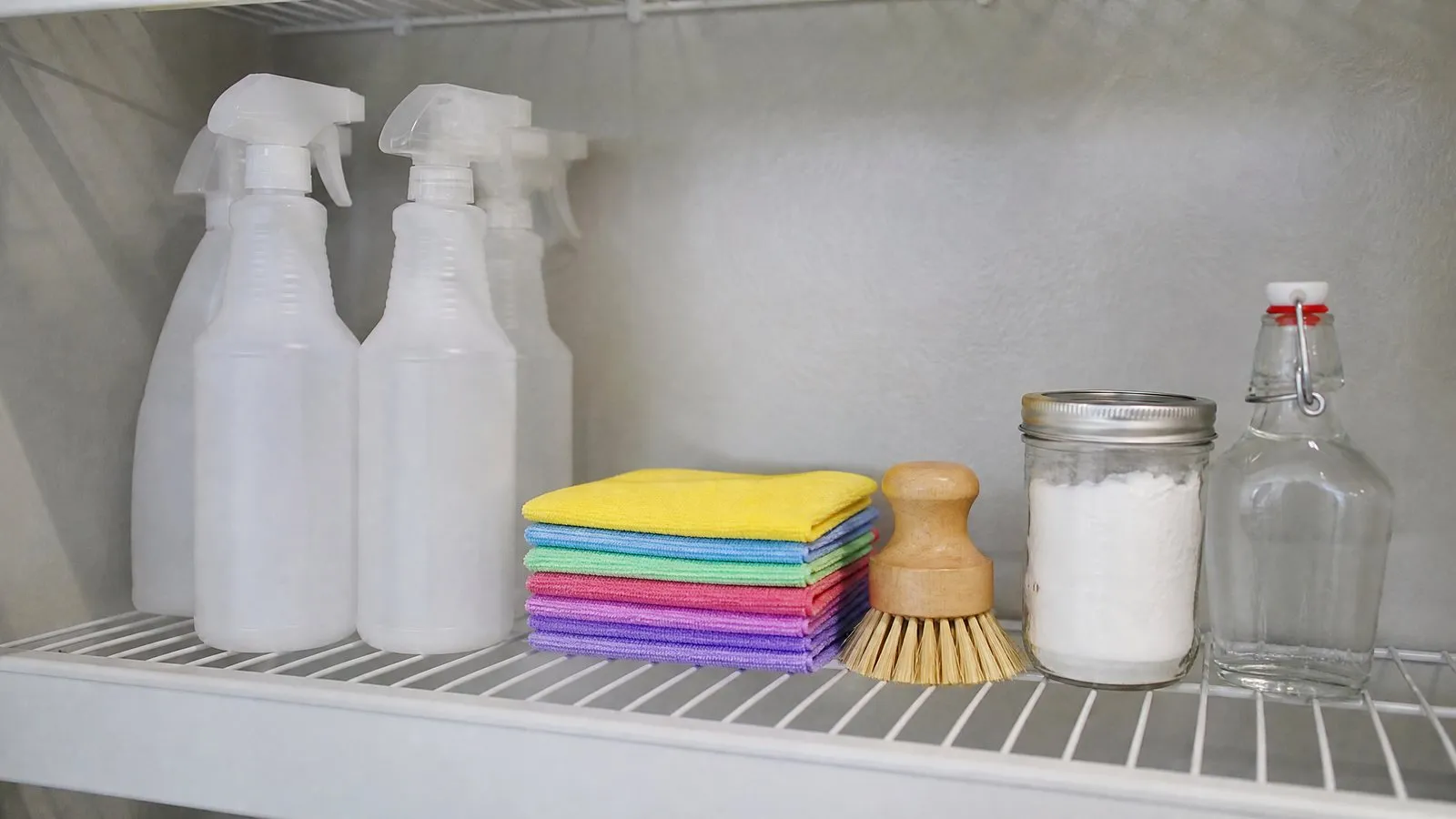
You don’t need a cupboard full of specialty products to run this schedule. A short, honest starter kit covers nearly everything — see the only cleaning supplies you really need.
FAQ
What if I miss a day?
Don’t double up or stress. Just pick up where you are the next day, and use your Saturday flex slot to catch the one task that matters most. Missing a day here and there is normal and the home won’t notice.
Can I combine days to clean less often?
Yes. If weekdays are impossible, batch the zones into two or three longer sessions — for example kitchen and bathroom on Saturday, floors and laundry on Sunday. You’ll spend the same total time; it just lands differently. Keep the daily reset either way, because that’s what prevents a big backlog.
How is this different from a deep clean?
This schedule maintains a home that’s already at baseline. A deep clean gets you to baseline — moving furniture, cleaning inside appliances, scrubbing grout. Do a deep clean a couple of times a year or when you move in, then let the weekly schedule keep it that way. Our deep cleaning checklist covers the full list.
Is 20 minutes a day really enough for a family?
For a small home with one or two adults, yes. Families and pet owners should expect closer to 25–30 minutes on some days plus a second short tidy, mainly for floors and laundry. The structure stays the same; the frequency of a few tasks goes up.
Where should I start if I’ve never had a routine?
Start with just the daily reset for one week — dishes, counters, five-minute tidy. Once that feels automatic, add one weekday zone at a time. Trying to launch the whole schedule at once is the most common reason people quit.