The Only Cleaning Supplies You Really Need (Starter Kit)
A simple cleaning starter kit: 10 essentials that cover your whole home, what each is for, what to skip, and how to store them safely.
You can clean an entire apartment or small home with about ten things, and most of them cost a few dollars each. You don’t need a cabinet full of specialty sprays for every surface. The list below covers floors, bathrooms, kitchens, glass, and everyday messes — and that’s it.
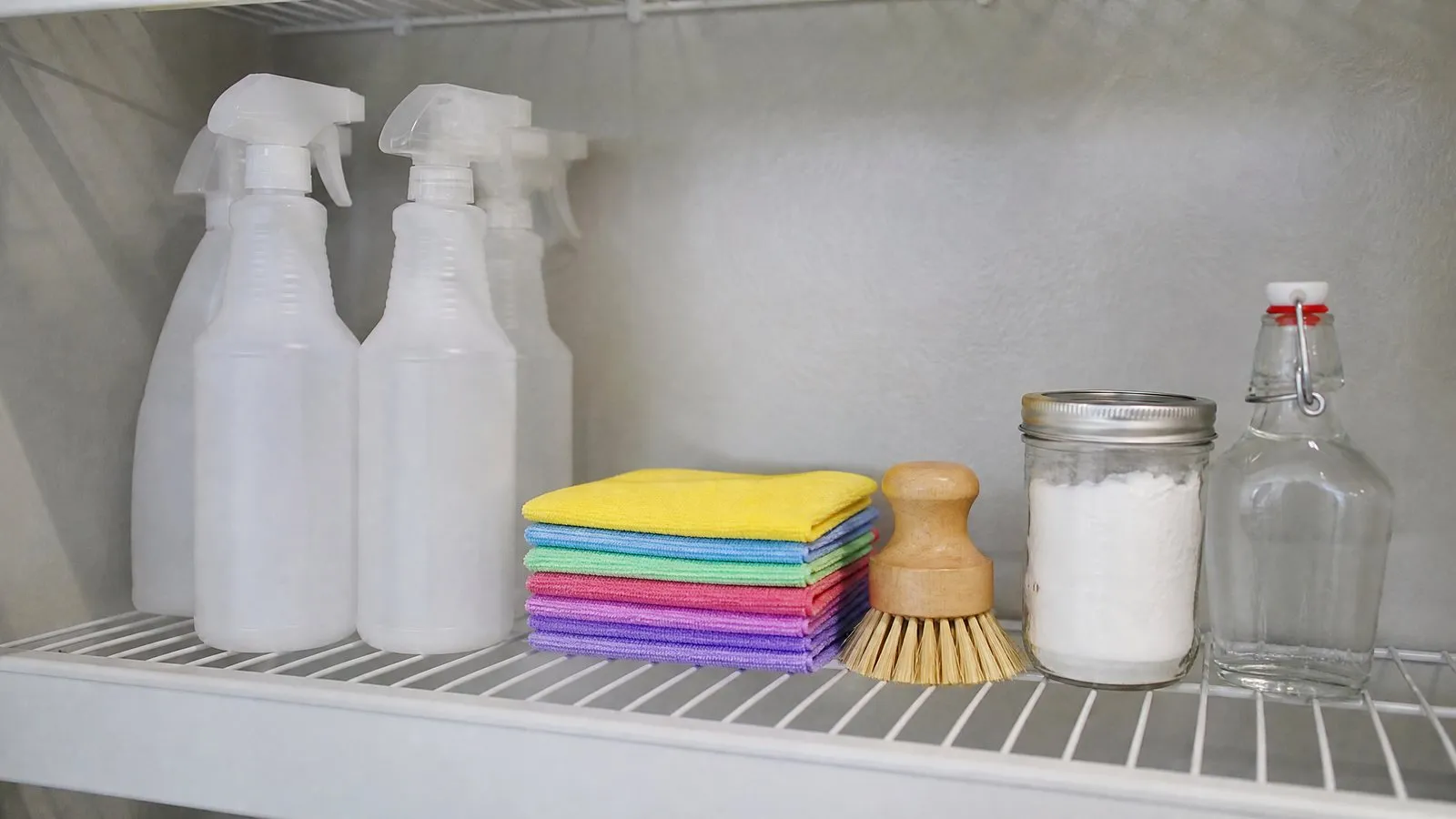
Here’s the short version: one all-purpose cleaner, dish soap, baking soda, white vinegar, a disinfectant, a pack of microfiber cloths, a scrub brush, a toilet brush, a mop, and a vacuum. Below is what each one does, what it’s not good for, and what you can safely skip.
The 10-item starter kit
| Item | Main job | Rough cost | Buy once or refill |
|---|---|---|---|
| All-purpose cleaner | Counters, tables, general wiping | $3–6 | Refill |
| Dish soap | Dishes, plus a diluted all-purpose cleaner | $2–5 | Refill |
| Baking soda | Scrubbing, deodorizing | $1–3 | Refill |
| White vinegar | Glass, mineral deposits, some descaling | $2–4 | Refill |
| Disinfectant (spray or wipes) | Germs on high-touch and sickroom surfaces | $4–8 | Refill |
| Microfiber cloths (6–10) | Dusting, wiping, drying, glass | $8–15 | Buy once |
| Scrub brush | Tubs, grout, stuck-on grime | $3–6 | Buy once |
| Toilet brush | The toilet, and only the toilet | $4–8 | Buy once |
| Mop | Hard floors | $10–25 | Buy once |
| Vacuum | Carpet, rugs, floors, upholstery | varies | Buy once |
That’s the whole kit. Let’s go through each one.
1. All-purpose cleaner
For: Sealed countertops, tables, cabinet fronts, appliance exteriors, painted walls (spot-cleaning), and most everyday grime. This is your workhorse — the spray you’ll reach for most days.
Not for: Natural stone like marble or granite unless the label says it’s stone-safe (acidic or harsh cleaners can etch and dull it). Don’t assume it disinfects — most all-purpose cleaners clean rather than kill germs, which is a real difference we’ll cover below.
You can buy a ready-made spray or make a basic one by mixing a few drops of dish soap into a spray bottle of warm water. The homemade version handles most light messes fine.
2. Dish soap
For: Dishes, obviously, but also as the base of a gentle all-purpose solution. A squirt in warm water cleans sealed floors, wipes down the fridge, and tackles greasy stovetops. It’s safe on almost everything.
Not for: Dishwashers — never put hand dish soap in a dishwasher, as it foams over. It also doesn’t disinfect.
3. Baking soda
For: Gentle scrubbing (sinks, tubs, cooktops), deodorizing (fridges, trash cans, carpets before vacuuming), and lifting stuck-on food from pans. Sprinkle it on, add a little water to make a paste, and scrub. It’s mildly abrasive but won’t scratch most surfaces.
Not for: It doesn’t disinfect, and it’s a weak cleaner on grease by itself. It also doesn’t belong on soft aluminum or some delicate finishes where any abrasive can dull the surface.
We’ve got a longer list of real uses in Baking Soda Cleaning: 12 Uses That Actually Work.
4. White vinegar
For: Glass and mirrors (diluted, roughly half water), cutting through mineral deposits and limescale on faucets and showerheads, and descaling a kettle or coffee maker. Cheap and effective on hard-water spots.
Not for: Natural stone, which it etches. Avoid it on hardwood floors, waxed surfaces, and some appliance seals and rubber gaskets, where the acid can cause damage over time. And here’s the important one:
Never mix vinegar (or any acid) with bleach. The combination releases toxic chlorine gas. This is a genuine hazard, not a theoretical one.
For exactly where vinegar helps and where it harms, see Cleaning with Vinegar: Where It Works and Where It Damages and the rundown of dangerous combinations in Cleaning Products You Should Never Mix (and Why).
5. A disinfectant
This is the one that confuses people most, so it’s worth being clear. Cleaning removes dirt and most germs by wiping them away. Disinfecting kills germs that are left behind. Your all-purpose cleaner, dish soap, baking soda, and vinegar mostly clean — they are not registered disinfectants.
For: High-touch surfaces and sickroom cleaning — toilet seats, doorknobs, light switches, phones, and kitchen surfaces after raw meat. You don’t need to disinfect your whole home every day; focus on the spots where germs actually spread.
How to use it properly: Disinfectants only work if the surface stays visibly wet for the full “contact time” or “dwell time” printed on the label — often several minutes. Spraying and immediately wiping doesn’t disinfect; it just moves things around. The US EPA registers disinfectants and lists the contact time on the label, so read it. Clean visible dirt off first, then disinfect.
Options include a disinfectant spray or pre-moistened wipes. Both are fine. Diluted household bleach also works as a disinfectant, but it’s harsher and must never be mixed with other cleaners.
More on getting this right in Cleaning vs Disinfecting: How to Disinfect Properly.
6. Microfiber cloths
For: Nearly everything — dusting, wiping counters, polishing glass, drying surfaces. Microfiber grabs dust and grime better than paper towels and costs nothing over time because you wash and reuse it. Get a pack of 6 to 10 so you always have a clean one.
A simple color system helps: keep one color for the bathroom, another for the kitchen, so you’re not spreading bathroom germs onto counters.
Not for: Don’t wash them with fabric softener — it clogs the fibers and ruins their grab. And don’t use the same cloth across the whole home without rinsing; a dirty cloth just redistributes grime.
7. Scrub brush
For: Tub and shower grime, grout, stuck-on cooktop messes, and anything a cloth can’t shift. A stiff-bristled handheld brush is the most useful shape. An old toothbrush covers tight corners and faucet bases.
Not for: Delicate or glossy surfaces that scratch, like acrylic tubs or glass cooktops — test a hidden spot first or use a softer pad.
8. Toilet brush
For: The toilet bowl. That’s its entire job.
Not for: Anything else, ever. Keep it strictly for the toilet. Store it in its holder and let it drip-dry over the bowl for a minute before closing it away, so it isn’t sitting in dirty water.
9. Mop
For: Sealed hard floors — tile, vinyl, laminate, and sealed wood. A flat mop with a washable microfiber pad is easy to store in a small home and skips the dirty-bucket problem. A spray mop is also fine.
Not for: Don’t soak wood or laminate — too much water causes warping and lifting seams. Wring the mop well and use a barely-damp pad. Hardwood has its own rules, covered in How to Clean Hardwood Floors Without Damaging Them.
10. Vacuum
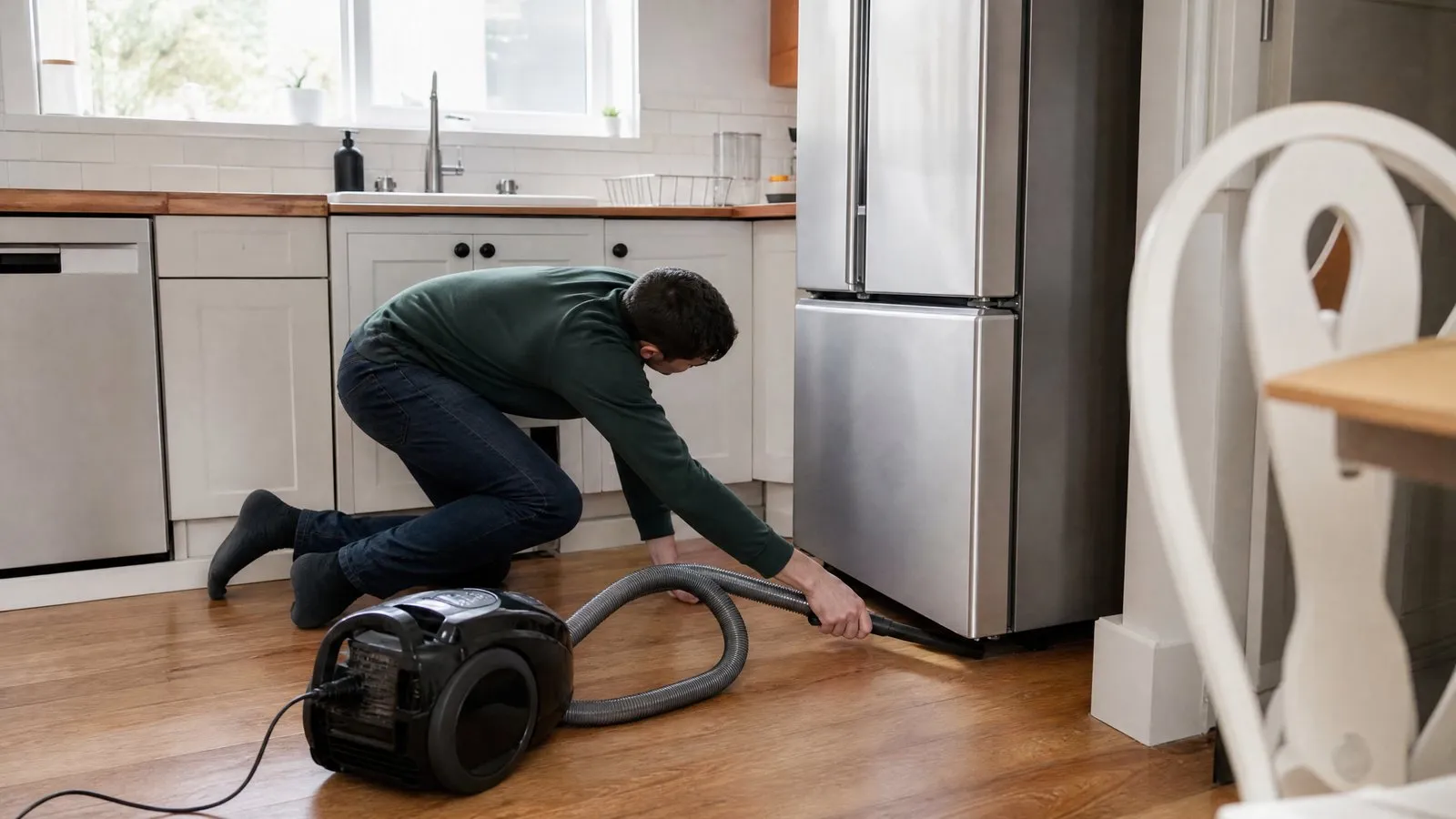
For: Carpets, rugs, hard floors, upholstery, and getting into corners. Even in a tiny apartment, a vacuum does more than a broom because it captures fine dust instead of pushing it around. A compact stick or cordless model stores easily; a small canister works too.
Not for: Don’t vacuum up liquids or large sharp debris unless it’s a wet/dry model. Empty or change the bag regularly or suction drops off.
What you can skip
Most “specialty” cleaners do a job your basics already cover. You can safely leave these on the shelf:
- Separate glass cleaner — diluted vinegar and a microfiber cloth do the same thing.
- Separate wood polish and furniture spray — a barely-damp microfiber cloth handles routine dusting.
- Granite/stone sprays — only worth it if you actually have stone counters; then buy a stone-safe cleaner and skip the vinegar on them.
- A different cleaner for every room — one all-purpose cleaner covers most rooms.
- Antibacterial everything — you don’t need antibacterial soap or sprays on every surface. Clean regularly; disinfect the high-touch spots.
- Air fresheners to “clean” — they mask smells, they don’t clean. Fixing the source and opening a window works better.
- Fancy scrubbing gadgets — a brush, baking soda, and a bit of effort cover most of it.
Buy specialty products only when you hit a specific problem — an oven you can’t face, limescale that won’t budge, mold in the shower. Even then, there’s usually a basic-ingredient method first.
How to store it all safely
If children or pets live in or visit your home, storage matters as much as the products themselves. America’s Poison Centers and the CDC both stress keeping cleaning products in their original, labeled containers, up high, and out of reach.
Do this:
- Keep products in their original containers with labels intact. If you decant into spray bottles, label them clearly — never reuse a food or drink container, which invites a dangerous mistake.
- Store up high and out of sight, ideally in a latched or locked cabinet. Under-sink cupboards are low and easy for small children to open, so add a childproof latch if that’s your only space.
- Keep the lids closed and don’t leave bottles out on the counter mid-clean when a toddler is around.
- Store products separately from food, and keep bleach well away from anything acidic like vinegar.
- Keep the Poison Control number handy. In the US, call 1-800-222-1222. In the UK, call 111 (or 999 in an emergency). In Australia, call the Poisons Information Centre on 13 11 26. In Canada, use your provincial poison center. If someone swallows a product or has a serious reaction, call right away — don’t wait for symptoms.
A full walkthrough is in How to Store Cleaning Supplies Safely with Young Children. If you have cats or dogs, see Pet-Safe Cleaning: What to Use Around Cats and Dogs.
Putting the kit to work
Ten items, a few minutes a day, and most of a home stays clean. Once you’ve got the kit, the easiest next step is a light routine so messes never pile up. Our 10 Daily Habits That Keep a Home Clean Without Cleaning Days and the Weekly Cleaning Schedule That Takes 20 Minutes a Day both use exactly these basics — nothing extra to buy.
FAQ
Do I really not need a different cleaner for each room?
Mostly, no. One all-purpose cleaner handles kitchens, living areas, and sealed surfaces throughout the home. The main exceptions are a disinfectant for high-touch and sickroom spots, and a stone-safe cleaner if you have marble or granite. Keeping one color of cloth for the bathroom and another for the kitchen matters more than owning separate sprays.
Is vinegar a disinfectant?
No. Vinegar cleans and cuts mineral deposits, but it is not a registered disinfectant and should not be relied on to kill germs during illness or after handling raw meat. For that, use an EPA-registered disinfectant (or a product listed by your country’s regulator) and follow the contact time on the label.
How many microfiber cloths do I actually need?
A pack of 6 to 10 is plenty for a small home. That lets you keep separate cloths for bathroom and kitchen and still have clean ones while others are in the wash. Wash them without fabric softener so they keep their grip.
What’s the one thing most people waste money on?
Specialty single-purpose sprays — separate glass cleaner, furniture polish, and a “different” cleaner for every room. Diluted vinegar handles glass, a damp microfiber cloth handles dusting, and all-purpose cleaner covers most rooms. Buy a specialty product only when you hit a specific problem your basics can’t solve.
Can I use dish soap on the floor and the fridge too?
Yes. A few drops of dish soap in warm water makes a gentle cleaner that’s safe on sealed floors, the fridge interior, and most everyday surfaces. Just wring your cloth or mop well so you’re not leaving surfaces soaking wet, especially on wood or laminate.