A Realistic Cleaning Routine for Working Parents
A realistic cleaning routine for working parents: lower the standard, run a 15-minute bedtime reset, share kid jobs, batch laundry, and a weekend power hour.

Here’s the honest version of a cleaning routine that works when you have a job, kids, and no spare time: lower your standard on purpose, do a short reset after bedtime most nights, hand real jobs to your kids, and batch the big stuff into one weekend session. That’s the whole system. Everything below just fills in the details.
You do not need a spotless home. You need one that’s safe, functional, and calm enough to relax in. Aim for that, and the rest gets much easier.
Step one: lower the standard on purpose
Most parent guilt comes from measuring your home against a photo, a relative, or your pre-kids self. Drop that standard deliberately. It’s a decision, not a failure.
Here’s what “clean enough” actually means for a busy household:
- Hygiene first. Kitchen surfaces, the bathroom, and anywhere food is prepared stay clean. This is the part that affects health.
- Function second. Floors are clear enough to walk safely, you can find what you need, and surfaces aren’t buried.
- Appearance last. Dusting the baseboards, polishing, and perfectly straight cushions are optional extras, not the baseline.
Sort your home the same way. A smeared bathroom sink matters more than a slightly cluttered bookshelf. When time is short, protect the first category and let the third one slide without a second thought.
One reframe that helps: aim for “reset,” not “clean.” You’re not trying to finish cleaning forever. You’re returning the home to a workable starting point so tomorrow is easier.
The 15-minute after-bedtime reset
This is the core habit. Once the kids are down, set a timer for 15 minutes and reset the main living spaces. Not deep cleaning — just putting the house back to neutral so you wake up to order instead of chaos.
A realistic 15-minute reset:
- Kitchen (6 minutes). Load or run the dishwasher, wipe the counters and stovetop, and do a quick sweep of the floor where food lands.
- Living areas (5 minutes). Toys into bins, cushions back, dishes and cups to the kitchen, one quick surface wipe.
- Floors and entry (2 minutes). Line up shoes, hang bags and coats, clear the walkway.
- Set up tomorrow (2 minutes). Lunch boxes out, bags by the door, coffee ready.
Two things make this stick. First, do it with a timer — when it beeps, you stop, even if it’s not perfect. Second, do it most nights, not every night. Four or five nights a week is a win. If you’re exhausted, skip it and don’t make it mean anything.
If even 15 minutes feels like a lot some nights, our list of 10 daily habits that keep a home clean without cleaning days has smaller moves you can slot in during the day instead.
Give kids age-appropriate jobs
Kids can do more than most of us expect, and involving them means less work for you and fewer power struggles over mess. The trick is matching jobs to age and keeping expectations loose — their “done” won’t look like yours, and that’s fine.
| Age | Jobs they can handle | Notes |
|---|---|---|
| 2–3 | Put toys in a bin, carry unbreakable dishes to the counter, throw away trash | Make it a game; expect lots of help |
| 4–5 | Match socks, wipe low surfaces with water, feed pets, set the table | Short tasks, one at a time |
| 6–8 | Make their bed, clear their plate, sort laundry by color, water plants | Can follow a 2–3 step list |
| 9–12 | Load/unload dishwasher, vacuum, take out trash, fold and put away laundry | Can own a whole task start to finish |
| 13+ | Clean a bathroom, run a load of laundry, cook a simple meal | Treat as shared adult-level chores |
A few things that make kid chores actually work:
- Attach jobs to existing routines. “Toys away before story time” beats a chore chart nobody checks.
- Keep storage low and obvious. Open bins kids can reach, labeled with pictures for pre-readers, mean they can tidy without you.
- Praise effort, redo quietly later if needed. If you re-clean in front of them, they’ll stop trying.
- Don’t pay for everything. Basic jobs are part of being in the family; save allowance for extras if you use it at all.
For a deeper system — including how to set up spaces so kids can keep them tidy — see how to keep a home organized with kids.
The weekend power hour
The nightly reset handles maintenance. The weekend power hour handles the deeper jobs that build up. Pick one block — 60 minutes is plenty — and work fast with everyone pitching in.
The point is to divide and conquer, not to do it all yourself. Put on music or a timer, assign zones, and go.
A sample power hour for a family:
- Bathrooms (15 min). Toilet, sink, mirror, a quick scrub of the tub or shower, swap towels. One adult or an older kid can own this.
- Kitchen beyond the daily wipe (15 min). Microwave inside, fridge quick purge, mop the floor, wipe appliance fronts.
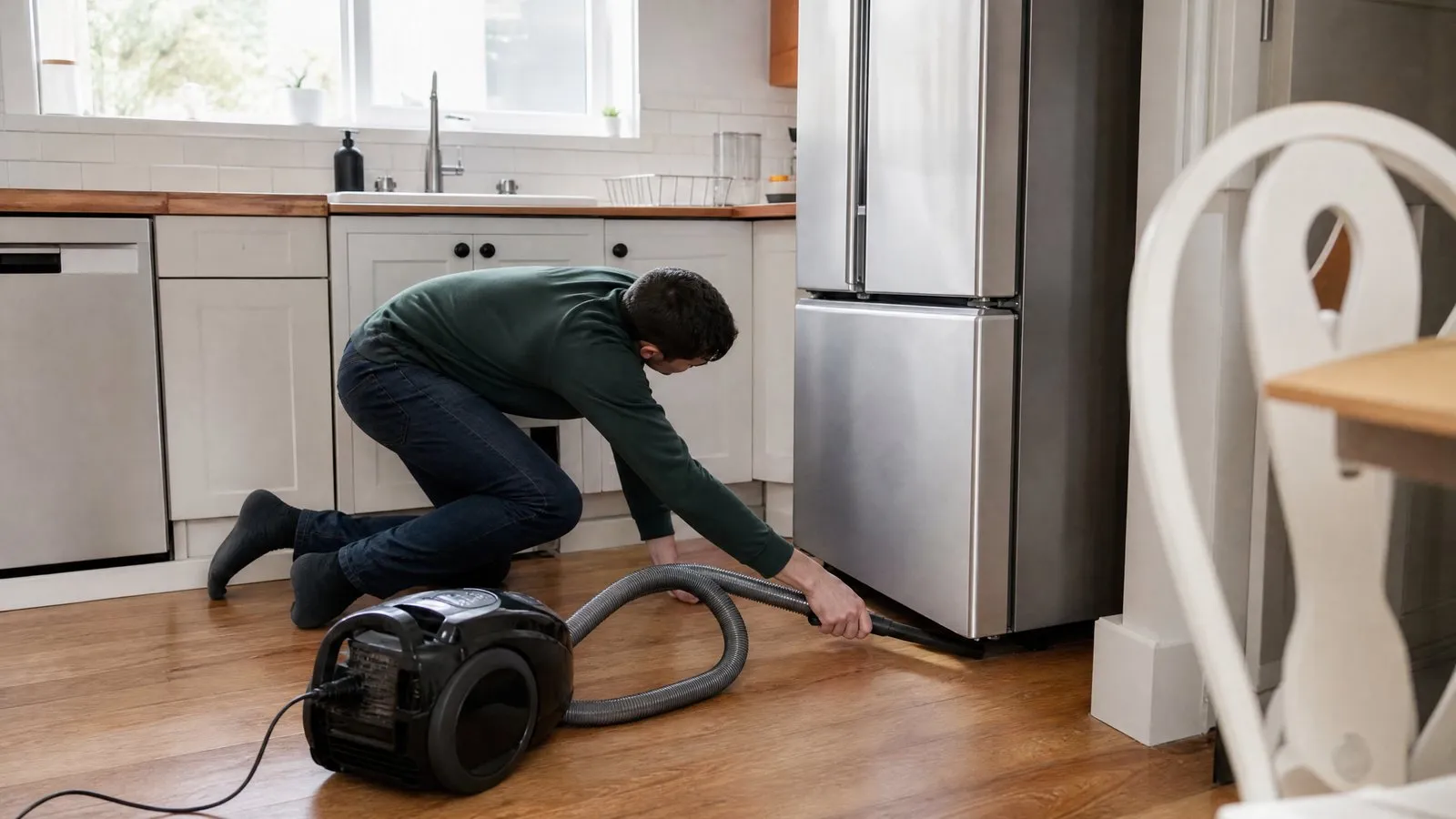
- Floors throughout (15 min). Vacuum main rooms and hallways; mop hard floors.
- One rotating deep job (15 min). Pick just one each week — wash bed linens, wipe baseboards, clean the oven, tackle a cluttered drawer.
That last rotating slot is how deep cleaning happens without a dedicated “cleaning day.” Over a couple of months you’ll cycle through most of it. When you want a full room-by-room reference, keep our deep cleaning checklist handy and pull one task from it each week.
If a weekend hits where the whole house feels out of control, a focused reset works better than despair. Our 1-hour speed clean walks through exactly where to spend the time for the biggest visible difference.
Prefer a daily rhythm over a weekend block? The weekly cleaning schedule that takes 20 minutes a day spreads the same work across the week instead, and our free weekly cleaning plan tool lets you build one around your actual days off.
Batch your laundry (stop doing it every day)
Laundry is the chore that quietly eats parents alive, mostly because it’s always half-done — washed but not folded, folded but not put away. The fix is batching: fewer, fuller runs, each one taken all the way through.
Two systems work. Pick the one that fits your home:
Day-of-the-week system. Assign loads to days — say, darks Monday, lights Wednesday, towels and sheets Saturday. Good if you have a washer at home and steady routines.
Two-day blitz system. Do all the laundry across one or two days (often the weekend). Good if you use a laundromat or shared machines and want to go less often.
Whichever you choose, the rule that saves you is: never start a load you won’t finish that day. A clean load left in the machine or basket becomes tomorrow’s problem. Wash, dry, fold, and put away in one chain.
Make it faster:
- Sort as you go. Two or three labeled hampers (lights, darks, towels) means no sorting on laundry day.
- Fold straight out of the dryer while things are warm — fewer wrinkles, less re-ironing.
- Give each kid a bin or basket and have them put away their own clothes. Folding to save drawer space helps everything fit; see how to fold clothes to save drawer space.
- Keep a stain treatment nearby so you can hit spots before they wash in and set. Our quick stain reference covers the common kid culprits.
If you’re building habits from scratch, how to do laundry: a beginner’s step-by-step guide covers temperatures, sorting, and reading care labels so you can hand parts of it off to a teen with confidence.
Keep your supplies simple and safe
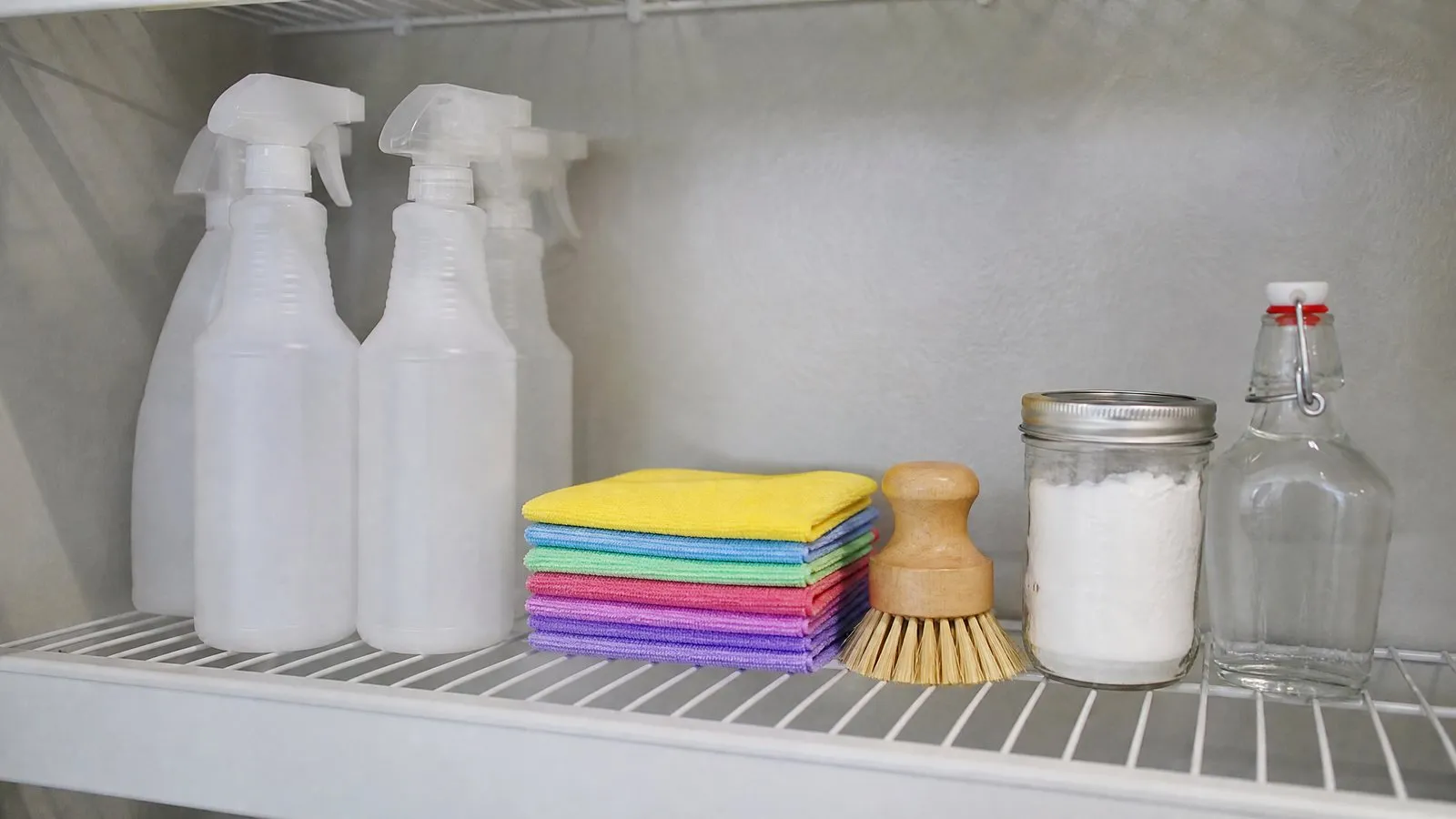
You don’t need a cabinet full of specialty sprays. A small kit — an all-purpose cleaner, a bathroom cleaner, dish soap, baking soda, microfiber cloths, and a disinfectant for when someone’s sick — covers almost everything. See the only cleaning supplies you really need if you want to pare down.
Two safety points matter more with kids in the house, and both come from mainstream guidance:
- Never mix cleaning products. Bleach mixed with ammonia or acids (including some vinegar-based cleaners) releases toxic gas. America’s Poison Centers and the US EPA both warn against combining products. Our guide on cleaning products you should never mix spells out the risky pairs.
- Store everything up high and locked. Young children act fast. Keep all products — including “natural” ones and laundry pods — out of reach and sight. How to store cleaning supplies safely with young children walks through setting this up.
If you’d rather lean on cheap basics, baking soda has a dozen genuinely useful jobs, and cleaning with vinegar explains where it works and where it quietly causes damage.
What to outsource when the budget allows
If you have any room in the budget, buying back time is a legitimate parenting decision, not a luxury failing. You don’t have to do everything yourself to run a good home.
Worth considering, roughly in order of value for money:
- A cleaner every two to four weeks. Even one visit a month for bathrooms, floors, and kitchen resets your baseline and makes your nightly 15 minutes enough to maintain.
- Wash-and-fold laundry service. Often cheaper than people expect, and it removes the single most time-consuming chore. Great to use occasionally during busy stretches.
- Grocery delivery or pickup. Not cleaning, but it frees up a chunk of weekend time you can redirect to the power hour — or to rest.
- Seasonal deep cleans. Hire out the big jobs (oven, windows, inside the fridge) once or twice a year instead of doing them yourself.
Can’t afford any of it right now? That’s completely normal. The nightly reset, shared kid jobs, and batched laundry are the free version of the same result. Outsourcing just removes a task or two — it isn’t the engine of the system.
Putting it together
A realistic week looks like this: a 15-minute reset most weeknights after bedtime, kids doing their small jobs as part of daily routines, one or two batched laundry days, and a 60-minute power hour on the weekend with one rotating deep task. That’s it. No cleaning day that eats your Saturday, no guilt when a night gets skipped.
Start with just the nightly reset this week. Add the rest once that feels automatic. A home that’s clean enough and a household that isn’t burned out beats a spotless home every time.
FAQ
What if I’m too exhausted to do the reset at night?
Skip it, and don’t attach any meaning to skipping. The system is built to survive missed nights. If evenings are reliably too much, move a shortened version to the morning, or trade it for a few small daily habits spread through the day instead.
My kids resist chores — how do I get them to help?
Attach jobs to things that already happen (“toys away before a story”), keep tasks short and specific, and make storage low and reachable so tidying is easy. Praise the effort and quietly fix mistakes later rather than redoing their work in front of them.
How do I keep laundry from piling up?
Batch it into fewer, fuller loads and never start a load you won’t finish that day — wash, dry, fold, and put away in one chain. Sorting hampers and having each family member put away their own clothes removes most of the backlog.
Is it worth paying for cleaning help on a tight budget?
If you have any room, even one cleaner visit a month resets your baseline and makes daily maintenance much easier. If there’s no room, the nightly reset, kid jobs, and batched laundry achieve a similar result for free — outsourcing just removes a task, it isn’t essential.
How often do I actually need to deep clean?
Rotate one deeper task into your weekend power hour each week and you’ll cycle through most of the house over a couple of months — no dedicated deep-cleaning day required. Use the deep cleaning checklist to pick the next task each week.