Cleaning with Vinegar: Where It Works and Where It Damages
White vinegar cleans glass, kettle limescale and some hard-water spots well, but damages stone and more. Here's where it works and where it harms.
White vinegar is cheap, safe to handle, and genuinely good at a few jobs: cutting through limescale, shining glass, and loosening hard-water spots. But it’s not a cure-all, and on the wrong surface it causes real damage — etching stone, stripping finishes, and corroding rubber. It’s also not a registered disinfectant, so it shouldn’t be your choice when you actually need to kill germs.
Here’s a clear map of where vinegar earns its place and where it doesn’t, plus the one mixing rule you must never break.
What vinegar actually is (and why it cleans)
The vinegar in your cupboard is a dilute solution of acetic acid in water. Standard white distilled vinegar sold for food and cleaning is usually around 5% acetic acid. That mild acidity is the whole story: it dissolves alkaline mineral deposits like limescale and hard-water scale, and it cuts through soap scum, which is partly mineral-based.
“Cleaning vinegar” sold in some stores is slightly stronger — often around 6% — but it works the same way. The extra strength is minor; it’s not a different product.
Because it works by being acidic, vinegar is great on mineral problems and poor-to-harmful on anything that acid attacks. Keep that one idea in mind and most of the rules below make sense.
Where vinegar works well
Glass and mirrors
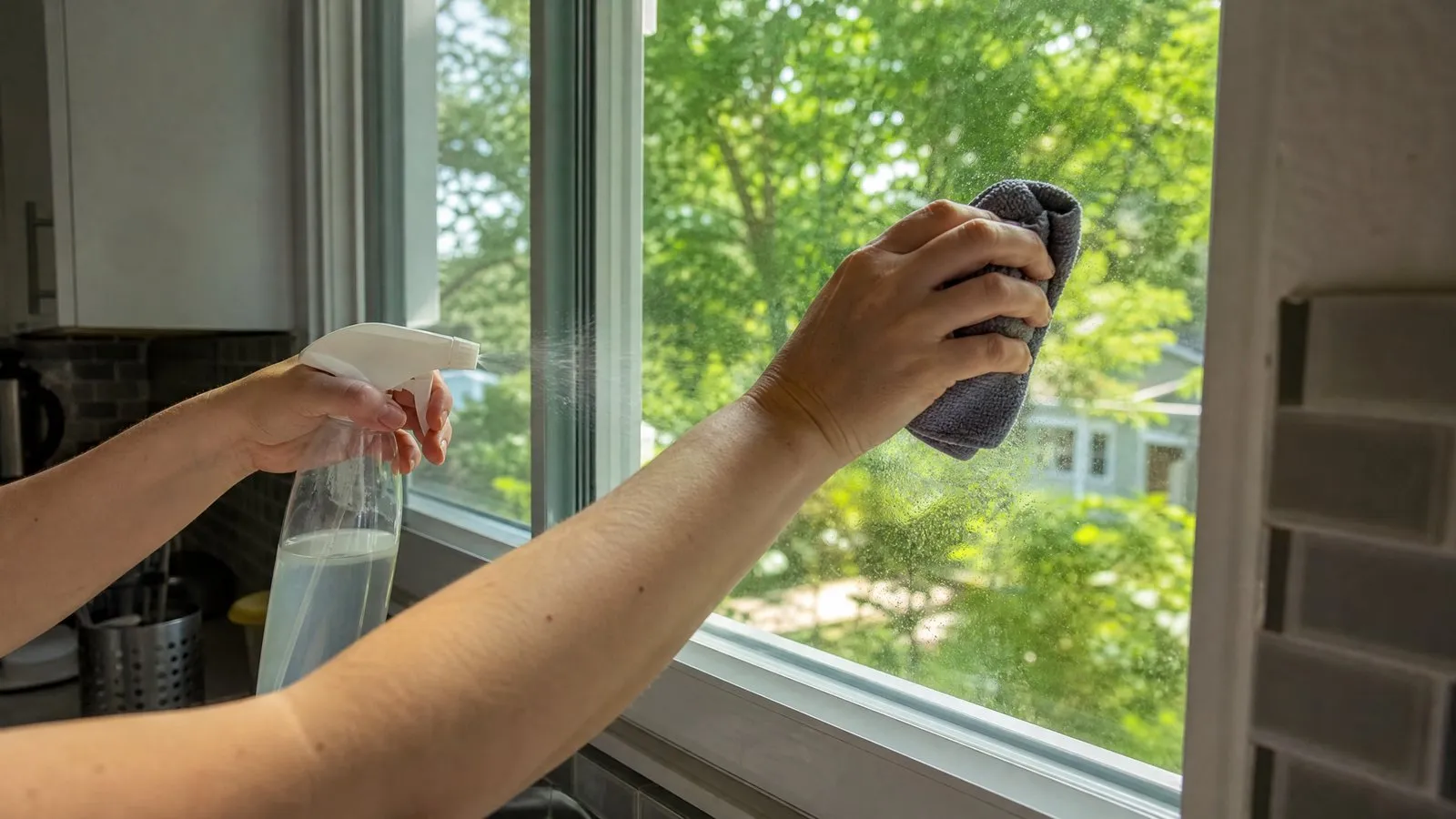
Diluted vinegar leaves glass streak-free because it cuts through the thin film of grease and mineral residue that causes streaks. Mix about one part white vinegar to four parts water in a spray bottle. Spray lightly, then wipe with a clean microfiber cloth and buff dry with a second dry cloth.
Skip paper towels — they shed lint. If the glass is greasy (kitchen windows, splashbacks), add a single drop of dish soap to the mix.
Kettle and coffee-maker limescale
This is vinegar’s best trick. To descale an electric kettle, fill it about halfway with equal parts white vinegar and water, bring to a boil, then switch off and let it sit for 20 to 30 minutes. Pour out, then rinse and boil with plain water two or three times until there’s no vinegar smell. Don’t drink the vinegar solution.
For coffee makers, check the manufacturer’s instructions first — some say vinegar, some sell their own descaler and warn vinegar can damage internal seals. If vinegar is allowed, run a half-vinegar, half-water cycle, then two or three plain-water cycles to rinse.
Hard-water spots and soap scum
Vinegar loosens the cloudy mineral film on shower glass, chrome taps, and glass shower doors. Spray on a 1:1 vinegar-and-water mix, leave it 5 to 10 minutes, then scrub lightly and rinse. For heavier scale, warm the solution slightly and give it longer.
It pairs well with baking soda for scrubbing jobs, though the fizzing reaction is mostly for show — they partly cancel each other out chemically. For more on that pairing, see our guide to baking soda cleaning.
Showerhead descaling
A classic fix: fill a plastic bag with white vinegar, slip it over the showerhead so the holes are submerged, and secure with a rubber band or hair tie. Leave 30 minutes to an hour (not overnight on metal or plated fittings), then remove, run the water, and the flow usually improves. Check your fixture’s material first — see the “avoid” list below.
Inside the dishwasher and washing machine
A cup of white vinegar run through an empty hot cycle can help clear mineral buildup and freshen a machine, but manufacturers differ on whether they recommend it, because it can degrade rubber seals and hoses over time. Use it occasionally, not every wash, and follow your appliance’s manual. Our full method is in how to clean a washing machine.
Everyday kitchen wiping (on safe surfaces)
For sealed laminate counters, stainless steel, and most sinks, a diluted vinegar spray handles daily grease and splashes well. Just keep it away from the materials below. See how to clean a kitchen properly for a full daily and weekly routine.
Where vinegar damages surfaces — avoid these
Acid is the problem here. On these materials, vinegar causes damage that’s often permanent.
| Surface | What vinegar does | Use instead |
|---|---|---|
| Natural stone (marble, granite, travertine, limestone) | Etches and dulls the surface; eats into the stone | pH-neutral stone cleaner or mild dish soap and water |
| Waxed or oiled wood, and many wood finishes | Strips wax, dulls and can cloud the finish | Wood-safe cleaner; damp (not wet) cloth |
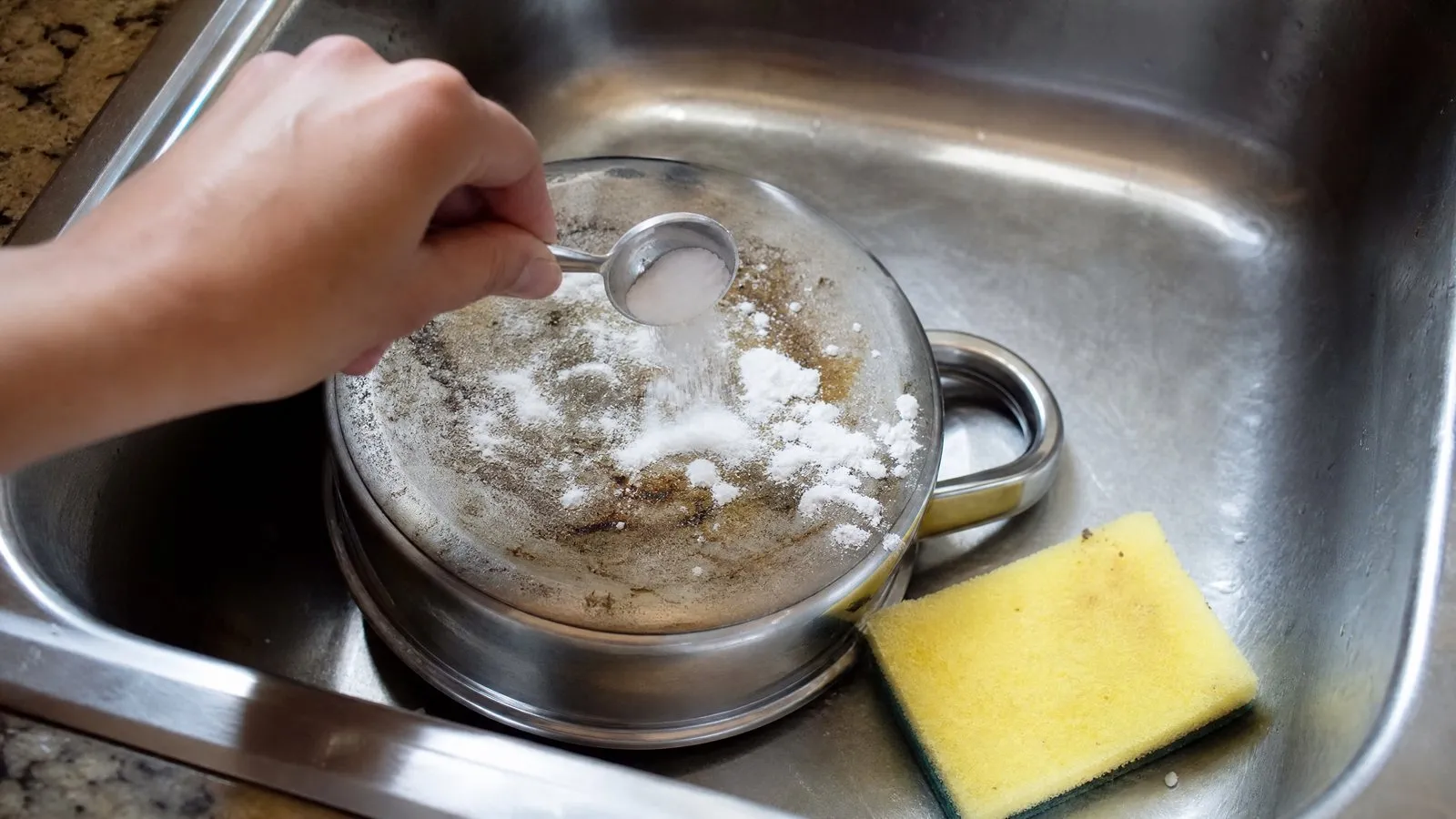
| Cast iron and carbon-steel pans | Strips seasoning and can pit the metal | Hot water, stiff brush, re-oil after |
| Unsealed grout | Can erode the grout over time | pH-neutral cleaner; baking soda paste for scrubbing |
| Rubber seals and gaskets (appliances, some faucets) | Dries out and corrodes rubber over repeated use | Occasional use only, or a dedicated cleaner |
| Aluminum and some coated metals | Corrodes, discolors, pits | Mild dish soap and water |
| Electronic screens and device coatings | Damages anti-glare and oleophobic coatings | Water or a screen-safe wipe |
| Stone or waxed floors | Etches stone; dulls waxed finishes | Floor cleaner matched to the flooring |
A few extra notes worth remembering:
- Marble and limestone are the big ones. A single splash of vinegar left to sit can leave a permanent dull mark. If you’re not sure whether a counter or tile is natural stone, treat it as stone and skip the vinegar.
- Hardwood floors: even sealed wood doesn’t love acid, and pooled liquid of any kind is the real enemy. Read how to clean hardwood floors without damaging them before reaching for vinegar.
- Cast iron: vinegar is sometimes used deliberately to strip rust off bare iron, but on a seasoned pan it ruins the nonstick layer you’ve built up.
The big one: vinegar is not a registered disinfectant
This is the most important thing to understand. Vinegar can clean — it lifts dirt and residue — but cleaning is not the same as disinfecting. Disinfecting means killing germs to a tested standard.
In the US, disinfectants are registered with the Environmental Protection Agency (EPA), and that registration means the product has been tested to kill specific bacteria and viruses when used exactly as the label says. Vinegar is not an EPA-registered disinfectant. It has some limited antimicrobial effect in lab conditions, but it isn’t proven to reliably kill the germs you care about — like the ones behind foodborne illness or colds and flu — on household surfaces. The same logic applies in the UK, Canada, and Australia, where disinfectant claims are regulated too.
So when does that matter?
- Use a registered disinfectant after handling raw meat, when someone in the house is sick, for the toilet, and for diaper-change areas and other high-germ spots.
- Vinegar is fine for routine cleaning where you just want surfaces clean, not sterile — glass, limescale, general wiping.
The order also matters: you clean first, then disinfect, because disinfectants work poorly over grime. For the full method, see cleaning vs disinfecting.
Never mix vinegar with bleach
This is a hard safety rule. Mixing vinegar (an acid) with chlorine bleach releases chlorine gas, which is toxic and can cause coughing, breathing trouble, burning eyes, and in a confined space, serious harm.
Don’t combine them in a bucket, don’t use vinegar to “boost” bleach, and don’t pour one down a drain right after the other. Also avoid mixing vinegar with hydrogen peroxide in the same container, and never mix bleach with ammonia or any other cleaner.
The safe habit: use one product at a time, rinse the surface with plain water in between, and open a window. If you mix something by accident and smell a sharp, chlorine-like odor, leave the room, get fresh air, and don’t go back until it clears. If anyone has trouble breathing, call your local emergency number; in the US you can also reach America’s Poison Centers at 1-800-222-1222 for guidance.
For a wider list of dangerous combinations, read cleaning products you should never mix.
Dilution: how strong should it be?
Most of the time you want vinegar diluted. Full-strength 5% vinegar is only needed for stubborn limescale.
| Job | Mix | Notes |
|---|---|---|
| Glass and mirrors | 1 part vinegar : 4 parts water | Add a drop of dish soap if greasy |
| General surface spray (safe surfaces) | 1 part vinegar : 3–4 parts water | Keep off stone, wood, rubber |
| Hard-water spots, soap scum | 1 part vinegar : 1 part water | Leave 5–10 minutes before scrubbing |
| Kettle/showerhead limescale | Full strength or 1:1 | Rinse thoroughly afterward |
A few practical points:
- Mix small batches. Diluted vinegar is cheap, so make what you’ll use in a few weeks rather than storing gallons.
- Label the bottle clearly, especially if you have children in the house. Even low-risk cleaners should be stored safely — see storing cleaning supplies safely with young children.
- Test first on an inconspicuous spot if you’re unsure about a surface. Wait a few minutes and check for dulling or color change.
- The smell fades. The vinegar odor disappears as it dries. If it bothers you, you can add a little lemon peel to a batch, but don’t count on it to disinfect.
Where vinegar fits in a normal cleaning kit
You don’t need many products. Vinegar, dish soap, baking soda, a registered disinfectant, and a few microfiber cloths cover the vast majority of home cleaning. See the only cleaning supplies you really need to build a lean kit.
If you’re a pet household, vinegar is relatively low-risk around cats and dogs once dry, but strong undiluted vinegar can irritate — our pet-safe cleaning guide covers what to watch for.
And if you just want to get the house clean quickly without overthinking any of this, how to clean your home fast walks you through a one-hour routine.
FAQ
Is cleaning vinegar different from the vinegar in my kitchen?
Only slightly. Cleaning vinegar is usually around 6% acetic acid versus about 5% for standard white distilled vinegar — a minor difference in strength, same basic chemistry. Both work for cleaning. Don’t use cleaning vinegar on food.
Can I use vinegar to disinfect after raw chicken?
No. Vinegar isn’t a registered disinfectant and isn’t proven to reliably kill foodborne germs. Clean the surface first, then use an EPA-registered disinfectant (or a regulated equivalent in your country) and follow the contact time on the label.
Will vinegar damage my stone countertop?
Yes — avoid it entirely on marble, granite, limestone, and travertine. Acid etches and dulls stone, sometimes from a single splash. Use a pH-neutral stone cleaner or mild dish soap and water instead.
Why shouldn’t I mix vinegar and bleach?
The combination produces toxic chlorine gas, which can harm your lungs and eyes. Use only one product at a time, rinse surfaces with water in between, and keep the room ventilated.
How often can I run vinegar through my washing machine or dishwasher?
Occasionally — not every cycle. Vinegar can degrade rubber seals and hoses over time, and some manufacturers advise against it. Check your appliance manual and use a dedicated cleaner if the maker recommends one.
A note on health information: Always read and follow the label on any cleaning product, ventilate the room, and never mix products unless the label says it is safe. Test any method on a hidden spot first. If someone swallows a cleaning product or has trouble breathing after exposure, call Poison Control or emergency services right away.