Pet-Safe Cleaning: What to Use Around Cats and Dogs
Pet-safe cleaning made simple: keep cats and dogs off wet floors, avoid risky ingredients, rinse well, use enzyme cleaners, and know when to call a vet.
Most everyday cleaning is safe around pets if you do three things: keep cats and dogs off surfaces until they’re fully dry, rinse floors they walk and lick, and store products where paws and noses can’t reach. The bigger risks come from a short list of ingredients — concentrated bleach, phenols, and essential oils (especially around cats) — plus accidental spills or chewed bottles.
Here’s exactly what to use, what to be careful with, and what to do if your pet gets into something.
The one rule that prevents most problems
Pets explore with their mouths and paws, and cats groom constantly. A cat will lick cleaner off its fur; a dog will lick the floor. So the real goal isn’t finding a magic “pet-safe” product — it’s making sure your pet doesn’t contact a cleaner while it’s still wet or concentrated.
Three habits cover almost everything:
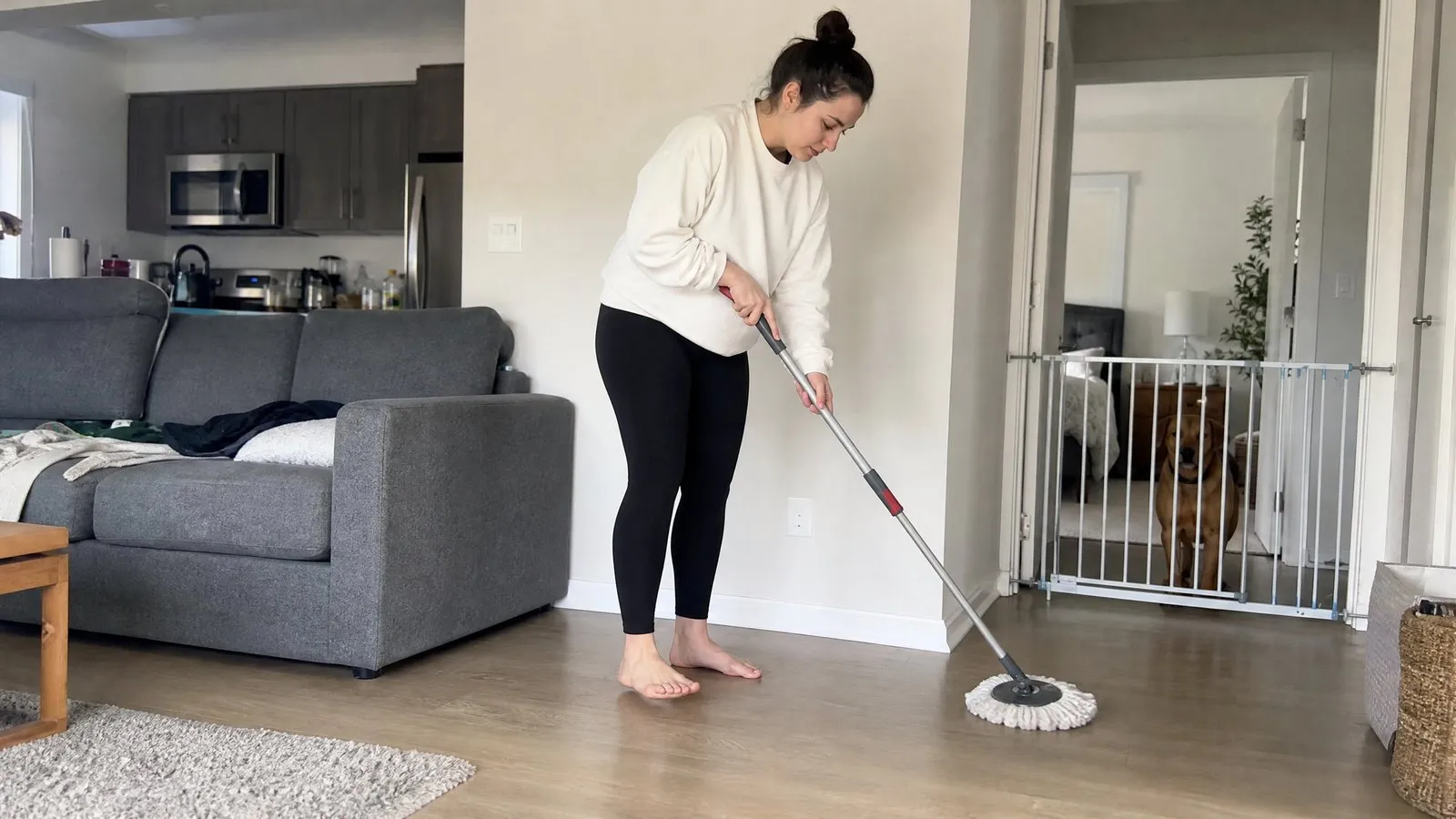
- Clean when pets are elsewhere. Shut them in another room, use a baby gate, or clean while they’re napping or outside.
- Let surfaces dry fully before letting pets back. Most cleaners are far less of a problem once dry.
- Rinse anything a pet licks or walks on — floors, food bowls, crate trays, low windowsills.
If you build cleaning into a routine, this gets easy. Our weekly cleaning schedule and daily habits both work fine with pets as long as you keep them out of the room until it’s dry.
Keep pets out until surfaces dry
This is the single most protective step, and it costs nothing.
- Floors: Wait until completely dry — usually 10 to 20 minutes, longer in humid weather. Open a window or run a fan to speed it up.
- Counters and tables: Wipe off residue with a clean damp cloth after cleaning, especially where a cat might jump up.
- Bathrooms: Close the door while cleaning and until surfaces dry. Keep the toilet lid down if you use an in-tank or in-bowl product — dogs drink from toilets.
- Freshly disinfected areas: Disinfectants need to stay wet for a set “contact time” to work, then should be left to dry or rinsed. Keep pets out for the whole time.
A simple cue: if it’s shiny-wet, pets stay out.
Ingredients to be careful with
You don’t need to fear your cleaning cupboard. But a few ingredients deserve real caution around animals.
Essential oils — especially around cats
This is the one many pet owners don’t expect. Cats lack a liver enzyme that helps process certain compounds in essential oils, so oils that seem “natural” can be genuinely toxic to them. Tea tree (melaleuca) oil is a well-known offender, and others including eucalyptus, citrus, peppermint, pine, cinnamon, and wintergreen can cause problems too.
Routes of exposure include licking oil off fur or surfaces, walking through it, and in some cases inhaling it from active diffusers. The ASPCA Animal Poison Control Center and the Pet Poison Helpline both warn about essential oils for cats.
Practical takeaways:
- Avoid cleaning products and DIY sprays that rely on essential oils if you have cats.
- Don’t run an essential oil diffuser in a room a cat can’t leave, and don’t apply undiluted oils anywhere a pet could contact them.
- Dogs are generally more tolerant than cats, but concentrated oils can still irritate or harm them — treat them with caution too.
Phenols and “phenolic” disinfectants
Phenol-based cleaners are especially risky for cats. You’ll often spot them because the solution turns milky-white when added to water. Products described as strong “disinfectant” cleaners with a medicinal smell sometimes fall into this category — check the label for ingredient names ending in “-phenol” or terms like “phenolic.”
If you keep cats, it’s simplest to choose a different type of disinfectant and avoid phenols entirely.
Concentrated bleach
Diluted bleach is a common, effective disinfectant, but concentrated bleach is corrosive and the fumes are strong. Pets can be harmed by lapping up a spill, walking through it, or breathing fumes in a closed room.
If you use bleach:
- Dilute it properly following the label (typical disinfecting dilutions are quite weak).
- Ventilate well and keep pets out of the room.
- Rinse hard floors with clean water afterward and let them dry before pets return.
- Never mix bleach with ammonia, acids, or vinegar — the resulting gases are dangerous to you and your pets. See cleaning products you should never mix.
Other things to watch
- Toilet bowl cleaners and in-tank tablets: keep lids down.
- Oven and drain cleaners: highly caustic; use with pets out of the kitchen and store locked away. Our guide on cleaning an oven without harsh fumes covers gentler methods.
- “Pine” and “pine-scented” cleaners: some contain compounds that irritate cats.
- Ammonia: strong fumes, and the smell can actually attract some pets to urinate in the spot.
A quick product guide
| Product type | Pet risk | How to use it more safely |
|---|---|---|
| Diluted bleach (properly mixed) | Fumes, residue if not rinsed | Ventilate, keep pets out, rinse floors, dry fully |
| Concentrated bleach | High — corrosive, strong fumes | Dilute per label; store locked up |
| Phenolic disinfectants | High for cats | Avoid if you have cats; choose another disinfectant |
| Essential oil sprays/diffusers | High for cats, caution for dogs | Avoid around cats; don’t diffuse in closed rooms |
| Ammonia-based cleaners | Fumes; may attract re-marking | Ventilate, keep pets out, rinse |
| Dish soap + water | Low | Good general-purpose cleaner for many surfaces |
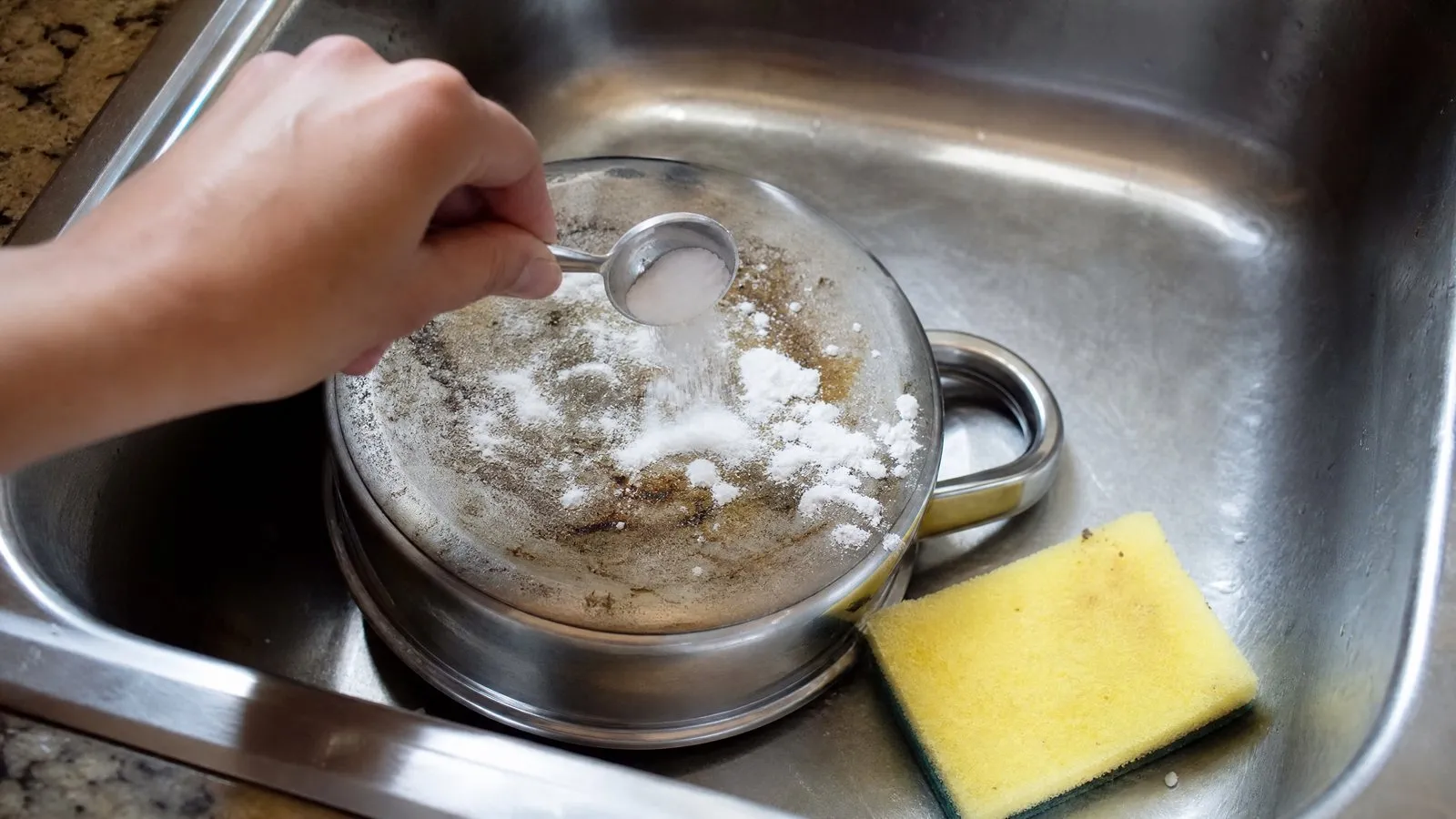
| Baking soda | Low | Safe for scrubbing and deodorizing |
| Plain white vinegar (diluted) | Low (smell aside) | Fine on many surfaces; not all — see cautions below |
| Enzyme cleaners | Low | Best choice for pet accidents |
Many everyday jobs are fine with dish soap and water, or baking soda. Diluted vinegar is low-risk for pets, but it damages some surfaces like stone and can dull certain floor finishes, so check before using it broadly.
Rinsing floors matters more with pets
Floors are where pets spend their lives — they walk, lie, and lick there, and then groom their paws. Residue that would be harmless on a wall can end up inside your pet from the floor.
A simple approach:
- Clean the floor with your usual product.
- Go over it a second time with a cloth or mop and clean water to pick up residue.
- Let it dry fully before pets return.
For wood floors, keep water to a minimum and dry as you go — see how to clean hardwood floors without damaging them. On most sealed floors, plain warm water or a drop of dish soap in water does a solid everyday job and leaves little residue to worry about.
Enzyme cleaners for accidents
For pet urine, vomit, and feces, an enzyme cleaner is the right tool. Enzymes break down the organic matter and the odor-causing compounds, which matters because if a pet can still smell a previous accident, it’s more likely to go there again. Regular cleaners and masking sprays often leave that scent behind.
How to use one on urine:
- Blot first. Press clean paper towels or a cloth to soak up as much liquid as possible. Don’t scrub — that spreads it.
- Apply the enzyme cleaner generously. Soak the area so it reaches as deep as the urine did, including into carpet padding.
- Leave it to work. Follow the label time — often 10 minutes to several hours. Enzymes need contact time.
- Don’t mix with other cleaners. Residue from bleach, ammonia, or vinegar can interfere with the enzymes. Clean the spot with the enzyme product alone.
- Let it air-dry, then blot any excess.
Avoid ammonia-based cleaners on pet accidents specifically — the smell resembles urine and can encourage repeat marking. For fabric and carpet stains generally, our stain reference and the guide to cleaning a mattress can help with set-in marks.
Store cleaning products securely
Chewed bottles and lapped-up spills send a lot of pets to the vet. Treat cleaning supplies the way you’d treat them around a toddler — because a curious dog is very similar.
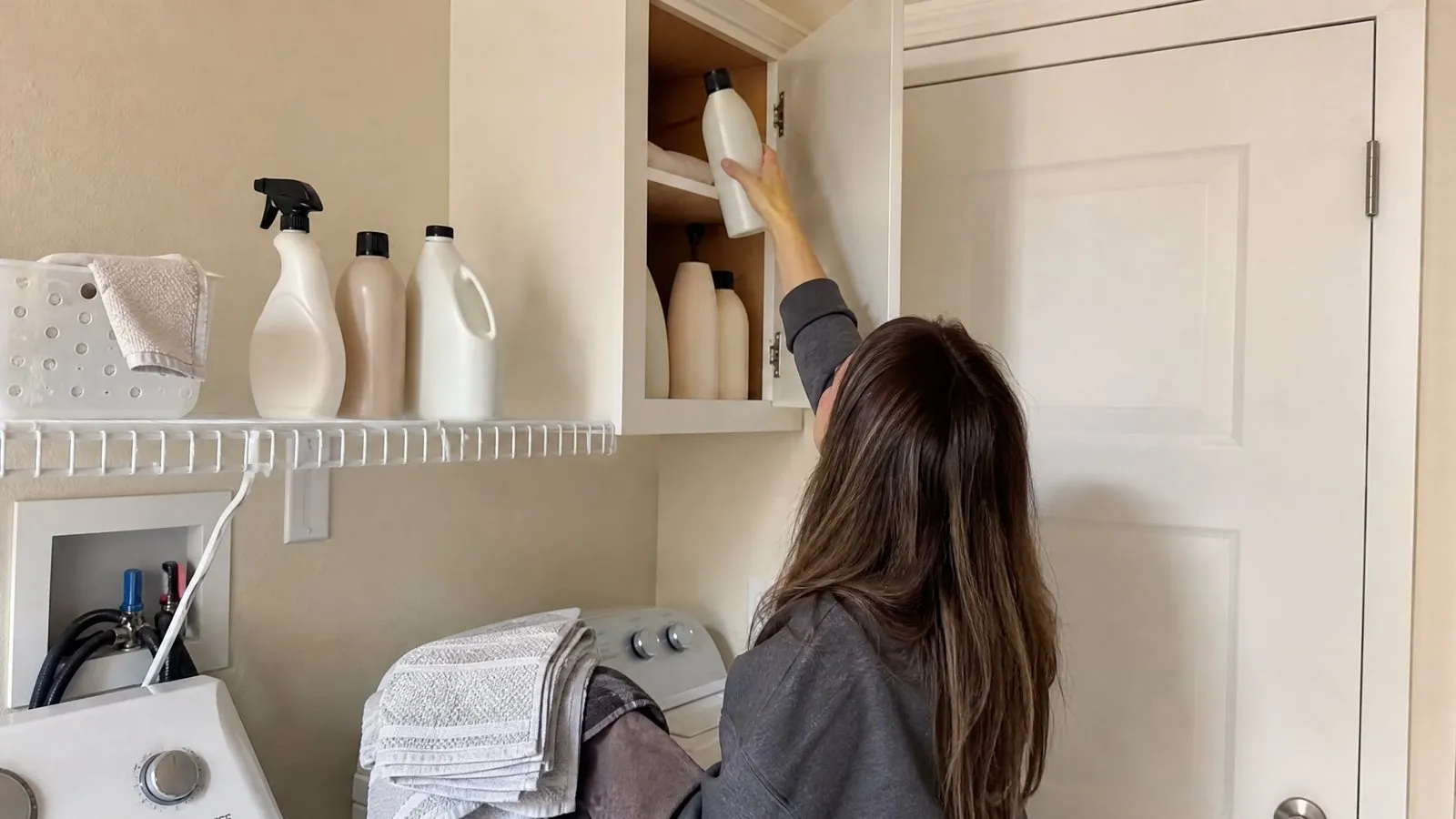
- Up high or behind a latched door. A base cabinet with a childproof latch, or a shelf a cat can’t reach, is ideal.
- Keep lids tight and bottles upright. Many pet poisonings are spills, not deliberate chewing.
- Don’t decant into cups, bowls, or unlabeled bottles. Pets (and people) can mistake them for water.
- Store in original containers so the ingredients and first-aid instructions stay with the product.
- Buckets of cleaning water: empty them right away. Pets drink from them.
- Dishwasher and laundry pods are a specific hazard — their bright coating attracts pets. Keep them closed and out of reach, and wipe up detergent drips.
Our guides on storing cleaning supplies safely with young children and a lean starter kit of supplies both help you keep less around and lock up what you keep.
If your pet is exposed: what to do
Act calmly and quickly. Minor residue is usually not an emergency, but ingestion, strong fumes, or skin and eye contact can be serious.
Immediate steps:
- Remove your pet from the area and stop further exposure.
- If it’s on fur or skin, keep your pet from licking it. For non-caustic products, you can wipe or rinse the area with lukewarm water. For a known corrosive (bleach, oven or drain cleaner), rinse gently and call for advice right away.
- If it’s in the eyes, rinse gently with lukewarm water or saline.
- Do not make your pet vomit unless a vet or poison line tells you to — with corrosive products, vomiting causes more damage.
- Keep the product container so you can read the ingredients to the vet.
Call for help if your pet swallowed a cleaner, got a corrosive product on skin or in eyes, was in a closed room with strong fumes, or shows any of these signs:
- Drooling, pawing at the mouth, or refusing food
- Vomiting or diarrhea
- Unsteadiness, tremors, or seizures
- Difficulty breathing, coughing, or wheezing
- Redness, burns, or swelling around the mouth, eyes, or skin
- Unusual lethargy or hiding (cats especially)
Who to call:
- Your veterinarian, or the nearest emergency vet after hours.
- An animal poison control service. In the US, the ASPCA Animal Poison Control Center and the Pet Poison Helpline are both available 24/7 (a consultation fee usually applies). In the UK, Animal PoisonLine is a dedicated service, and your vet can also contact the Veterinary Poisons Information Service. In Canada and Australia, call your vet or local emergency animal hospital.
When in doubt, call. These services would rather advise early than treat a crisis later, and a quick phone consult can save a stressful, expensive emergency visit.
FAQ
Are “natural” or “green” cleaners automatically safe for pets?
No. Natural doesn’t mean non-toxic to animals — essential oils are a clear example, and several are dangerous to cats. Read the ingredients, keep pets off wet surfaces, and rinse floors regardless of how a product is marketed.
Is diluted vinegar safe to use around cats and dogs?
Generally yes, diluted white vinegar is low-risk for pets apart from the smell, which fades as it dries. The bigger issue is surfaces: vinegar can damage stone, grout, and some floor finishes. Avoid using it on pet accidents, though, since it can leave a scent that encourages repeat marking.
How long should I keep my pet off a floor after mopping?
Until it’s fully dry — usually about 10 to 20 minutes, longer in humid conditions. Opening a window or running a fan speeds it up. For extra caution with licked surfaces, go over the floor once with plain water first.
Why does my dog keep peeing in the same spot even after I clean it?
Most likely the odor is still there even if you can’t smell it. Regular and ammonia-based cleaners leave scent markers behind. Use an enzyme cleaner, apply it generously so it reaches as deep as the urine soaked, and give it the full contact time on the label.
What’s the safest all-purpose option if I have both a cat and a dog?
For everyday messes, warm water with a little dish soap handles most surfaces and leaves minimal residue. Keep baking soda for scrubbing and an enzyme cleaner for accidents. When you need to disinfect, use properly diluted bleach with pets out of the room and rinse floors afterward — and skip phenolic and essential-oil products entirely because of the cat.
A note on health information: Always read and follow the label on any cleaning product, ventilate the room, and never mix products unless the label says it is safe. Test any method on a hidden spot first. If someone swallows a cleaning product or has trouble breathing after exposure, call Poison Control or emergency services right away.