How to Clean an Oven Without Harsh Fumes
Clean your oven without harsh fumes using a simple baking soda paste. Step-by-step method, rack soaking, self-clean safety tips, and glass door care.
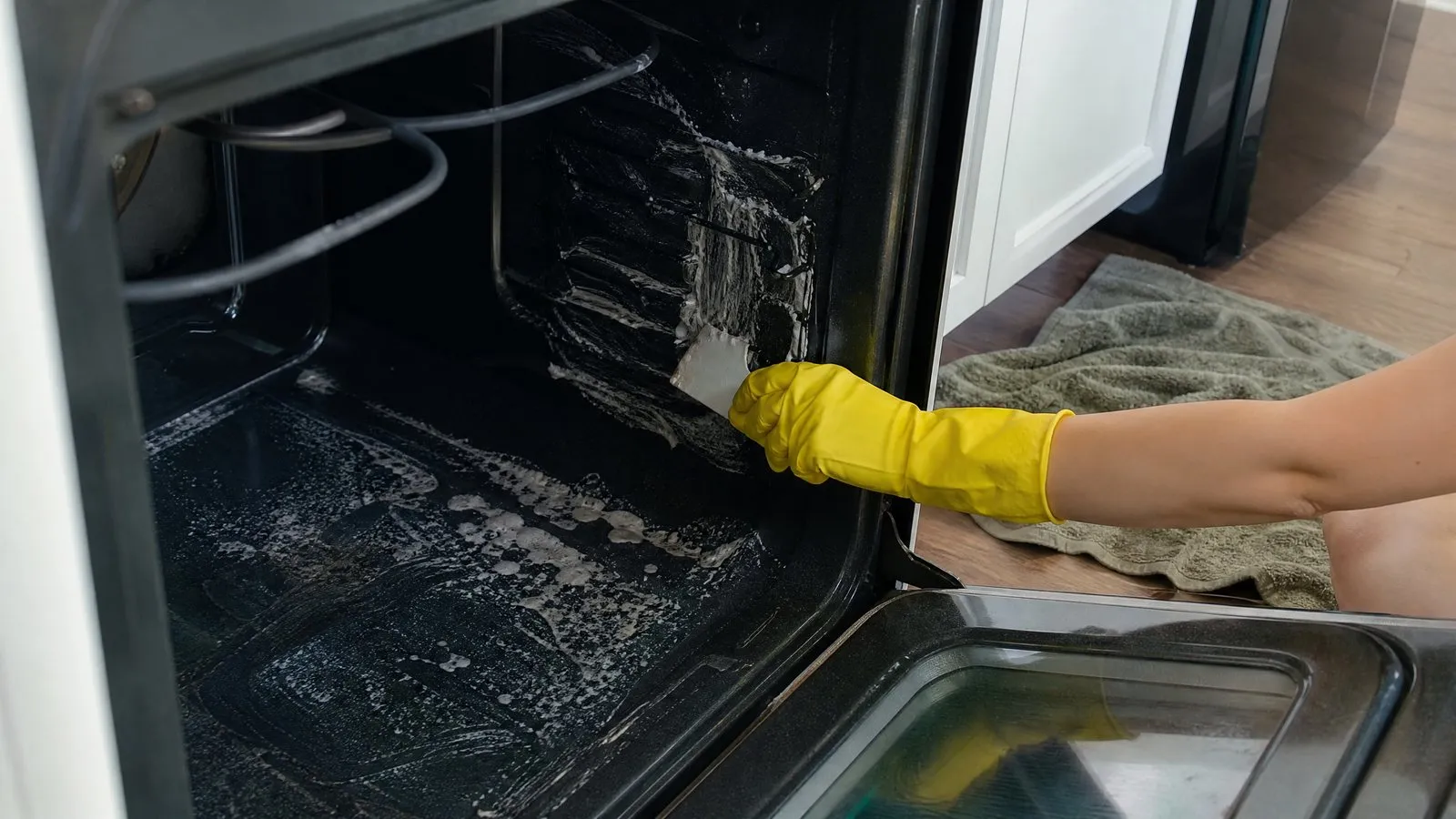
The easiest low-fume way to clean an oven is a baking soda paste: coat the inside, leave it a few hours or overnight, then wipe it out with a damp cloth. It skips the fumes of aerosol oven cleaners, costs almost nothing, and works on baked-on grease with mostly elbow grease and patience. Below is the full method, plus how to handle racks, the glass door, and the self-clean cycle safely.
Why skip harsh oven cleaners
Most spray-on oven cleaners contain strong alkalis like sodium hydroxide (lye). They work fast, but the fumes can irritate your eyes, nose, and lungs — a real concern in small apartments with poor airflow. They also need careful rinsing and gloves.
Baking soda (sodium bicarbonate) is a mild alkali. It’s slower, but it lifts grease and burnt residue without the harsh smell, and it’s safe to handle with basic gloves. For most everyday oven grime, it’s all you need.
A quick safety note before you start: never mix cleaning products while you work. If baking soda doesn’t shift something, don’t reach for a chlorine bleach spray or ammonia on top of it. See Cleaning Products You Should Never Mix (and Why) if you’re unsure what’s safe together.
What you’ll need
- Baking soda (about half a cup to a cup)
- Water
- A spray bottle with plain water, or a little white vinegar
- Rubber gloves
- A plastic or silicone spatula or scraper (not metal, which scratches)
- A few old cloths or sponges
- Old towels or newspaper for the floor
Total hands-on time is about 20–30 minutes, spread across a wait of several hours. Plan to start it in the evening and finish in the morning, or start after breakfast and finish by dinner.
The baking soda paste method, step by step
1. Empty and prep (5 minutes)
Take out the racks and anything stored inside. Set the racks aside — you’ll clean them separately. Lay an old towel on the floor in front of the oven to catch drips.
Scrape out any loose crumbs or burnt bits with your spatula or a dry cloth. The less loose debris, the cleaner your paste will work.
2. Mix the paste (2 minutes)
In a small bowl, stir baking soda with a little water until you get a spreadable paste, roughly the texture of toothpaste or frosting. Start with half a cup of baking soda and add water a spoonful at a time. You want it thick enough to cling to vertical surfaces.
3. Spread it inside (5–10 minutes)
Put on your gloves. Spread the paste over the inside of the oven — the back, sides, floor, and the inside of the door. Focus on the greasy, browned areas. Avoid the heating elements (the metal bars or coils) and any exposed fan, light, or vent openings. The paste will turn brownish as it starts to work on the grease; that’s normal.
A thin, even layer is plenty. You don’t need to cake it on.
4. Wait (at least 4 hours, ideally overnight)
Close the oven and leave the paste to do its work. Overnight — around 12 hours — gives the best results on heavy buildup. For light grime, 4 to 6 hours is fine.
5. Wipe it out (10–15 minutes)
Dampen a cloth and wipe away the dried paste. For stubborn spots, lightly mist with plain water (or a little white vinegar in water) to loosen the residue, then wipe again. A plastic scraper helps lift anything baked hard onto the floor of the oven.
You’ll likely need to rinse your cloth many times. Keep wiping until no powdery residue or grease streaks remain, then do one final pass with a clean, water-only cloth so nothing is left behind to smoke the next time you bake.
6. Dry and reassemble (5 minutes)
Wipe the inside dry, put the racks back once they’re clean (see below), and you’re done.
If any faint baking soda haze smokes slightly the first time you heat the oven, that’s leftover residue burning off — run the oven empty at a moderate temperature for 15–20 minutes with the window open, and it will clear.
Cleaning oven racks in the bathtub or sink
Oven racks are often the grimiest part, and they’re awkward to scrub in place. Soaking does most of the work.
- Protect the surface. Line your bathtub or a large sink with an old towel. This stops the metal racks from scratching the enamel or acrylic.
- Add hot water and dish soap. Lay the racks on the towel and run enough hot water to cover them. Add a good squirt of dish soap. For extra lift, sprinkle in a handful of baking soda.
- Soak. Leave them for a few hours or overnight — the same timing as the paste works well.
- Scrub. Use a sponge, an old dish brush, or a nylon scouring pad. Most of the softened grime wipes away. For stuck-on spots, make a thicker baking soda paste and scrub directly.
- Rinse and dry. Rinse well, dry with a cloth so they don’t rust, and drain the tub. Wipe the tub afterward so you don’t leave a greasy ring.
No bathtub? A deep kitchen sink works, and so does a plastic storage tub on the floor. If nothing fits, lay the racks on old towels on the floor, cover with wet soapy cloths, and re-wet them every hour or two.
Baking soda is one of the most versatile things in a cleaning kit — see Baking Soda Cleaning: 12 Uses That Actually Work for more ways to use the box you just opened.
Cleaning the glass door
The inside of the oven door often has its own baked-on film. The same paste handles it.
- Spread a thin layer of baking soda paste on the inside glass.
- Leave it 20–30 minutes (you can do this while the main oven paste is still working).
- Wipe with a damp cloth. For a clear finish, follow with a little white vinegar in water and buff dry with a lint-free cloth.
For the outside glass, plain glass cleaner or a vinegar-and-water mix works. Spray the cloth rather than the oven so liquid doesn’t seep into the controls or the gap between panes.
If grime is trapped between the glass panes, that’s not a surface clean — it means the door needs partial disassembly, which varies by model. Check your manual, and if you’re not confident, leave it. It’s cosmetic, not a safety problem.
About the self-clean cycle
Many ovens have a self-clean cycle that heats the interior to very high temperatures to burn residue down to ash you can wipe away. It’s effective, but it isn’t fume-free, so treat it with care.
The high heat releases smoke and fumes from burning food residue. The main things to know:
- Ventilate well. Open windows and run the kitchen exhaust fan or range hood before and during the cycle. Keep the kitchen as airy as possible.
- Move pets — especially birds. Birds have very sensitive respiratory systems and can be harmed by fumes from overheated cookware and self-clean cycles. Keep birds well away, ideally in another room with its own ventilation or out of the home during the cycle. Cats and dogs should also be kept out of the kitchen while it runs and until the air clears.
- Wipe out loose debris first. Scrape out crumbs and spills before you start. Less residue means less smoke.
- Remove the racks unless your manual says otherwise. Many manufacturers say the high heat can discolor racks or damage their coating. Check first.
- Don’t leave it unattended and don’t run it right before you’re hosting or cooking — the oven stays locked and very hot for a while, and the kitchen needs time to air out.
- Follow your manual. Cycle length, whether racks stay in, and lock behavior all vary by brand and model. The manufacturer’s instructions override any general advice.
If anyone in your home has asthma or another respiratory condition, the baking soda method is the gentler choice.
Steam clean, if your oven has it
Some ovens offer a shorter steam-clean or “steam assist” option: you pour water into a tray or the oven floor, run a low-heat cycle, and the steam loosens light grime so you can wipe it off. It produces far less smell than a full self-clean and works well for routine, lighter cleaning. As always, follow the amounts and steps in your manual.
Preventing future mess
A little prevention keeps you from ever needing a deep clean. These habits take seconds:
- Catch spills with a tray. Put a baking sheet on the rack below anything bubbly, like a pie or casserole. It catches drips before they bake onto the oven floor.
- Wipe while warm. After the oven cools to just warm (not hot), a quick wipe of fresh spills stops them from carbonizing. Warm grease wipes off in seconds; burnt-on grease takes hours.
- Don’t line the oven floor with foil. It can block airflow, trap heat, and damage the finish on some models. Use a drip tray on a rack instead.
- Do a 5-minute monthly check. Wipe the door glass and the oven floor once a month and you may never need the full overnight treatment.
Folding small jobs like this into a routine is easier than facing a crusted oven twice a year. A simple weekly cleaning schedule can slot the oven in as a monthly task, and the kitchen as a whole is covered in How to Clean a Kitchen Properly (Daily and Weekly). If you’re tackling the whole place at once, add it to your deep cleaning checklist.
When to call a professional
Call an appliance technician or your landlord if you notice:
- A gas smell (leave the area and contact your gas provider or emergency services first)
- Sparking, a burning electrical smell, or exposed or damaged heating elements
- A self-clean cycle that won’t unlock or shut off
- Cracked door glass
These are safety and repair issues, not cleaning jobs, and forcing them yourself can make things worse.
FAQ
How long should I leave baking soda paste in the oven?
At least 4 hours for light grime, and overnight (around 12 hours) for heavy, baked-on buildup. Longer gives the paste more time to break down grease, so you scrub less.
Can I use vinegar and baking soda together on the oven?
You can use them in sequence, not mixed in a jar. Let the baking soda paste sit and do its work first, then spritz a little vinegar-and-water afterward to help lift the residue and leave a cleaner finish. Mixing them in a container just fizzes and loses its cleaning power. See Cleaning with Vinegar: Where It Works and Where It Damages for more.
Is the self-clean cycle safe for pets?
The high heat can release fumes that are especially dangerous to pet birds, which have very sensitive airways. Move birds out of the home or to a separate, well-ventilated room, keep cats and dogs out of the kitchen, open windows, and run your exhaust fan. The low-fume baking soda method avoids this entirely.
Will baking soda damage my oven?
No — baking soda is a mild abrasive and a gentle alkali, safe for standard oven interiors and glass. Just avoid scrubbing heating elements, fans, and vents, and use a plastic or silicone scraper rather than metal so you don’t scratch the surface.
How do I get rid of the smell after cleaning?
Wipe the inside a final time with a water-only cloth to remove any residue, then run the empty oven at a moderate temperature for 15–20 minutes with a window open. Any leftover haze will burn off and clear quickly.