How to Clean Hardwood Floors Without Damaging Them
Clean hardwood floors safely: dry first, damp-mop with the right cleaner, skip steam and excess water, and protect finishes with felt pads and mats.
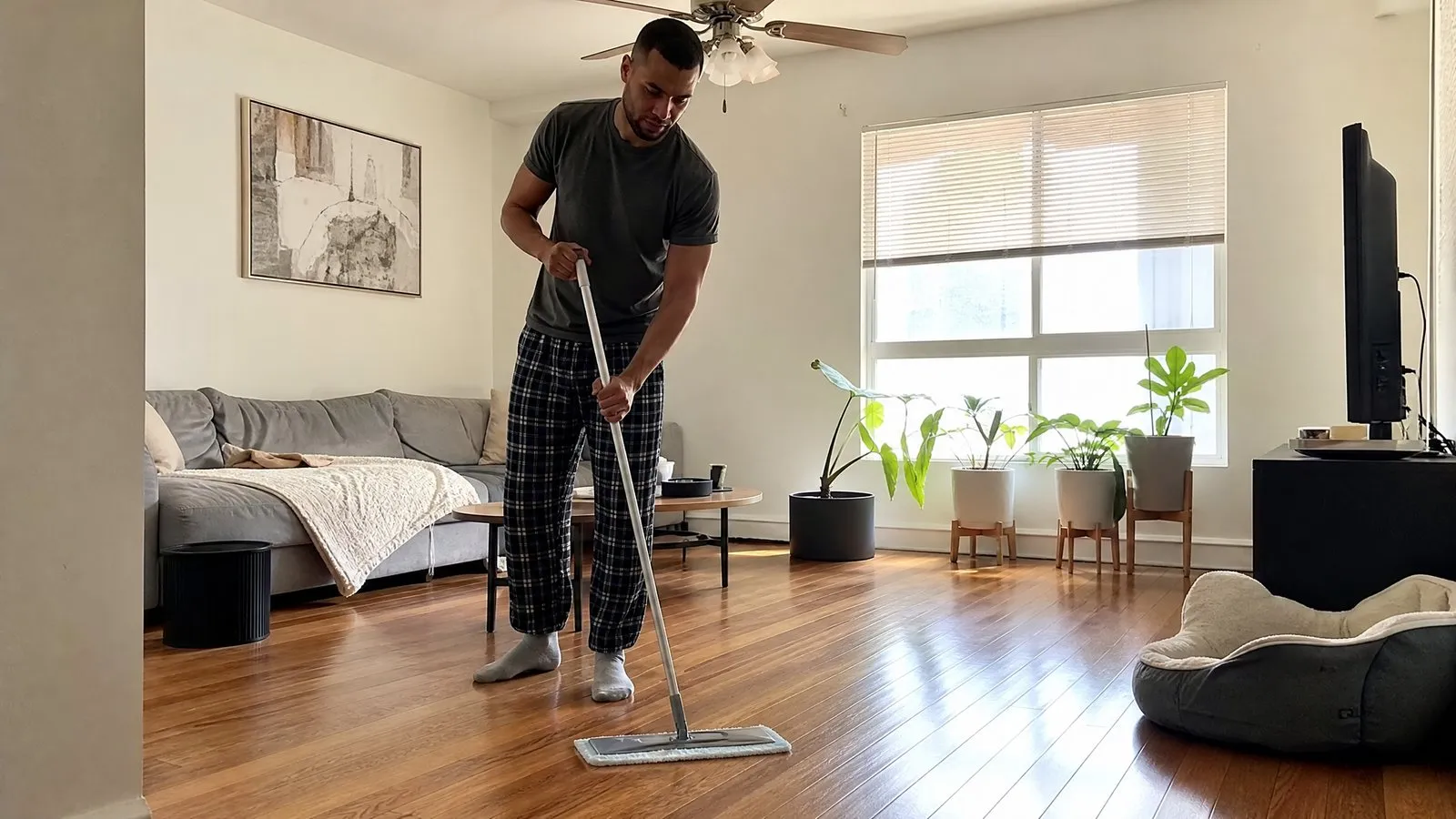
The safest way to clean hardwood floors is to dry-clean first, then damp-mop with a cleaner your floor’s finish maker approves. Never flood the floor with water, and keep steam mops off most wood finishes. That’s the whole routine in one sentence — the rest is detail that protects a floor you can’t easily replace.
Hardwood is forgiving about dirt but unforgiving about water. Most damage people cause isn’t from the wrong cleaner once — it’s from mopping too wet, too often, with whatever’s under the sink. Get the water and the cleaner right, and your floors will look good for years.
Know your finish before you clean
Almost all modern hardwood floors have a surface finish — usually polyurethane — sitting on top of the wood. When you clean, you’re really cleaning that finish, not the wood itself. That’s good news: a sealed finish resists everyday spills and handles a damp mop fine.
A smaller number of older or specialty floors have a penetrating oil or wax finish. These soak into the wood and need different care — usually no water-based cleaners at all, and periodic re-oiling or waxing instead.
Quick test: put a few drops of water on a hidden spot. If it beads up and sits there, you likely have a sealed surface finish. If it soaks in or leaves a dark mark within a few minutes, you probably have an oil or wax finish — stop and check the maker’s instructions before using any liquid.
If you rent, assume a sealed finish but mop extra-cautiously, and don’t use anything that could strip or dull it — you don’t want to argue about the floor at move-out.
Step 1: Dry-clean first (2–5 minutes)
Grit is the real enemy. Tiny bits of sand and dirt act like sandpaper underfoot and scratch the finish over time. Removing them first also means your mop spreads clean water, not muddy slurry.
Do this before any wet cleaning:
- Sweep with a soft-bristle broom, or
- Dust-mop with a dry microfiber flat mop, or
- Vacuum using the hard-floor setting — the one that retracts the beater bar/brush roll.
Important: don’t vacuum hardwood with the beater bar spinning. That rotating brush is made for carpet and can scuff or dent a wood finish. If your vacuum has no hard-floor mode, use a flat microfiber mop instead.
Pay attention to edges, corners, and under furniture where grit collects. For a fast once-over, a dry microfiber pad grabs hair and dust better than a broom and doesn’t send it airborne.
Step 2: Damp-mop — damp, not wet (5–10 minutes)
The single most important rule: damp, not wet. Your mop pad should feel barely moist, like a wrung-out cloth. You should never see standing water, puddles, or streaks that take more than a few seconds to dry.
Water is what warps boards, lifts edges, and dulls finishes. It seeps into the seams between boards where the finish is thinnest and swells the wood underneath.
How to do it:
- Dry-clean first (Step 1) — don’t skip this.
- Mix your cleaner per its label, or use a ready-to-use hardwood spray.
- Use a flat microfiber mop. Spray a light mist on the floor (or lightly dampen the pad), not a soaking pour.
- Mop in the direction of the wood grain, working in sections.
- Wring hard if you’re using a bucket — the pad should be damp, not dripping.
- Wipe up any spot that still looks wet. The floor should air-dry in a minute or two.
A spray-and-microfiber method beats a sopping string mop for wood every time, because you control exactly how much liquid touches the floor. If you only buy one tool for hard floors, make it a flat mop with washable microfiber pads.
Rinse or swap your pad when it looks dirty. A grimy pad just smears. Wash microfiber pads in the laundry (no fabric softener — it ruins their grab).
What cleaner to use
Your best guide is whoever made your floor or its finish. Most flooring and finish manufacturers recommend either a cleaner made specifically for sealed wood floors, or plain water for light cleaning. Products labeled as pH-neutral hardwood floor cleaners are designed to clean without stripping or clouding the finish.
The American Cleaning Institute’s general advice for wood floors lines up with this: clean with products intended for the surface, use minimal moisture, and dry promptly.
Good options for a sealed finish:
- A ready-to-use hardwood floor cleaner (spray or concentrate), used per the label.
- Plain warm water on a well-wrung microfiber pad for routine light cleaning.
- A few drops of dish soap in water for occasional sticky messes — then a plain-water pass, because soap residue builds up and dulls the shine.
What to avoid on wood:
| Avoid | Why |
|---|---|
| Steam mops | Heat + moisture forced into seams can lift, cloud, or damage many finishes |
| Oil soaps and “mop & shine” waxes | Leave residue that builds up, dulls the finish, and complicates future refinishing |
| Furniture spray / polish | Makes floors slippery and hazy |
| All-purpose sprays, ammonia, bleach | Can strip or discolor the finish |
| Abrasive powders or scouring pads | Scratch the finish |
| Lots of water / wet string mops | The number-one cause of warping and dull spots |
When in doubt, test any new cleaner on a hidden patch first — inside a closet doorway or under a couch — and wait a day.
The steam mop question
Skip the steam mop on hardwood. It’s a fair question because steam cleans well and uses no chemicals, but many hardwood and finish manufacturers specifically warn against it, and using one can void a floor’s warranty.
Steam does two things wood doesn’t like at once: it adds moisture and drives it in with heat and pressure. Over time that can cloud the finish, loosen board edges, or push moisture into seams where it causes swelling and gaps. The damage is often gradual, so it looks fine for a while — then it doesn’t.
If you love the no-chemical idea, a microfiber pad with plain warm water gives you most of that benefit with none of the risk.
The vinegar debate, settled
You’ll see vinegar recommended everywhere as a natural floor cleaner. On sealed hardwood, it’s best avoided or heavily diluted. Vinegar is acidic, and repeated use can gradually dull or etch some finishes. It won’t wreck your floor from one accidental use, but it’s not the gentle, finish-safe choice people assume.
There’s no real upside here: a pH-neutral hardwood cleaner or plain water does the job without the risk. If vinegar is your go-to for other surfaces, keep it for those. We go deeper on this in Cleaning with Vinegar: Where It Works and Where It Damages.
One more safety note that applies in every home: don’t mix cleaners together hoping for extra power. See Cleaning Products You Should Never Mix (and Why) before you combine anything.
Spills, sticky spots, and shoe marks
- Spills: wipe up immediately with a dry or barely damp cloth. The longer liquid sits, the more it finds the seams. Water, pet accidents, and anything acidic (juice, wine, coffee) all count.
- Sticky spots: lay a damp cloth over the spot for 30–60 seconds to soften it, then wipe. Don’t scrape with anything metal.
- Scuff marks from shoes: rub gently with a dry or barely damp microfiber cloth. For stubborn marks, a tiny dab of hardwood cleaner on the cloth usually lifts them.
- Pet accidents: blot fast, clean with a damp cloth, dry thoroughly. For odor on a sealed floor, a pet-safe enzyme cleaner used sparingly works — see Pet-Safe Cleaning: What to Use Around Cats and Dogs.
Resist the urge to “scrub.” Pressure and abrasives do more harm than the mark itself.
Protect the floor so you clean it less
The best hardwood maintenance happens before dirt and scratches start. These small habits save you real work.
Felt pads under furniture. Stick felt pads on the feet of chairs, tables, sofas, and anything that gets moved or sat in. They prevent the fine scratches that dull a floor fastest. Check them every few months — grit gets embedded in worn pads and turns them into sandpaper, so replace them when they’re flat or dirty.
Doormats at every entry. A mat outside and a washable mat inside each door catches the grit and moisture before it reaches the wood. Most tracked-in dirt comes from the first few steps indoors. This one change cuts how often you need to mop.
A no-shoes habit (if it suits your household). Shoes carry grit, salt, and moisture. Even a casual “shoes off near the door” norm makes a visible difference, and it’s free.
Area rugs in high-traffic lanes — hallways, in front of the sink, by the couch. Use a rug pad that’s safe for wood floors (some rubber-backed mats can trap moisture or discolor finishes), and lift rugs occasionally to let the floor breathe.
Lift, don’t drag. Moving a chair or box across the floor is the classic way to gouge it. Lift furniture or slide it on felt pads or a towel.
Trim pet nails. Long claws scratch finishes, especially on softer woods.
Manage sunlight and humidity. Strong direct sun fades wood over time — blinds or sheers help. Big swings in indoor humidity make boards expand and contract, which causes gaps and squeaks; keeping humidity reasonably steady helps the floor stay put.
A realistic cleaning schedule
You don’t need to mop daily. Match effort to traffic:
| Task | How often | Time |
|---|---|---|
| Dry-clean (sweep/dust-mop/vacuum) high-traffic areas | 2–3x per week | 2–5 min |
| Dry-clean the whole floor | Weekly | 5–10 min |
| Damp-mop high-traffic areas | Weekly | 5 min |
| Damp-mop whole floor | Every 1–2 weeks | 10 min |
| Wipe spills | Immediately | seconds |
| Check/replace felt pads | Every few months | 5 min |
Busy homes with kids or pets lean toward the more frequent end; quiet homes can stretch it out. The dry-cleaning matters more than the mopping — it’s the grit that does the slow damage.
If you want to fold this into a bigger routine, see A Weekly Cleaning Schedule That Takes 20 Minutes a Day or build your own with our Weekly Cleaning Plan tool. For a lighter-touch approach, 10 Daily Habits That Keep a Home Clean Without Cleaning Days covers the mat-and-shoes habits that keep floors cleaner by default.
When to call a professional
Call a flooring pro if you see cupping or warping (boards curling at the edges or bowing up), widespread dulling or cloudiness that cleaning won’t fix, finish that’s wearing through to bare wood, or deep scratches and gouges in traffic areas. These usually mean the floor needs a screen-and-recoat or full refinishing — a job worth doing properly rather than masking with products that make future refinishing harder.
If you’re renting and notice damage, tell your landlord early rather than trying to patch it yourself.
FAQ
Can I use a steam mop on sealed hardwood?
It’s not recommended. Many hardwood and finish manufacturers warn against steam mops because the heat and forced moisture can cloud the finish, loosen board edges, and cause swelling in the seams over time — and it can void your warranty. A microfiber pad with plain warm water is the safe alternative.
Is vinegar safe for hardwood floors?
It’s best avoided on sealed finishes. Vinegar is acidic and repeated use can gradually dull or etch the finish. One accidental use won’t ruin a floor, but there’s no advantage over a pH-neutral hardwood cleaner or plain water, which clean just as well without the risk.
How often should I mop hardwood floors?
Damp-mop high-traffic areas about once a week and the whole floor every one to two weeks. Dry-clean (sweep, dust-mop, or vacuum on the hard-floor setting) more often, since removing grit prevents scratches. Always wipe spills right away.
What’s the best cleaner for hardwood floors?
A cleaner made specifically for sealed wood floors, labeled pH-neutral, or just plain warm water on a well-wrung microfiber pad for light cleaning. Follow the recommendation from your floor or finish maker, and avoid oil soaps, wax polishes, ammonia, and all-purpose sprays.
How do I get rid of scratches on hardwood?
Light surface scratches in the finish can sometimes be minimized with a wood-floor cleaner and buffing, or a matching touch-up product. Deep scratches that reach the wood usually need professional screening and recoating. Prevent new ones with felt pads, doormats, and by lifting furniture instead of dragging it.