Cleaning Products You Should Never Mix (and Why)
Learn which cleaning products are dangerous to mix, why they react, and exactly what to do if you're exposed to bleach, ammonia or chlorine fumes.
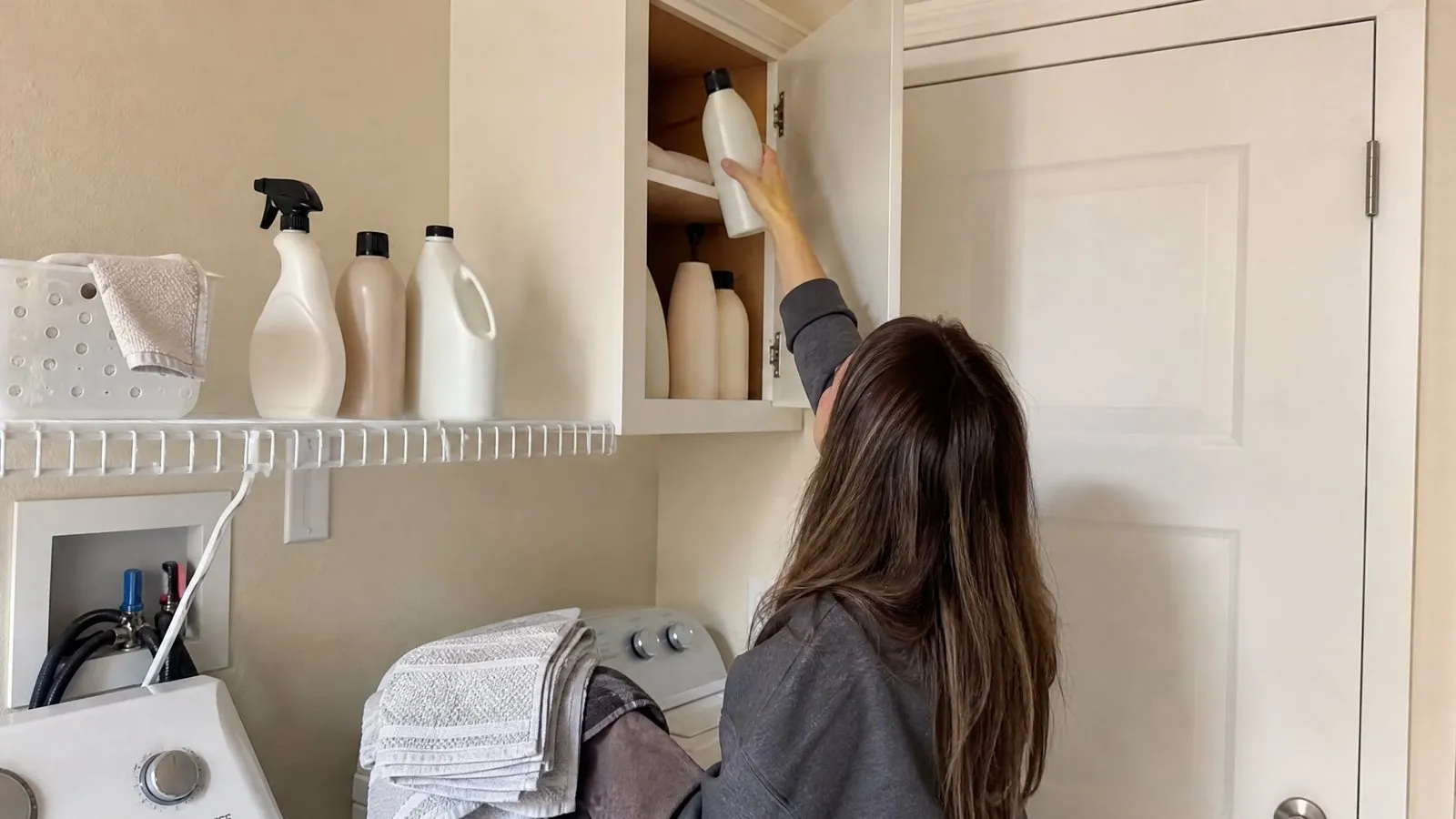
The short version: never mix bleach with ammonia, with acids like vinegar or many toilet cleaners, or with rubbing alcohol. Don’t combine different drain cleaners, and don’t store hydrogen peroxide and vinegar together in the same bottle. These combinations can release toxic gases or cause dangerous reactions, sometimes within seconds.
Most cleaning accidents at home aren’t from one scary chemical. They happen when two ordinary products meet — in a bucket, in a toilet bowl, or on a surface that wasn’t rinsed between steps. The good news is that the rules are simple, and once you know them you can clean confidently.
Here’s what to avoid, why it matters, and exactly what to do if something goes wrong.
The combinations to never mix
| Mix this… | …with this | What it makes | Why it’s dangerous |
|---|---|---|---|
| Bleach | Ammonia (and some glass cleaners, some multi-surface sprays) | Chloramine gas/vapors | Irritates eyes, nose, throat and lungs; can cause coughing, shortness of breath, chest pain |
| Bleach | Acids: vinegar, lemon, some toilet bowl cleaners, some descalers, rust removers | Chlorine gas | Highly toxic; burns airways and eyes even at low levels |
| Bleach | Rubbing alcohol (isopropyl alcohol) | Chloroform and other chlorinated compounds | Toxic fumes; irritates the respiratory system |
| Drain cleaner | A different drain cleaner | Unpredictable reaction, heat, gas | Can bubble, splash, or release fumes; may crack pipes |
| Hydrogen peroxide | Vinegar (in the same sealed container) | Peracetic acid | Corrosive; irritates skin, eyes and lungs, especially concentrated or enclosed |
The common thread is bleach. Chlorine bleach (sodium hypochlorite) reacts with a lot of everyday things. When in doubt, keep bleach on its own and rinse thoroughly before and after you use it.
Why each mix is dangerous
Bleach + ammonia = chloramine gas
Ammonia shows up in more products than people expect — some glass cleaners, some multi-surface sprays, and certain floor cleaners. Pet urine is also high in ammonia, which matters if you’re pouring bleach into a litter area or over a urine spot.
When bleach meets ammonia, it releases chloramine vapors. Breathing them in can cause watery eyes, a runny nose, coughing, chest tightness and nausea. In a small, closed bathroom or laundry room, symptoms come on fast.
Bleach + acids = chlorine gas
This is the one that lands people in the ER most often. Many toilet bowl cleaners, limescale and rust removers, and descaling products are acidic. Vinegar is acidic too. Mix any of them with bleach and you get chlorine gas — the same chemical used as a weapon in World War I.
A classic mistake: pouring bleach into a toilet that still has acidic cleaner in it, or trying to “boost” a cleaner by adding vinegar and bleach together. Don’t. If you want to know where vinegar helps and where it doesn’t, see our guide to cleaning with vinegar.
Bleach + rubbing alcohol
Combining bleach with isopropyl alcohol can produce chloroform and other chlorinated compounds. These fumes irritate your lungs and can make you lightheaded. Since both products are common in cleaning and first-aid kits, keep them separate and never use them on the same surface without rinsing in between.
Different drain cleaners
Chemical drain cleaners are strong — often highly alkaline (lye-based) or highly acidic. If one doesn’t work and you pour in a different product, you can trigger a violent reaction that generates heat and gas inside the pipe or bottle. It can bubble back up, splash, or build pressure. Use one product, follow its label, and if it fails, stop and call a plumber rather than layering on another chemical.
Hydrogen peroxide + vinegar in the same container
Using hydrogen peroxide on a surface and then vinegar separately (rinsing between) is a different situation than combining them. The real hazard is mixing and storing them together in one bottle, where they form peracetic acid. In concentration, it’s corrosive to skin, eyes and lungs. If you like both, keep them in separate labeled bottles and never decant them into one.
The general rule: one product at a time
You don’t need to memorize every chemical. Follow a few habits and you’re covered:
- Use one cleaner, finish the task, then move on. Don’t layer products hoping for a stronger result. Stronger isn’t how cleaning works — the right product and a little dwell time is.
- Rinse surfaces with water between different products. Residue left behind can react with the next thing you spray. This is especially important in toilets, tubs and sinks.
- Never combine products in a bucket or spray bottle to make your own blend, unless a recipe comes from a trusted source and you understand what’s in it.
- Read labels for the words “bleach,” “sodium hypochlorite,” “ammonia,” “acid,” and warnings like “do not mix with other products.” The American Cleaning Institute and product labels both flag these clearly.
- Ventilate. Open a window or run an exhaust fan whenever you clean, even with a single product.
If you want a simple kit that avoids risky overlaps in the first place, our starter supplies checklist keeps it to a handful of safe basics.
Watch out for hidden ingredients
The tricky part is that you can mix dangerous combinations without ever touching a bleach jug. Hidden sources include:
- “Disinfecting” sprays and wipes — many contain bleach or quaternary ammonium compounds.
- Toilet bowl cleaners — often acidic; some are bleach-based. Two different toilet cleaners can conflict.
- Mold and mildew sprays — frequently bleach-based.
- Glass cleaners — some contain ammonia.
- Pet messes — urine is ammonia-rich.
So “I just used two cleaners in the same toilet” can accidentally be a bleach-plus-acid mix. When you switch products, flush or rinse first. For a safe bathroom routine, see how to clean a bathroom top to bottom in 30 minutes, and for mold specifically, how to get rid of mold and mildew in the shower.
What to do after accidental exposure
If you mix something by mistake and smell a sharp, irritating odor, or your eyes, nose or throat start burning, act quickly and calmly.
- Leave the area immediately. Take everyone — including pets — with you. Don’t stay to clean up the spill.
- Get fresh air. Go outside or to a well-ventilated room. If you can do it safely and quickly on your way out, open a window or door.
- Don’t try to “neutralize” the mix by adding another product. That can make it worse.
- Call Poison Control. In the US, call America’s Poison Centers at 1-800-222-1222 — it’s free, confidential, and staffed 24/7. In the UK, call 111. In Canada, call your provincial poison center. In Australia, call the Poisons Information Centre at 13 11 26.
- Rinse exposed skin or eyes with lots of running water for several minutes if the product touched you.
Call 911 (or your local emergency number) right away if someone has trouble breathing, is choking, has chest pain, collapses, or won’t wake up. Don’t wait to see if it passes.
Once the air has cleared and symptoms are gone, ventilate the space fully before you return to finish cleaning — and only with a single product this time.
Safer cleaning habits going forward
A few small changes prevent almost all mixing accidents:
- Keep bleach by itself and treat it as the product that doesn’t play well with others.
- Label any bottles you fill yourself, especially if you decant. Unlabeled bottles are how peroxide-and-vinegar storage accidents happen. If you have young kids, our guide to storing cleaning supplies safely covers this in detail.
- Clean in a sensible order so you’re not switching products on the same surface. A routine like our 20-minute daily schedule or the 1-hour speed clean naturally keeps tasks separated.
- Match the product to the job. You rarely need bleach for routine cleaning — plain soap, water, and a basic all-purpose cleaner handle most of a home. Save disinfectants for when they’re needed and use them correctly; our guide on cleaning vs disinfecting explains the difference.
- Store products upright, lids tight, out of reach of children and pets. For pet households, see pet-safe cleaning.
You don’t have to be a chemist to clean safely. Use one product at a time, rinse between them, keep bleach separate, and ventilate. That’s the whole system.
FAQ
Is it safe to mix bleach and water?
Yes. Diluting bleach with plain water is standard and safe — it’s how many disinfecting solutions are made. The danger is mixing bleach with other cleaning products, not with water. Always follow the dilution ratio on the label, use cool water, and ventilate the room.
Can I use vinegar and baking soda together safely?
Yes, that combination is harmless — it just fizzes and releases carbon dioxide, which is why it’s popular for drains and freshening. It’s not nearly as powerful as people hope, but it won’t hurt you. The danger is vinegar with bleach, or storing vinegar mixed with hydrogen peroxide. See cleaning with baking soda for what actually works.
How long should I wait between using two different cleaners on the same surface?
Rinse the surface with water first, rather than relying on time. A quick rinse removes residue so the next product can’t react with it. If you can’t rinse (for example, a large floor), make sure the first product has fully dried and the room is well ventilated before applying another.
What should I do if I already breathed in fumes but feel fine now?
Leave the area, get fresh air, and keep the space ventilated. If you feel completely normal after a short exposure, you’re likely okay, but it’s still worth calling Poison Control at 1-800-222-1222 (US) for advice. Watch for a cough, chest tightness or breathing trouble over the next few hours, and seek medical care if symptoms appear.
Are “natural” or plant-based cleaners safe to mix?
Not automatically. “Natural” products can still contain acids (like citric acid or vinegar) or other reactive ingredients. Treat them with the same caution: use one at a time, rinse between products, and never combine anything with bleach.
A note on health information: Always read and follow the label on any cleaning product, ventilate the room, and never mix products unless the label says it is safe. Test any method on a hidden spot first. If someone swallows a cleaning product or has trouble breathing after exposure, call Poison Control or emergency services right away.