Baking Soda Cleaning: 12 Uses That Actually Work
Baking soda actually works for scrubbing sinks, ovens, and pans and for killing odors. Here are 12 real uses, plus what it won't do and where to avoid it.
Baking soda is a cheap, mild abrasive that deodorizes and lifts baked-on grime. It genuinely shines at scrubbing sinks and tubs, loosening oven gunk, freshening carpets and fridges, and scouring pots and pans. It will not disinfect, and it can scratch a few delicate surfaces. Here’s exactly where it works, how to use it, and where to skip it.
One box (sodium bicarbonate) costs little and lasts for months. If you’re building a simple kit, baking soda earns its spot alongside dish soap and vinegar — see The Only Cleaning Supplies You Really Need.
First, what baking soda actually does
Baking soda helps in three ways:
- Gentle abrasion. The fine crystals scrub away grime without scratching most hard surfaces.
- Deodorizing. It neutralizes many acidic and oily odor compounds rather than just masking them.
- Mild alkalinity. It’s slightly basic, which helps cut grease and food residue.
What it does not do: kill germs. Baking soda is not a disinfectant. If you need to disinfect — after raw meat, illness, or around someone immunocompromised — use an EPA-registered disinfectant and follow the label’s contact time. See Cleaning vs Disinfecting for the difference.
12 uses that actually work
1. Gentle scrub for sinks and tubs
This is baking soda at its best. It cuts soap scum and light stains without the scratches you’d risk from a harsh powder.
- Rinse the surface so it’s damp.
- Sprinkle a thin, even layer of baking soda.
- Scrub with a damp sponge or soft cloth in small circles (1–2 minutes).
- Rinse well.
For a stainless steel sink, scrub with the grain, not against it. Works on enamel, acrylic, porcelain, and most tubs.
2. Oven paste for baked-on grease
Baking soda is the core of the no-fumes oven method. It’s slow but effective and skips the harsh chemicals.
- Mix about 1/2 cup baking soda with a few tablespoons of water into a spreadable paste.
- Spread it over the oven floor and walls, avoiding the heating elements and any fan opening.
- Leave it overnight (or at least a few hours).
- Wipe with a damp cloth. Stubborn spots: spray a little vinegar to fizz and loosen, then wipe again.
- Rinse until no residue remains.
Full walkthrough: How to Clean an Oven Without Harsh Fumes.
3. Deodorizing carpets and rugs
Baking soda pulls out musty and pet smells. Expect odor reduction, not stain removal.
- Sprinkle a light, even layer over the dry carpet.
- Leave 15 minutes for everyday smells, or a few hours for stronger odors.
- Vacuum thoroughly.
Use sparingly on thick or wool rugs — too much fine powder can be hard to vacuum out fully. For mattresses, the same trick works; see How to Clean a Mattress.
4. Freshening the fridge
An open box of baking soda absorbs food odors in the fridge. Set a small open container on a back shelf and replace it every 1–3 months. For a spill or lingering smell, wipe shelves with a baking soda and water solution, then dry.
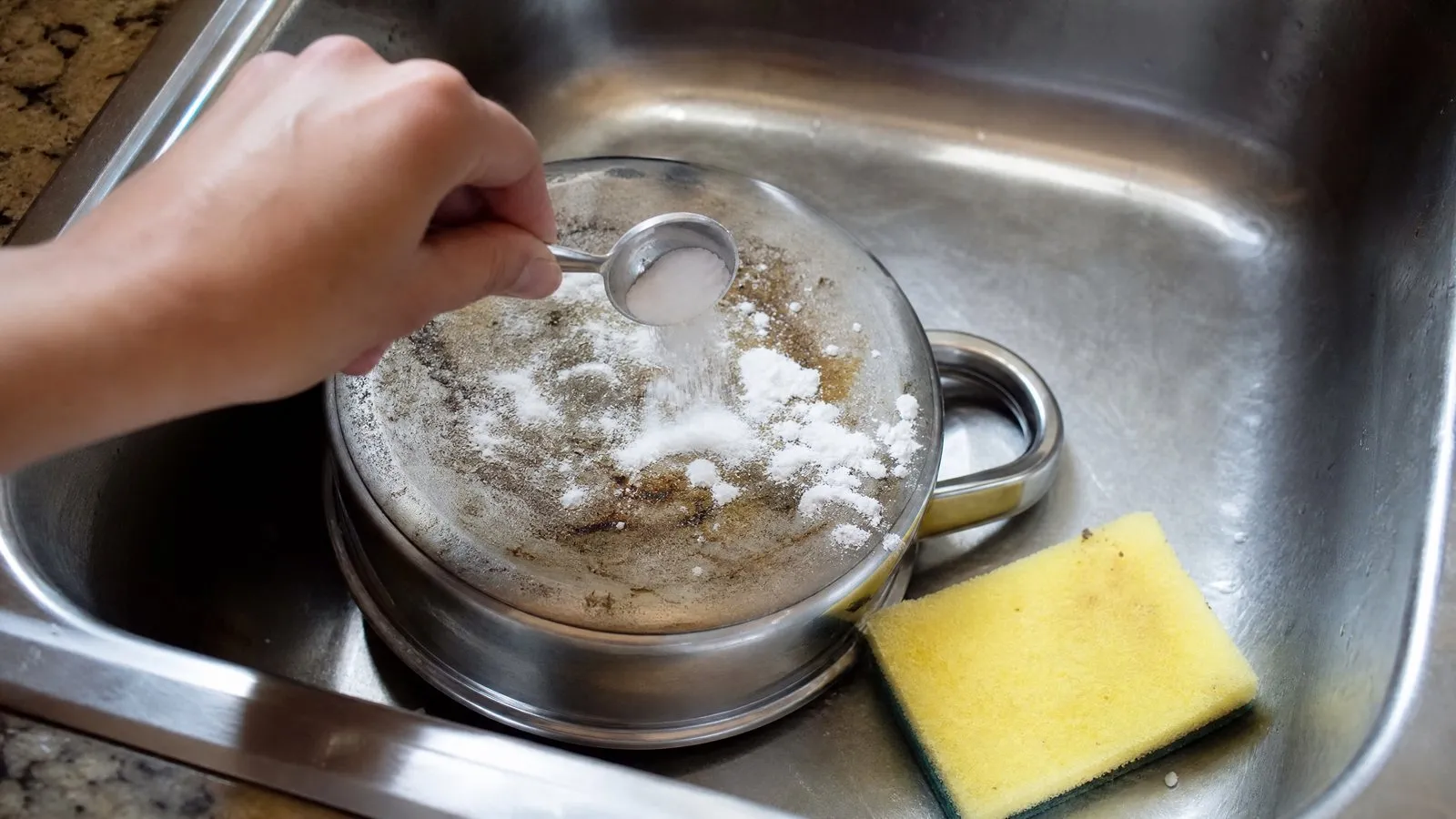
5. Scouring pots and pans
For burnt-on food, baking soda loosens the mess so you scrub less.
- Sprinkle baking soda over the dry or damp pan.
- Add a splash of water to make a paste.
- Let it sit 15–30 minutes, then scrub.
For truly stuck-on food, add water to cover the bottom, stir in 2–3 tablespoons baking soda, and simmer for 10 minutes before scrubbing. Great on stainless steel and enamel. Skip the next section’s warning for aluminum and nonstick.
6. Grout paste
Baking soda brightens dingy grout lines with a little elbow grease.
- Make a thick paste with water.
- Apply to grout with an old toothbrush.
- Scrub along the lines, let sit 10 minutes, then rinse.
This cleans surface grime and lightens stains. It will not remove black mold embedded in grout or silicone — for that, read How to Get Rid of Mold and Mildew in the Shower.
7. Drains (with realistic expectations)
The classic baking soda and vinegar “volcano” is more fizz than muscle. It can freshen a smelly drain and help with very minor slow flow, but it won’t clear a real clog.
For odor and light maintenance:
- Pour about 1/2 cup baking soda down the drain.
- Follow with 1/2 cup white vinegar.
- Let it fizz 10 minutes.
- Flush with a kettle of hot (not boiling, if you have plastic or PVC pipes) water.
For an actual blockage, use a drain snake, a plunger, or call a plumber. Chemical drain cleaners are a last resort — and never combine them with anything else.
8. Deodorizing trash cans and bins
Sprinkle a tablespoon or two in the bottom of an empty, dry trash can or diaper pail. Refresh when you change the liner. It absorbs odors between cleanings.
9. Freshening shoes and gym bags
Sprinkle a teaspoon of baking soda inside each shoe, leave overnight, and tap it out in the morning. For delicate or suede interiors, use a small breathable pouch instead of loose powder.
10. Cleaning the inside of a microwave or cooler
A baking soda paste scrubs dried splatters inside a microwave without scratching. For a musty cooler or lunch box, wipe with a baking soda solution, rinse, and air-dry open. This works because it lifts odor and residue, not just grease.
11. Boosting laundry and tackling odors
Adding 1/2 cup baking soda to a wash can help with odor and soften water slightly, so detergent works a bit better. It’s not a stain remover on its own, but it’s a safe helper for smelly towels or gym clothes. See How to Wash Towels So They Stay Soft and Fresh.
12. Deodorizing and cleaning food containers
Plastic containers that hold onto garlic or tomato smells respond well to a baking soda scrub. Make a paste, rub the inside, let sit 15 minutes, then wash normally.
A quick reference table
| Job | How much | Dwell time | Rinse? |
|---|---|---|---|
| Sink/tub scrub | Thin layer | Scrub 1–2 min | Yes |
| Oven paste | ~1/2 cup + water | Overnight | Yes |
| Carpet deodorize | Light layer | 15 min–few hrs | Vacuum |
| Fridge | Open box | 1–3 months | No |
| Pots/pans | 2–3 tbsp | 15–30 min | Yes |
| Grout | Thick paste | 10 min | Yes |
| Drain freshen | 1/2 cup + vinegar | 10 min | Flush hot water |
| Laundry boost | 1/2 cup | Full cycle | Cycle rinses |
What baking soda won’t do
Set your expectations here so you don’t waste effort:
- It won’t disinfect. No meaningful kill claim against bacteria and viruses. Use a registered disinfectant when it matters.
- It won’t clear real clogs. The vinegar reaction is gentle.
- It won’t remove set-in or deep mold. It cleans surface grime, not roots in grout or silicone.
- It won’t lift tough stains alone. For specific stains, check How to Remove Common Stains.
- It won’t shine or polish glass and mirrors — the grit can leave a film.
Surfaces to avoid scratching or damaging
Baking soda is mild, but it’s still an abrasive. Skip it or test first on:
- Nonstick cookware — it can wear down the coating.
- Aluminum — baking soda can discolor or dull bare aluminum (it reacts with the metal).
- Soft natural stone like marble, granite, and marble-look surfaces — use a stone-safe cleaner instead; abrasives and anything acidic can etch it.
- Glossy or clear-coated finishes, fiberglass, and acrylic in poor condition — test a hidden spot first and rub lightly.
- Antique or lacquered wood — stick to a damp cloth.
- Gold-plated or delicate fixtures — the grit can scratch thin plating.
Also: don’t make a big deal of mixing baking soda and vinegar in a sealed container — it releases gas and pressure. It’s fine in an open drain, but never store the mixture. For other risky combinations, read Cleaning Products You Should Never Mix.
Safety notes
Baking soda is low-hazard and widely considered pet-friendly in normal cleaning amounts, which makes it handy if you have cats or dogs — see Pet-Safe Cleaning. Still, keep large amounts from being eaten by pets or kids, and store supplies out of reach as covered in How to Store Cleaning Supplies Safely with Young Children. If someone swallows a large amount or has a reaction, contact America’s Poison Centers (or your local poison service) or a doctor.
How to work it into your routine
You don’t need a special “baking soda day.” Fold these into what you already do:
- Keep a small shaker of baking soda by the kitchen and bathroom sinks for a 30-second scrub.
- Refresh the fridge box when you take out the trash on bin day.
- Add the carpet sprinkle to your weekly vacuum.
For a plan that ties it together, see A Weekly Cleaning Schedule That Takes 20 Minutes a Day or build your own with the Weekly Cleaning Plan tool.
FAQ
Is baking soda the same as baking powder?
No. Baking soda is pure sodium bicarbonate and is what you want for cleaning. Baking powder contains baking soda plus acids and starch, so it’s less effective and more expensive for cleaning jobs.
Can I mix baking soda and vinegar to clean better?
They mostly cancel each other out into water, salt, and gas, so the fizz is weak as a cleaner. It’s useful for loosening oven residue or freshening a drain, but for most jobs use them separately. Never seal the mixture in a closed bottle.
Does baking soda kill germs or mold?
No. It cleans and deodorizes surfaces but isn’t a disinfectant and won’t kill mold at the root. Use an EPA-registered disinfectant for germs, and address moisture and mold directly.
Will baking soda damage my stainless steel sink or pans?
Used as a light, damp scrub it’s safe on stainless steel — just rub along the grain and rinse well. Avoid it on nonstick coatings and bare aluminum, where it can wear or discolor the surface.
How long can I keep a box of baking soda for cleaning?
Indefinitely for cleaning purposes — it doesn’t really “go bad.” A fridge box loses its odor-absorbing punch after a few months, so swap that one out, but any older box is still fine for scrubbing.
A note on health information: Always read and follow the label on any cleaning product, ventilate the room, and never mix products unless the label says it is safe. Test any method on a hidden spot first. If someone swallows a cleaning product or has trouble breathing after exposure, call Poison Control or emergency services right away.