How to Remove Common Stains: A Quick Reference
A quick-reference guide to removing coffee, red wine, grease, blood, grass, ink, sweat and makeup stains—first steps, what to use, and what to avoid.
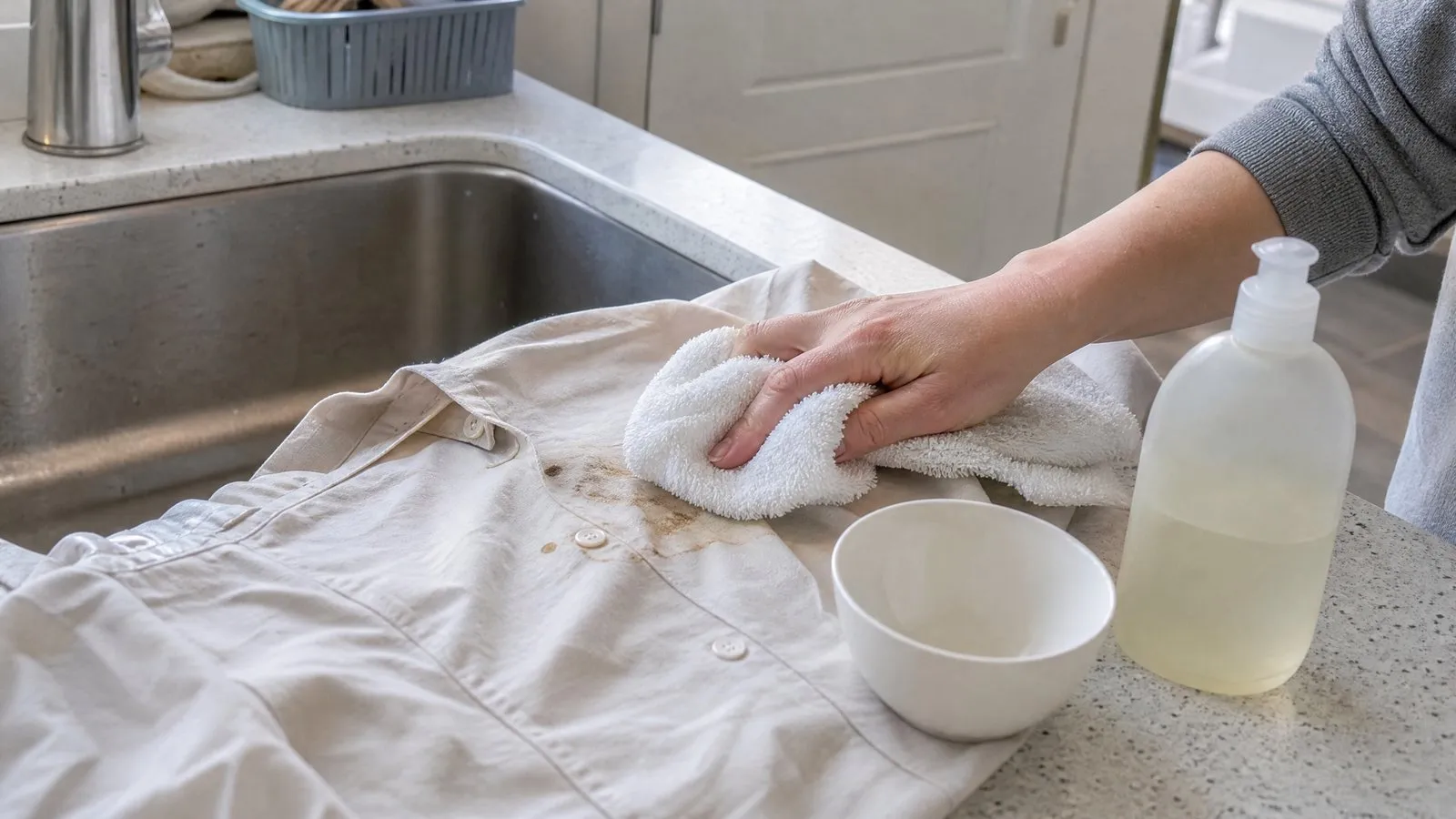
Most stains come out if you act fast and follow two rules: blot, don’t rub, and keep protein stains (blood, sweat, egg) in cold water. Heat and scrubbing are what turn a fresh spill into a permanent mark. Below is a quick-reference table, plus the details that make each method actually work.
Before you treat anything, two 30-second checks save a lot of grief.
Before you start: two quick checks
Check the care label. The symbols tell you whether an item can handle water, heat, or bleach at all. “Dry clean only,” silk, wool, leather, and anything labeled “W” or “S” for upholstery needs a gentler approach—for those, blot the excess and take it to a professional rather than soaking it. If the symbols are a mystery, see how to read laundry care labels.
Test a hidden spot. Dab your chosen cleaner on an inside seam, hem, or a hidden corner of the fabric and wait a minute. You’re watching for color change or dye running. This matters most on colored fabric, upholstery, and carpet, where a “fix” can leave a worse mark than the stain.
The four rules that apply to almost every stain
- Act fast. Fresh stains lift far more easily than set ones. Even just blotting and rinsing in the first few minutes makes a big difference.
- Blot, don’t rub. Rubbing pushes the stain deeper into the fibers and can fray or fuzz the surface. Press a clean white cloth straight down and lift.
- Work from the outside in. Start at the edge of the stain and move toward the center so you don’t spread it.
- No heat until it’s gone. Hot water, the dryer, and the iron all “cook” stains into the fabric permanently. Air-dry and check the spot before anything hot touches it.
Quick-reference stain table
| Stain | First step | Use | Avoid |
|---|---|---|---|
| Coffee / tea | Blot excess, rinse from the back with cold water | Dish soap + cool water; a little white vinegar for tannin; oxygen bleach soak for stubborn marks | Hot water on milky coffee, rubbing |
| Red wine | Blot, don’t rub; rinse with cool water | Dish soap + cool water; oxygen bleach soak; club soda to dilute | Hot water, salt left on for hours, heat drying |
| Grease / oil | Scrape off solids; blot | Dish soap worked straight into the spot; cornstarch or baking soda to absorb first | Cold-only rinse (grease needs detergent), skipping the degreaser |
| Blood | Rinse in cold water immediately | Cold water, dish soap; hydrogen peroxide or enzyme cleaner for dried blood | Hot/warm water (sets it), bleach on colors |
| Grass | Blot; pre-treat the stain | Dish soap or enzyme detergent; oxygen bleach; dab of rubbing alcohol for dye | Hot water first, bar soap scrubbing |
| Ink (ballpoint) | Place cloth under stain to catch transfer | Dab rubbing alcohol or alcohol-based hand sanitizer; blot often | Soaking, rubbing (spreads it), gel/India ink needs a pro |
| Sweat / deodorant | Rinse the area; pre-treat | Oxygen bleach soak; enzyme detergent; baking soda paste on yellowing | Chlorine bleach (yellows it worse), hot drying |
| Makeup | Lift excess; blot | Dish soap for oily (foundation, lipstick); micellar water or alcohol for long-wear; shaving foam on carpet | Rubbing into the weave, hot water on oily makeup |
The rest of this guide explains each one so you know why it works and what to do if the first try doesn’t clear it.
Coffee and tea
Coffee and tea stain because of tannins, and milk or cream adds a greasy, protein component. Catch it fast and it usually lifts completely.
- Blot up the excess with a clean cloth.
- Rinse the back of the fabric under cool running water to push the stain out the way it came in.
- Mix a few drops of dish soap into a cup of cool water. Dab it on, wait 5 minutes, then blot.
- Still there? Add a teaspoon of white vinegar to the soapy water for the tannin, or soak the item in oxygen bleach (sodium percarbonate) and cool water for 1 to 4 hours.
- Air-dry and check before machine drying.
For carpet, do the same but blot rather than rinse, and press a dry cloth down afterward to pull up moisture.
Red wine
Red wine is a tannin stain too, so you don’t need the viral salt-and-white-wine tricks. Dilution and a gentle cleaner do the job.
- Blot gently—never rub—to lift as much liquid as you can.
- Pour or dab cool water or plain club soda on to dilute, then keep blotting.
- Apply a dish-soap-and-cool-water solution, wait a few minutes, and blot again.
- For a set or stubborn stain, soak washable fabric in oxygen bleach and cool water for an hour or more.
- Launder as normal and air-dry until you’ve confirmed it’s gone.
A dab of hydrogen peroxide mixed with a little dish soap works well on white and colorfast fabrics, but test it on a hidden spot first—it can lighten color.
Grease and cooking oil
Grease is the one stain where cold water alone won’t help; oil needs a detergent to break it down. You’ll find this one a lot if you cook—our kitchen cleaning guide covers keeping those splatters down in the first place.
- Scrape off any solids with the edge of a spoon.
- Sprinkle cornstarch, baking soda, or talc on the spot to absorb oil. Leave 10 to 15 minutes, then brush off.
- Work undiluted dish soap (a good grease-cutter) directly into the stain with your fingers.
- Let it sit 5 to 10 minutes, then rinse with warm water—grease is the exception where warm helps, as long as you’ve already treated it.
- Launder and air-dry. Repeat before drying if a shadow remains.
Old, set grease stains on clothing are the hardest to shift; a second treatment and a longer soak often clears what one pass misses.
Blood
Blood is a protein stain, so the single most important rule is cold water only. Heat cooks the protein into the fibers and locks it in.
- Rinse the fresh stain under cold running water from the back of the fabric.
- Rub a little dish soap or liquid detergent into the spot and keep rinsing cold.
- For dried or stubborn blood, dab on hydrogen peroxide (it will fizz) or soak in an enzyme-based cleaner, which digests protein. Test peroxide on colors first.
- Launder in cold water and air-dry.
Mattresses can’t be soaked—blot with cold water and a dab of soap, or use a peroxide paste, and let it air-dry. There’s a full method in how to clean a mattress.
Grass
Grass stains combine plant pigment (chlorophyll) and protein, so an enzyme detergent is your best friend. They’re common on kids’ knees—part of life if you’re keeping a home organized with kids.
- Blot or brush off loose dirt.
- Pre-treat with an enzyme laundry detergent or dish soap worked into the stain. Leave 10 to 15 minutes.
- For the green dye that’s left behind, dab a little rubbing alcohol on with a cloth, blotting as the color transfers.
- For whites and colorfast items, an oxygen bleach soak finishes the job.
- Launder and air-dry; repeat before the dryer if needed.
Ink
Ballpoint ink responds well to alcohol, which dissolves the dye. The trick is to catch the ink as it releases instead of spreading it.
- Place a clean white cloth or paper towel under the stain to absorb what comes through.
- Dab—don’t rub—rubbing alcohol or alcohol-based hand sanitizer onto the ink from the top.
- As ink transfers to the cloth beneath, move to a clean section so you’re not re-depositing it.
- Repeat until no more ink lifts, then rinse and launder.
Gel ink, India ink, and permanent marker are much harder and may not come out at all. For a valued item, blot the excess and ask a professional cleaner rather than risk spreading it.
Sweat and deodorant stains
Yellow underarm stains come from a reaction between sweat and aluminum in antiperspirant, often made worse by heat drying. They build up over time, so pre-treating before they set matters.
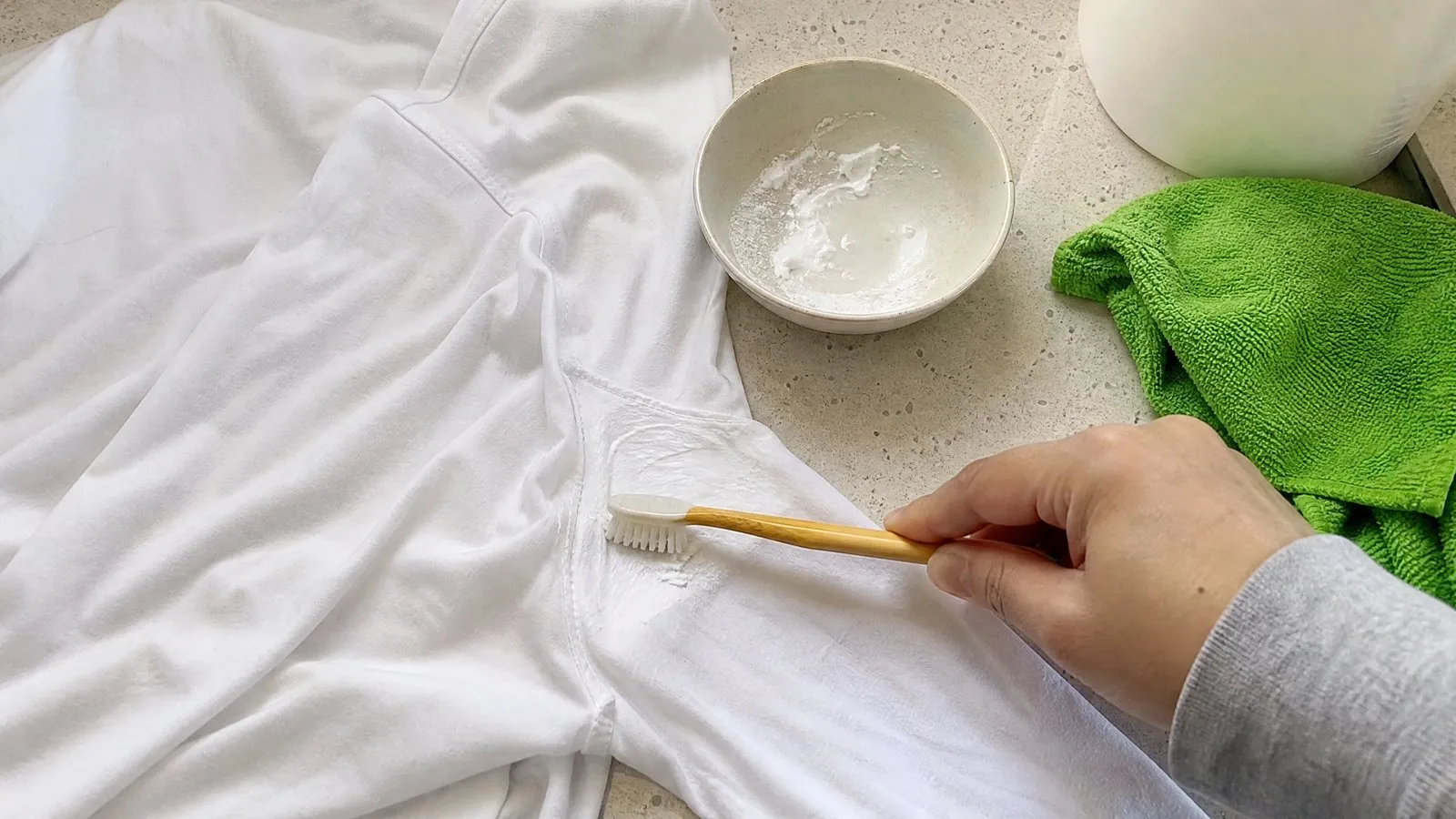
- Rinse the area, then pre-treat with an enzyme detergent or a baking soda paste (baking soda plus a little water) worked in and left 30 minutes.
- Soak the shirt in oxygen bleach and cool water for 1 to 4 hours—or overnight for old stains.
- Launder as normal and air-dry. The dryer bakes any remaining stain in.
Skip chlorine bleach on these—it reacts with the proteins and can turn the yellow darker. There’s a dedicated walkthrough in how to remove yellow sweat stains from shirts.
Makeup
Makeup splits into two types, and the right method depends on which you’re dealing with.
- Oily makeup (foundation, lipstick, cream blush): treat like grease. Work in a little dish soap, let it sit, then rinse and launder.
- Long-wear and liquid products: micellar water or a dab of rubbing alcohol on a cloth breaks down the pigment. Blot, don’t rub.
- On carpet or upholstery: shaving foam (plain, non-gel) dabbed on and blotted off lifts many makeup stains gently.
For lipstick especially, blot first with a dry cloth so you lift the waxy layer before any water touches it.
When to stop and call a professional
Take an item to a professional cleaner—don’t keep experimenting—when it’s labeled dry-clean-only, when it’s silk, wool, leather, suede, or vintage, when the dye runs during your hidden-spot test, or when the stain is ink, paint, or something you can’t identify on a fabric you care about. Keeping your basic cleaning kit stocked with dish soap, oxygen bleach, rubbing alcohol, and white cloths means you can handle most everyday spills the moment they happen—which is really the whole game. A quick daily habits routine helps you catch spills before they dry, too.
One safety note: never mix cleaning products while stain-fighting. Combining chlorine bleach with ammonia, vinegar, or other cleaners can create toxic gas. See cleaning products you should never mix before you reach for two bottles at once. If anyone swallows a cleaning product or gets it in their eyes, in the US you can contact America’s Poison Centers at 1-800-222-1222; other countries have their own poison lines.
FAQ
Why does cold water matter so much for blood?
Blood, sweat, egg, and other protein stains coagulate when heated—just like an egg in a hot pan. Hot water (and the dryer) permanently sets them into the fibers. Cold water keeps the proteins loose so detergent and enzymes can lift them out.
Can I use vinegar on any stain?
No. White vinegar helps with tannin stains like coffee, tea, and some sweat, but it’s acidic and can damage natural stone, hardwood finishes, and some dyes. Always test first, and never mix it with bleach. See cleaning with vinegar for where it helps and where it harms.
What if the stain has already been through the dryer?
It’s harder but not always hopeless. Re-wet the area and try a longer oxygen bleach soak (several hours to overnight for washable items), then launder and air-dry. Some set stains won’t fully clear—accept that it may only fade rather than vanish.
Is oxygen bleach safe for colored clothes?
Oxygen bleach (sodium percarbonate) is color-safe for most fabrics, unlike chlorine bleach, which strips color. Still test a hidden spot first and avoid it on wool, silk, and anything labeled no-bleach.
Should I treat a stain before or after checking the care label?
Check the label first—it only takes a few seconds and tells you whether the item can handle water, heat, or bleach at all. Treating a dry-clean-only or delicate fabric the wrong way can cause damage that’s harder to fix than the original stain.
A note on health information: Always read and follow the label on any cleaning product, ventilate the room, and never mix products unless the label says it is safe. Test any method on a hidden spot first. If someone swallows a cleaning product or has trouble breathing after exposure, call Poison Control or emergency services right away.