How to Remove Yellow Sweat Stains from Shirts
Remove yellow underarm stains with a dish soap and baking soda paste, enzyme detergent, and oxygen bleach for whites. Skip chlorine bleach, which makes them worse.
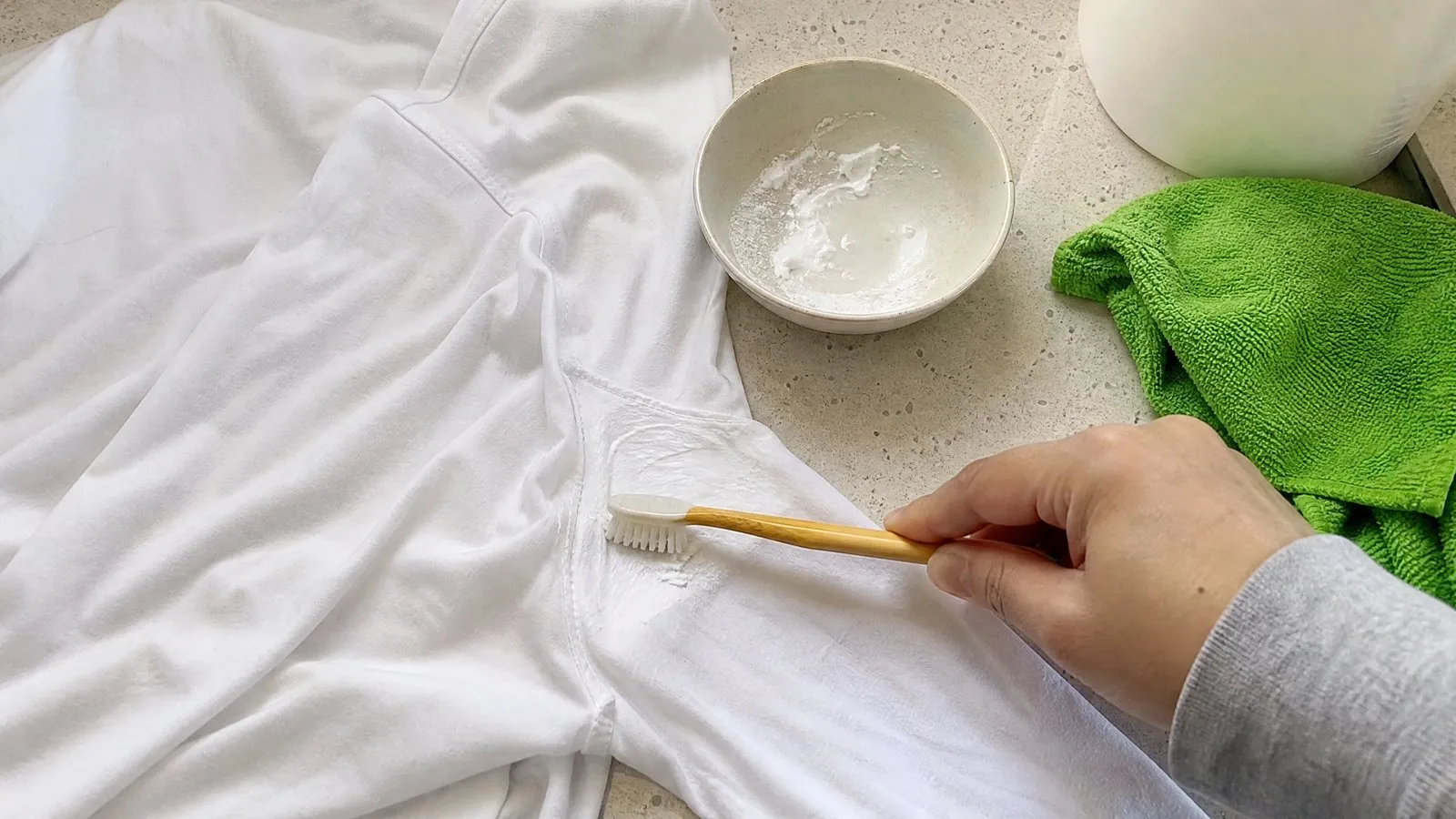
Yellow underarm stains lift best with a paste of dish soap and baking soda. Work it into the stain, let it sit 30 to 60 minutes, then wash in the warmest water the label allows using an enzyme detergent. For white cotton, soak in oxygen bleach (not chlorine bleach) before washing. The one rule to remember: never use chlorine bleach on these stains, because it reacts with the proteins in sweat and turns the yellow darker.
Here’s how to do it properly, why the stains happen, and how to stop them coming back.
Why underarm stains turn yellow
That stubborn yellow isn’t really dirt. It’s a buildup of two things mixing together on the fabric.
The first is sweat. Underarm sweat contains proteins, oils, and salts. On its own, dried sweat leaves a faint yellow or gray mark, especially on white shirts.
The second is your antiperspirant. Most antiperspirants contain aluminum compounds, which is how they stop you sweating. When that aluminum reacts with the proteins and salts in sweat, it creates a yellow, sometimes crusty, buildup that bonds tightly to fabric fibers. This is why the stain often feels slightly stiff and why it builds up over many wears rather than appearing all at once.
A few things make it worse:
- Heat. Hot dryers and ironing can “bake” a protein stain into the fabric, making it much harder to remove. Always treat the stain before any heat touches it.
- Time. The longer the buildup sits, the more it bonds. Fresh marks come out far more easily than months-old ones.
- Chlorine bleach. Counterintuitively, regular bleach reacts with the proteins and makes the yellow worse, not better.
Deodorant alone (which controls odor but not sweat) is less likely to cause heavy yellowing, but antiperspirant-deodorant combos are the usual culprit.
What you’ll need
You almost certainly have most of this already. For a fuller list of basics worth keeping on hand, see our cleaning supplies starter kit.
- Liquid dish soap (the plain grease-cutting kind)
- Baking soda
- An old soft toothbrush or a nail brush
- Hydrogen peroxide (3%, the standard drugstore strength) — optional but helpful
- An enzyme-based laundry detergent
- Oxygen bleach (sodium percarbonate, often sold as “oxygen” or “color-safe” bleach powder) — for whites and colorfast items
- A small bowl and a sink or bucket
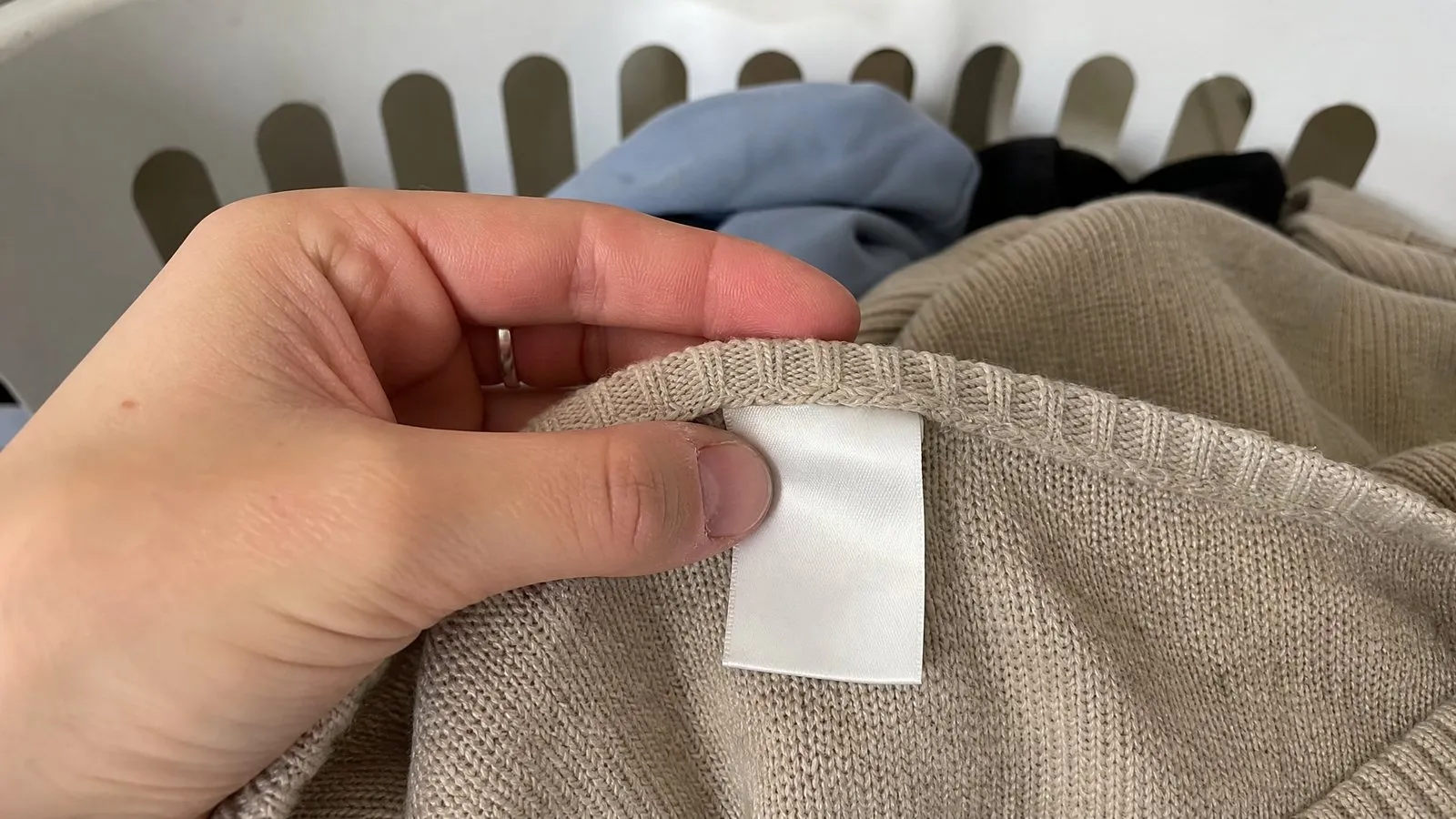
Before you start, always check the garment’s care label. If you’re not sure what the symbols mean, our guide on reading laundry care labels breaks them down. Silk, wool, and anything marked “dry clean only” should go to a professional cleaner — don’t attempt the methods below on those.
Method 1: The dish soap and baking soda paste (start here)
This works on most fresh and moderate stains, on both whites and colors. Total hands-on time is about 5 minutes, plus soaking.
- Mix the paste. In a small bowl, combine 2 tablespoons baking soda, 1 tablespoon hydrogen peroxide, and 1 teaspoon dish soap. Stir into a spreadable paste. (No peroxide? Use a little water instead — it’s still effective, just slightly less so.)
- Apply it. Lay the shirt flat, stain-side up. Spoon the paste onto the yellow area and spread it so the fabric is fully covered.
- Work it in. Gently scrub with an old toothbrush, following the weave of the fabric. Don’t scrub so hard you fray the threads.
- Let it sit. Leave it 30 to 60 minutes. Keep it out of direct sun and don’t let it dry hard. For heavy buildup, you can leave it up to a few hours.
- Wash as normal. Launder in the warmest water the care label allows, with your regular detergent.
- Check before drying. Look at the stain while the shirt is still wet. If any yellow remains, repeat the treatment. Do not put it in the dryer until the stain is gone — heat sets it.
A quick note on hydrogen peroxide: it has a mild lightening effect, so it’s safest on whites. On colored or dark fabrics, test it first on a hidden spot (an inside seam or hem) and leave it a few minutes to check it doesn’t lift the color.
Method 2: Enzyme detergent for the sweat proteins
Because sweat stains are partly protein-based, an enzyme detergent is one of your best tools. Enzymes (often listed as protease on the label) break protein stains apart at a molecular level — exactly what you want here.
You can use enzymes two ways:
- As a pre-soak. Dissolve a scoop of enzyme detergent, or a liquid enzyme stain remover, in a basin of warm water. Submerge the shirt and soak for 1 to 8 hours. Longer is fine for tough stains.
- As a pre-treatment. Rub a little liquid enzyme detergent directly into the stain, leave it 15 to 30 minutes, then wash.
One important detail: enzymes need warm, not hot, conditions and some time to work. Scalding water can deactivate them, so lukewarm to warm water is ideal. Check your detergent label — most list the temperature range the enzymes work best in.
Enzyme detergents are safe for most colors and are a good everyday choice for anyone who deals with sweat stains regularly. For a wider rundown of what shifts different marks, see our quick stain reference.
Method 3: Oxygen bleach soak for white shirts
For white cotton, polyester, and blends that have gone dingy or deeply yellow, oxygen bleach is the strongest safe option. Unlike chlorine bleach, oxygen bleach (sodium percarbonate) releases hydrogen peroxide in water and lifts stains without the harsh reaction that darkens sweat marks.
- Check the label. Confirm the garment is white or colorfast and that oxygen bleach is suitable. Read the oxygen bleach package for the correct dose per volume of water.
- Mix the soak. Dissolve the oxygen bleach fully in warm water in a basin or bucket, following the package ratio.
- Submerge and soak. Fully immerse the shirt and soak for 1 to 6 hours. For old, set-in stains, an overnight soak (up to 8 hours) is fine for sturdy whites.
- Wash as normal. Launder afterward with your usual detergent, warm water if the label allows.
- Air dry and check. As always, make sure the stain is gone before using the dryer.
Oxygen bleach works slowly and gently, so patience beats force here. For colored garments, use only the amount and soak time stated for colorfast items, and test an inside seam first.
Why you should skip chlorine bleach
It feels obvious to reach for regular household bleach on a white shirt, but with sweat stains it backfires. Chlorine bleach reacts with the proteins in dried sweat and can turn a pale yellow mark into a darker yellow or brown one that’s even harder to remove. It can also weaken fibers over repeated use, leaving thin or holey underarms.
There’s a safety angle too. Chlorine bleach should never be mixed with ammonia or acidic cleaners, as the combination creates dangerous gases — see our guide on cleaning products you should never mix. For sweat stains specifically, oxygen bleach does the job better and more safely, so there’s simply no reason to use chlorine bleach here.
A quick comparison
| Method | Best for | Time | Works on colors? |
|---|---|---|---|
| Dish soap + baking soda paste | Fresh to moderate stains | 30–60 min + wash | Yes (test peroxide first) |
| Enzyme detergent soak | Protein buildup, regular use | 1–8 hr soak | Yes |
| Oxygen bleach soak | Deep yellow on whites | 1–8 hr soak | Only if colorfast |
| Chlorine bleach | Nothing — avoid | — | No, makes it worse |
For set-in, stubborn stains
If a stain has survived several washes and maybe a trip through the dryer, combine methods and be patient:
- Start with the dish soap and baking soda paste, left on for an hour.
- Rinse, then move straight into an oxygen bleach soak (whites) or enzyme soak (colors) for several hours or overnight.
- Wash with enzyme detergent in the warmest water the label allows.
- Air dry and inspect. Repeat the cycle if there’s improvement — old stains often need two or three rounds.
If the fabric is lightening or thinning around the underarm and the stain still won’t budge, the fibers may be permanently damaged. At that point, consider switching the shirt to a wear-anywhere-you-sweat rotation rather than fighting it further.
How to prevent yellow stains
Prevention is far easier than removal. A few habits make a real difference:
- Let antiperspirant dry fully before dressing. Give it a couple of minutes. Pulling a shirt over wet antiperspirant transfers more aluminum straight onto the fabric.
- Apply a thin layer. More product doesn’t mean more protection — it means more buildup. A light swipe is enough.
- Wash sweaty shirts promptly. Don’t leave worn shirts crumpled in a hamper for a week. The longer sweat and antiperspirant sit, the more they bond.
- Wash undershirts after each wear. A plain cotton undershirt takes the brunt of the sweat and antiperspirant, protecting your outer shirts.
- Skip the hot dryer on anything suspect. If you can still see a faint mark, air dry instead of risking a set-in stain.
- Consider an aluminum-free deodorant. If yellowing is a constant battle, switching away from aluminum antiperspirant removes the main cause. You may sweat a little more, but you’ll avoid the buildup.
- Keep your washer clean. A grimy machine redeposits residue on clothes. Our guide on cleaning a washing machine covers both front- and top-loaders.
Building a simple laundry rhythm helps too, so sweaty shirts get washed before stains have time to set — our beginner’s laundry guide walks through the basics.
When to call it (or call a pro)
For delicate fabrics — silk, wool, rayon, or anything labeled dry clean only — don’t experiment with pastes and soaks. Take the garment to a professional cleaner and point out the stain and its cause (sweat plus antiperspirant), as that helps them choose the right treatment.
For everyday cotton and synthetics, the methods above handle the vast majority of stains. If a white shirt is evenly yellowed across the whole underarm and the fibers feel stiff and thin, accept that some permanent discoloration may remain. It’s a fabric-damage issue at that point, not a cleaning one.
FAQ
Does hot water set sweat stains?
Very hot water can set the protein part of a sweat stain, much like heat from a dryer. Use warm water for washing and soaking, which is enough to lift the stain without baking it in. Save the hottest wash settings for after you’ve confirmed the stain is gone.
Can I use vinegar on yellow underarm stains?
Vinegar can help cut some residue and odor, and a diluted vinegar soak is a reasonable first step for lighter marks. But for the aluminum-and-protein buildup behind heavy yellowing, enzyme detergent and oxygen bleach work better. Never mix vinegar with oxygen or chlorine bleach. See our guide on cleaning with vinegar for where it helps and where it doesn’t.
Why did bleach make my shirt more yellow?
Chlorine bleach reacts with the proteins in dried sweat and can deepen the stain to a darker yellow or brown. This is a known problem with sweat and protein stains specifically. Use oxygen bleach instead, which lifts the stain without that reaction.
How do I stop undershirts from yellowing in the first place?
Apply antiperspirant thinly, let it dry fully before dressing, and wash undershirts after every wear rather than letting sweat sit. If buildup keeps happening, switching to an aluminum-free deodorant removes the main cause of the yellowing.
Will these stains ever come out of an old, set-in shirt?
Sometimes, but not always. Old stains that have been through the dryer may need two or three rounds of soaking and pre-treating to fade. If the fabric is thin, stiff, or evenly discolored across the underarm, the fibers may be permanently changed and no amount of washing will fully restore them.
A note on health information: Always read and follow the label on any cleaning product, ventilate the room, and never mix products unless the label says it is safe. Test any method on a hidden spot first. If someone swallows a cleaning product or has trouble breathing after exposure, call Poison Control or emergency services right away.