How to Clean a Kitchen Properly (Daily and Weekly)
Clean your kitchen the easy way with daily wipe-downs and a short weekly routine. Simple steps for the sink, stovetop, microwave, fridge, and sponges.
A clean kitchen comes down to two habits: a five-minute wipe-down every day, and a slightly longer reset once a week. Do the daily part and the weekly part almost takes care of itself. Here’s exactly what to do, in order, with realistic times.
The daily kitchen routine (5–10 minutes)
Do this after your last meal of the day, while the kitchen is already a bit of a mess. It’s faster than you think and it stops grime from building into a weekend project.
- Clear and load. Put dishes in the dishwasher or wash them. Stack nothing in the sink overnight — it dries on and breeds smells.
- Wipe the counters. Spray an all-purpose cleaner or use warm soapy water, then wipe from the back edge toward you. Move small appliances and wipe under them.
- Spot-clean the stovetop. Wipe spills while they’re fresh. A damp cloth now beats a scrubbing session later.
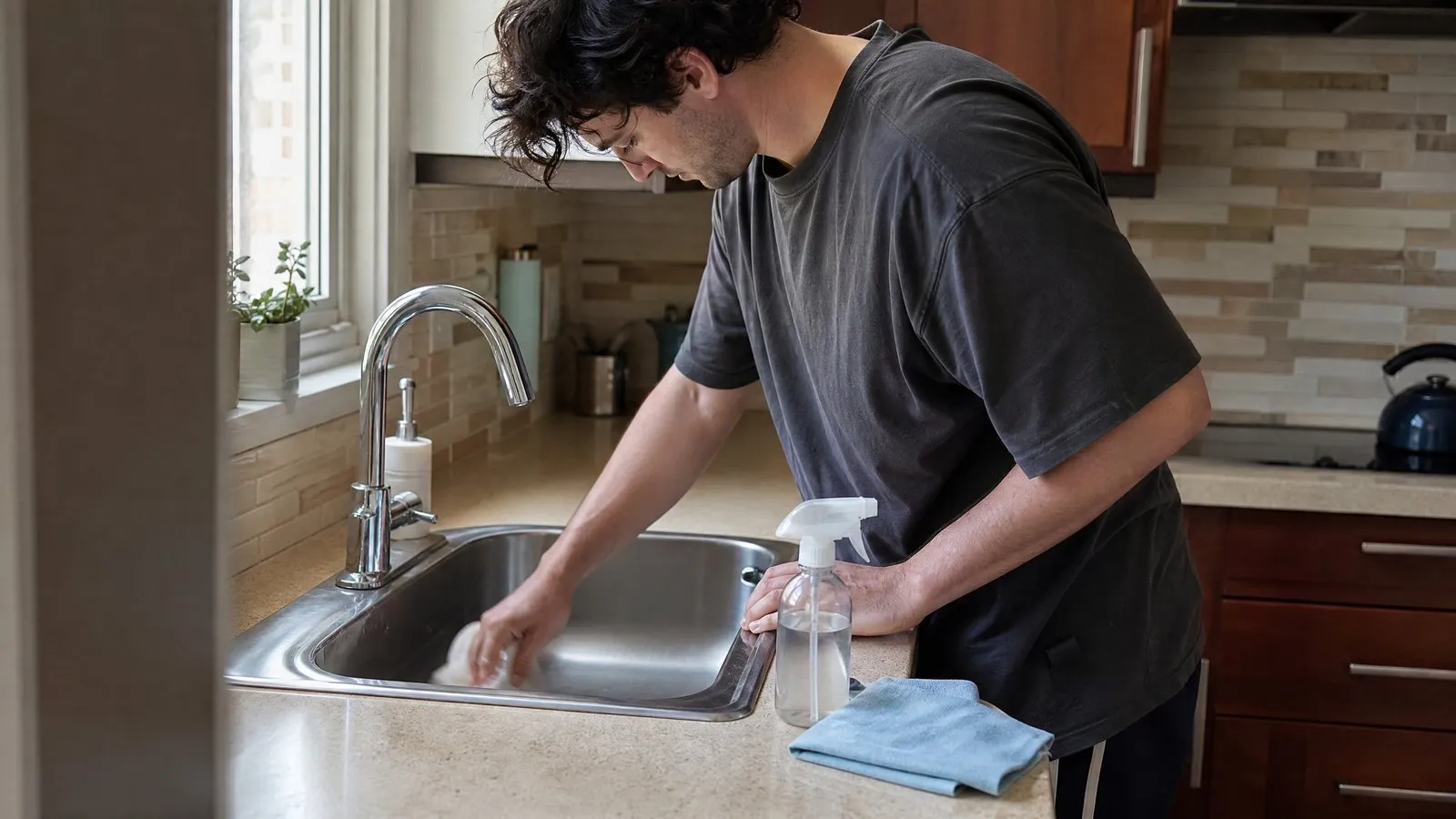
- Wipe the sink and faucet. A quick pass with dish soap and a cloth keeps it shining.
- Sweep or spot-mop the floor if there are crumbs or sticky spots. You don’t need to do the whole floor daily.
- Take out the trash if it’s full, and run the dishwasher if it’s loaded.
That’s the whole daily job. If you build it into your evening, it rarely takes more than ten minutes. For more small habits that keep mess from piling up, see our guide to daily habits that keep a home clean.
The weekly kitchen reset (30–45 minutes)
Once a week, go deeper on the things a quick wipe misses. Spread these across the week or knock them out in one session — whatever fits your life.
- Clean the sink and drain
- Sanitize cutting boards
- Degrease the stovetop and range hood filter
- Steam-clean the microwave
- Do a quick fridge clean-out
- Replace or sanitize the sponge
- Wipe cabinet fronts, handles, and the trash can lid
- Mop the floor
If you’d rather follow a plan that spreads kitchen tasks through the week, our 20-minute weekly cleaning schedule slots these in alongside the rest of the house.
How to clean the sink and drain
Your sink looks clean but holds more bacteria than most people expect. Give it a proper clean weekly.
- Remove any dishes and rinse out food bits.
- Squeeze dish soap onto a sponge or brush and scrub the whole basin, including the rim and around the faucet base.
- For a stainless steel sink with water spots, sprinkle a little baking soda, scrub, and rinse. It’s a gentle abrasive that won’t scratch.
- Rinse thoroughly and dry with a cloth so it shines and doesn’t water-spot.
For smells coming from the drain: pour a kettle of hot (not boiling, if you have plastic pipes) water down it. You can follow with a few tablespoons of baking soda, then a splash of vinegar, let it fizz for a few minutes, and flush with more hot water. This helps with odor but won’t clear a real clog.
If you want to disinfect the sink after handling raw meat, clean it first with soap and water, then apply a disinfectant and leave it wet for the contact time on the label. Cleaning and disinfecting are two different steps — our guide on how to disinfect properly explains why order matters.
Safety note: never mix bleach with vinegar or with any other cleaner. The combination can release dangerous chlorine gas. See cleaning products you should never mix.
Cutting boards and food safety
Cutting boards are a top spot for cross-contamination. The main rule from food safety guidance is to keep raw meat, poultry, and seafood away from ready-to-eat foods like fruit, veg, and bread.
- Use separate boards where you can — one for raw meat, one for everything else. Color-coding helps you keep them straight.
- Wash after every use with hot soapy water. Rinse and air-dry or dry with a clean towel.
- Plastic boards can usually go in the dishwasher, which sanitizes with hot water.
- Wooden boards should be hand-washed, not soaked and not put in the dishwasher, or they warp and crack. Dry them standing up.
- To sanitize a board after raw meat, the US FDA and USDA suggest a solution of about one tablespoon of unscented liquid bleach per gallon of water. Flood the surface, let it stand a few minutes, then rinse and air-dry.
- Replace boards that are deeply grooved or cracked — knife grooves trap bacteria that washing can’t reach.
Always wash your hands with soap for 20 seconds after handling raw meat, and wipe down any counter it touched.
Stovetop and range hood filter
Stovetop
Daily spot-cleaning keeps this easy. For the weekly degrease:
- Glass or ceramic cooktops: wipe with a damp cloth, then tackle burnt-on spots with a paste of baking soda and water. Let it sit a few minutes, wipe gently, and buff dry. Avoid heavy abrasives that scratch.
- Gas burners: lift off the grates and caps and soak them in hot soapy water for 15–20 minutes, then scrub and dry fully before putting them back.
- Knobs and backsplash: these collect grease splatter. Wipe with all-purpose cleaner or soapy water.
If your oven also needs attention, we have a low-fume method in how to clean an oven without harsh fumes.
Range hood filter
The metal mesh filter over your stove soaks up grease and becomes a fire risk if neglected. Clean it monthly, or more often if you fry a lot.
- Slide or unclip the filter out (check your manual).
- Fill the sink with very hot water, add dish soap and a few tablespoons of baking soda.
- Soak for 10–15 minutes, then scrub with a brush.
- Rinse, dry completely, and reinsert.
Many metal filters are dishwasher-safe — run them on their own cycle. Charcoal/carbon filters in recirculating hoods are different: they can’t be washed and must be replaced on the schedule in your manual.
The microwave steam-clean trick
This is the easiest win in the kitchen. Steam loosens dried-on food so it wipes away with no scrubbing.
- Fill a microwave-safe bowl with about one cup of water.
- Add a few slices of lemon or a tablespoon of vinegar to cut odors.
- Microwave on high for 3–5 minutes until it boils and steams up the inside.
- Leave the door shut for 2–3 minutes to let the steam work. The bowl will be hot.
- Carefully remove the bowl (use a towel), then wipe the inside with a cloth. Pull out the turntable and wash it in the sink.
For splatter on the ceiling of the microwave, the steam makes it come off with one pass. Do this weekly and you’ll never face baked-on messes.
Fridge clean-out (15 minutes weekly)
A quick weekly pass keeps your fridge fresh and prevents the science-experiment leftovers. Time it for just before grocery day when the fridge is emptiest.
- Toss anything expired, moldy, or that you know you won’t eat.
- Wipe spills and shelves with warm soapy water or a baking soda solution (about one tablespoon per quart of water). Skip strong-smelling cleaners — the smell lingers on food.
- Wipe door handles and the top edge of the door, which get touched constantly.
- Check the temperature. The US FDA recommends keeping your fridge at or below 40°F (4°C) and the freezer at 0°F (−18°C) to keep food safe. An inexpensive fridge thermometer tells you for sure.
A few times a year, pull everything out, remove the shelves and drawers, wash them in the sink, and wipe the interior fully. For spills on glass shelves, let them come to room temperature first — cold glass can crack under hot water. An open box of baking soda absorbs odors between cleanings.
Sponge hygiene and when to replace
Your sponge is often the dirtiest thing in the kitchen. It stays damp and full of food particles — ideal conditions for bacteria. Here’s how to keep it in check.
- Rinse and wring it out well after every use, and store it somewhere it can dry, not sitting in a puddle.
- Sanitize it daily or every couple of days. Two methods backed by USDA testing:
- Microwave: soak the sponge so it’s thoroughly wet (never microwave a dry sponge — it can catch fire), then microwave on high for one minute. It will be very hot; let it cool before touching.
- Dishwasher: run it through a full cycle with a heated dry.
- Replace it often. Even sanitizing doesn’t make a sponge last forever. Swap it out every one to two weeks, or sooner if it smells or falls apart.
Consider using dishcloths or brushes instead of sponges for some jobs — cloths can go in a hot laundry wash, and brushes dry out faster than sponges so they harbor less bacteria.
Daily vs weekly vs monthly at a glance
| Task | Daily | Weekly | Monthly |
|---|---|---|---|
| Wipe counters | ✓ | ||
| Spot-clean stovetop | ✓ | ||
| Wash dishes / run dishwasher | ✓ | ||
| Wipe and dry sink | ✓ | ||
| Sanitize sponge | every 1–2 days | ||
| Scrub sink + freshen drain | ✓ | ||
| Degrease full stovetop | ✓ | ||
| Steam-clean microwave | ✓ | ||
| Fridge clean-out | ✓ | ||
| Mop floor | ✓ | ||
| Replace sponge | every 1–2 weeks | ||
| Clean range hood filter | ✓ | ||
| Deep-clean fridge interior | a few times a year |
A quick word on supplies
You don’t need a cabinet full of specialty sprays. For almost everything here, dish soap, an all-purpose cleaner, baking soda, a few microfiber cloths, and a scrub brush will do the job. Add a disinfectant for raw-meat cleanup and that’s genuinely it. If you’re starting from scratch, see the only cleaning supplies you really need.
If evenings are chaotic and a daily routine feels impossible, the realistic routine for working parents shows how to keep a kitchen functional on very little time.
FAQ
How often should I really replace my kitchen sponge?
Every one to two weeks for a sponge in regular use, and immediately if it smells sour or starts breaking apart. Sanitizing it daily in the microwave or dishwasher extends its life and cuts bacteria, but it won’t make an old sponge safe forever.
What’s the fastest way to get rid of a smelly drain?
Flush it with hot water first. If the smell remains, pour in a few tablespoons of baking soda followed by a splash of vinegar, let it fizz for a few minutes, then rinse with more hot water. If the smell keeps coming back, or water drains slowly, you likely have a clog or trapped debris that needs a proper clean-out.
Do I need to disinfect my counters every day?
No. For everyday messes, cleaning with soap and water is enough. Save disinfecting for after you’ve handled raw meat, poultry, seafood, or eggs, or when someone in the home is sick. Clean the surface first, then apply disinfectant and leave it wet for the contact time listed on the label.
Can I put my wooden cutting board in the dishwasher?
No — the heat and prolonged water exposure make wood warp, crack, and split. Wash wooden boards by hand with hot soapy water, rinse, and stand them up to air-dry. Plastic boards are usually dishwasher-safe and get a hot-water sanitize in the process.
What temperature should my fridge be?
At or below 40°F (4°C) for the fridge and 0°F (−18°C) for the freezer, per US FDA guidance. A cheap fridge thermometer is the only reliable way to check, since the dial settings on many fridges aren’t actual temperatures.