Cleaning vs Disinfecting: How to Disinfect Properly
Cleaning removes dirt; disinfecting kills germs. Learn when each matters, how to use EPA-registered disinfectants, and how to respect contact time safely.
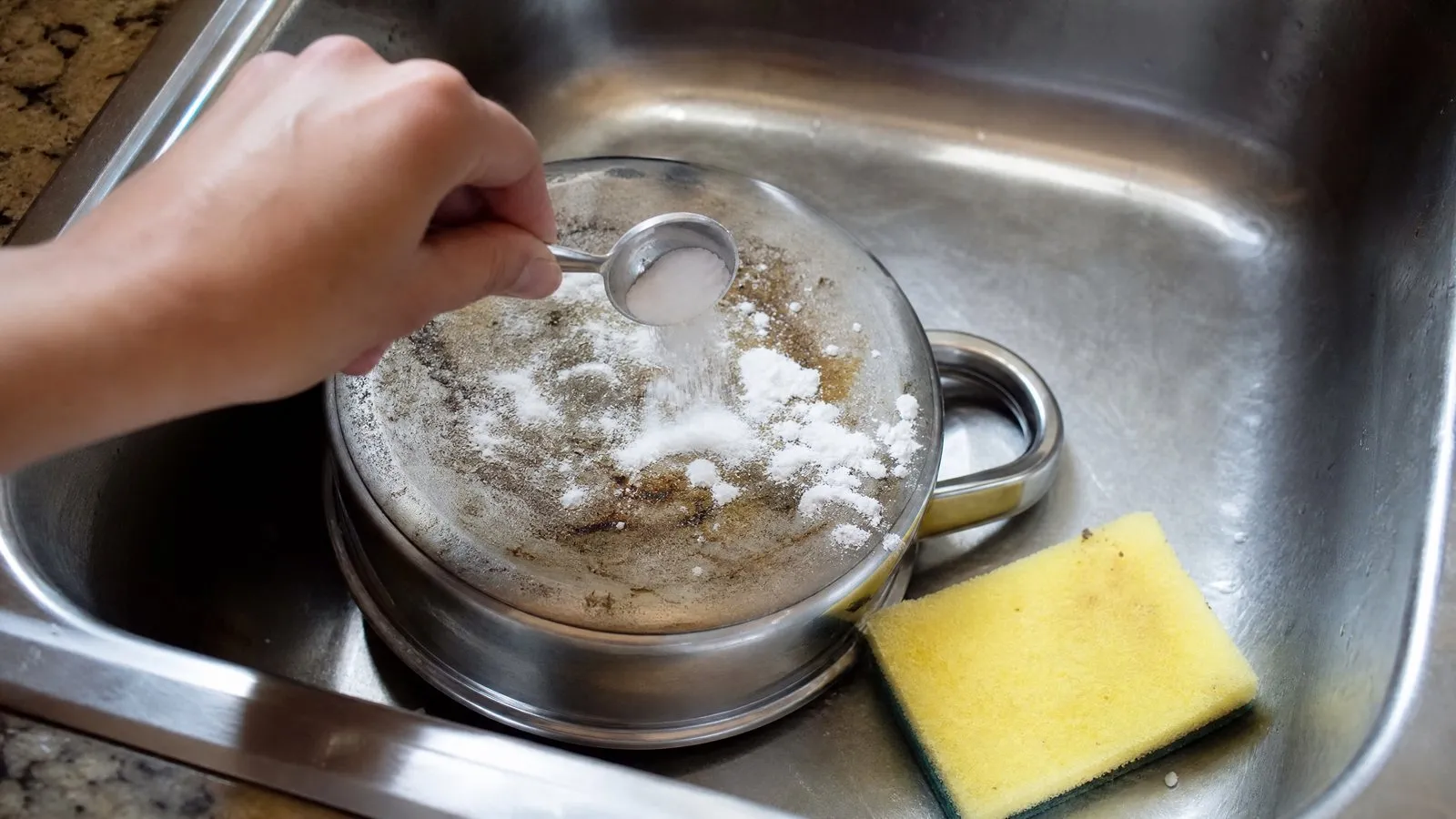
Cleaning and disinfecting are two different jobs. Cleaning uses soap and water to physically remove dirt, grease, and most germs from a surface. Disinfecting uses chemicals to kill germs that are left behind. You almost always clean first, then disinfect only when there’s a real reason to — and most of the time, plain soap and water is enough.
Here’s the key rule the CDC and the American Cleaning Institute both stress: you have to clean before you disinfect. Disinfectants don’t work well on dirty surfaces because grime shields the germs. And when you do disinfect, you have to leave the product wet on the surface for a set amount of time, called the contact or dwell time. Wiping it off too soon means it didn’t do its job.
The difference in plain English
- Cleaning removes dirt, food, grease, and a large share of germs using soap or detergent and water. It makes surfaces physically clean and lowers the number of germs.
- Sanitizing reduces germs to a level considered safe (often used for food-contact surfaces and dishes).
- Disinfecting kills a high percentage of germs on a surface using chemicals registered for that purpose.
For everyday tidying, cleaning is the main event. Disinfecting is a targeted extra step for specific situations, not something you need to do to your whole home every day.
When soap and water is enough
Most of the time, you don’t need a disinfectant at all. Regular cleaning with soap or an all-purpose cleaner handles normal household life just fine. Reach for plain cleaning when:
- You’re doing routine upkeep — wiping counters, tables, floors, and sinks.
- No one in the house is sick.
- You’re cleaning dust, crumbs, fingerprints, or spills.
- You’re tidying surfaces that don’t get touched by many hands.
If that’s your situation, you can skip the rest of the disinfecting steps and stick with your normal routine. A simple weekly cleaning schedule and a few daily habits will keep a home healthy without a cabinet full of harsh products.
When disinfecting actually matters
Disinfecting is worth the extra effort in a handful of specific cases:
- Someone in the home is sick — with a cold, flu, stomach bug, COVID-19, or anything contagious. Disinfect high-touch surfaces and shared bathrooms.
- After handling raw meat, poultry, fish, or eggs — disinfect the counter and any surface the raw juices touched.
- After vomiting or diarrhea — stomach bugs like norovirus spread easily, so clean up, then disinfect the area.
- Diaper-changing areas and potty-training messes.
- When bringing germs in from outside during a known outbreak, or around someone with a weakened immune system.
Outside these situations, daily disinfecting of every surface isn’t necessary and just uses up product and time.
High-touch surfaces: focus here
When you do disinfect, you don’t need to treat the whole house. Focus on the surfaces many hands touch, because that’s where germs spread. The usual suspects:
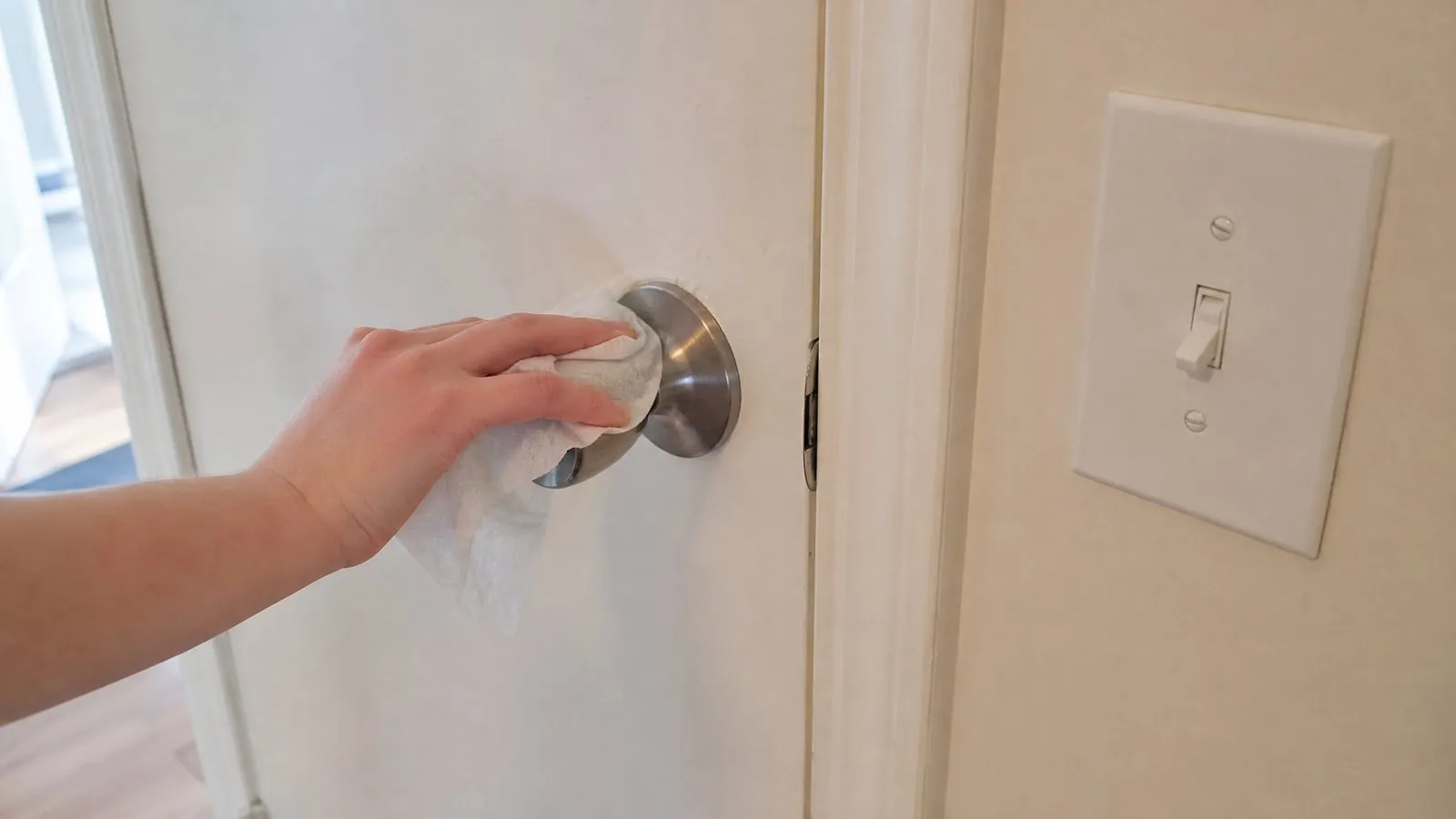
- Door handles and doorknobs
- Light switches
- Faucet handles and toilet flush levers
- Kitchen countertops
- Refrigerator and appliance handles
- TV remotes, game controllers, and phones (check the maker’s guidance for electronics)
- Stair railings
- Shared desks and tables
In a sickness week, a quick daily pass over these spots does far more good than a deep clean of places nobody touches.
How to disinfect properly, step by step
The whole process takes about 5 to 10 minutes for a round of high-touch surfaces. Here’s how to do it right.
- Read the product label first. The label tells you what germs it kills, how long it must stay wet, and whether you need to rinse afterward (important for food-contact surfaces and toys).
- Open a window or turn on a fan. Ventilation matters — more on that below.
- Put on gloves if the label suggests it, especially with bleach solutions.
- Clean the surface first. Wipe away visible dirt, grease, and crumbs with soap and water or an all-purpose cleaner. Let it dry or wipe it down.
- Apply the disinfectant. Spray or wipe so the surface is visibly wet. Don’t go too light.
- Leave it wet for the full contact time. This is the step people skip. If the label says 4 minutes, the surface must stay visibly wet for 4 minutes. Re-apply if it dries early.
- Rinse if required. For counters where food is prepared, toys, or anything that goes in the mouth, rinse with clean water after the contact time — the label will say.
- Let it air dry or wipe with a clean cloth.
Contact time is the whole point
The contact time (also called dwell time or wet time) is how long the chemical needs to stay on the surface to kill the germs it claims to kill. It varies a lot between products and even between germs on the same product.
| Product type | Typical contact time | Notes |
|---|---|---|
| Disinfecting wipes | 4 minutes (often) | Surface must stay wet the whole time; one wipe may not cover a big area |
| Disinfectant sprays | 1 to 10 minutes | Check the label — it differs by germ |
| Diluted household bleach | Follow label; often several minutes | Make fresh; it loses strength over time |
| Hydrogen peroxide cleaners | 1 to 5 minutes | Check the specific product |
These are general ranges, not a substitute for the label. The exact number for your product is printed on the bottle, and it’s the only one that counts.
Choose an EPA-registered disinfectant (and the regional equivalents)
In the US, a true disinfectant is registered with the Environmental Protection Agency (EPA). Look for an EPA registration number on the label — it means the product’s germ-killing claims have been reviewed. The label also lists which germs it’s proven to kill and the contact time for each.
Readers elsewhere: in Canada, disinfectants carry a Drug Identification Number (DIN) from Health Canada. In the UK and Australia, look for products that meet the relevant disinfectant standards and state the germs and contact times on the label. In all cases, the principle is the same — follow the label.
A few honest notes:
- Vinegar is not a disinfectant. It’s a decent everyday cleaner, but it isn’t registered to kill the range of germs a disinfectant does. We cover this in cleaning with vinegar.
- “Natural” or “kills 99.9% of germs” on the front doesn’t tell the whole story. Check the back for an EPA number (or local equivalent) and the contact time.
- A simple diluted bleach solution is an effective, cheap disinfectant for many hard surfaces when made and used per the label.
Ventilation: open a window
Disinfectants are designed to be reactive chemicals, and the fumes can irritate your eyes, nose, throat, and lungs — especially in a small apartment or a closed bathroom. Before you start:
- Open a window or two.
- Run an extractor fan or the kitchen/bathroom fan.
- Take breaks if you’re doing a lot of surfaces.
- Don’t use more product than the label says. More isn’t better, and it means more fumes.
If you have asthma or breathing issues, be extra careful and consider cleaning (not disinfecting) where you can.
Never mix disinfectants
This is a safety point worth its own heading. Never mix bleach with ammonia, or bleach with vinegar or other acids. These combinations create toxic gases that can send people to the emergency room. Don’t combine different cleaning products hoping for a stronger result — use one at a time, and rinse between products if you switch. Our full guide on cleaning products you should never mix spells out the dangerous pairs.
Keep products away from kids and pets
Disinfectants and their concentrated refills are among the most common causes of calls to poison control centers. America’s Poison Centers and product labels both urge you to store these products safely. To keep your home safe:
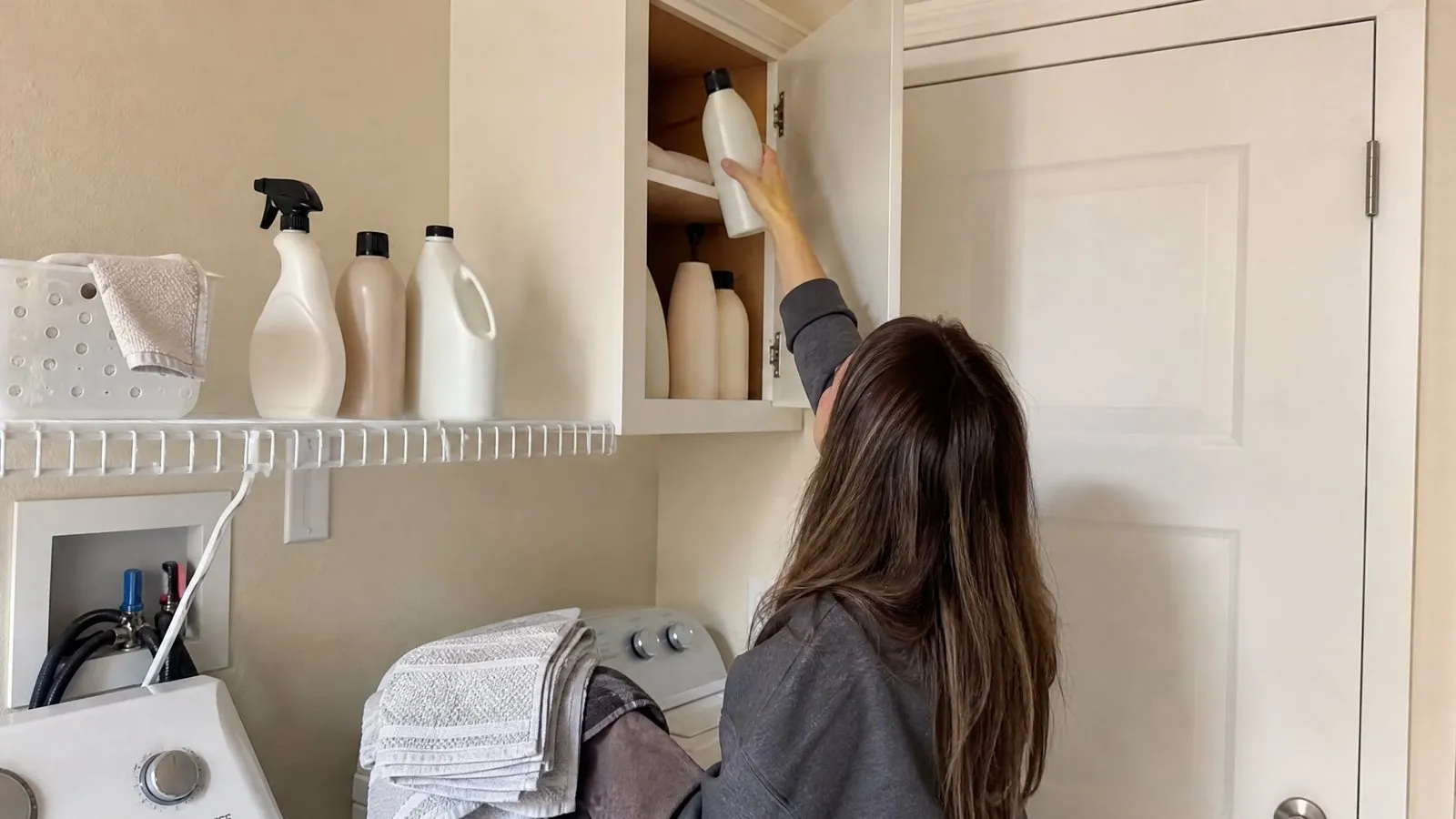
- Store products up high or in a locked cabinet, out of reach and out of sight of young children.
- Keep products in their original containers with the label intact — never decant into a cup, water bottle, or unlabeled spray bottle.
- Close caps fully and wipe up spills right away.
- Don’t leave a bucket of solution or a spray bottle unattended while you work.
- Keep kids and pets off treated surfaces until they’re dry (and rinsed, where needed).
- Rinse toys, high chairs, and other items that go in a child’s mouth after the contact time.
For a full setup, see how to store cleaning supplies safely with young children. If you have cats or dogs, some disinfectant ingredients can irritate paws or be harmful if licked — our pet-safe cleaning guide covers what to watch for.
If someone swallows a cleaning product, gets it in their eyes, or has trouble breathing after exposure: in the US, call Poison Control at 1-800-222-1222, or your local emergency number if the person is unconscious or struggling to breathe. In the UK call 111 (or 999 for emergencies), and in Australia call the Poisons Information Centre on 13 11 26. Keep the product container with you so you can read the ingredients to the operator.
A realistic routine
You don’t need to disinfect every day. A sensible rhythm for most homes:
- Daily: Clean with soap and water as part of normal tidying. Disinfect kitchen surfaces after raw meat.
- During illness: Disinfect high-touch surfaces once a day (or more) until everyone’s well.
- Normal weeks: Your regular kitchen and bathroom cleaning, with disinfecting reserved for the toilet area and anything germy.
If you want a repeatable plan, build one with our free Weekly Cleaning Plan tool, and keep your supplies lean with the starter kit checklist.
FAQ
Do disinfecting wipes clean and disinfect at the same time?
Not reliably in one pass. If a surface is visibly dirty, use one wipe to clean it, then a fresh wipe to disinfect — and keep that surface wet for the full contact time on the label. A single swipe that dries in seconds won’t disinfect anything.
Is hand sanitizer the same as surface disinfectant?
No. Hand sanitizer is made for skin and should never be used to disinfect surfaces, and surface disinfectants should never be used on skin. Use each product only for what its label describes.
Can I just use vinegar to disinfect?
No. Vinegar is a useful everyday cleaner for some jobs, but it isn’t a registered disinfectant and won’t reliably kill the range of germs that matter after raw meat or during illness. Use an EPA-registered disinfectant (or your country’s equivalent) when disinfecting is the goal.
How long should the disinfectant stay on the surface?
For exactly as long as the label says — the contact time. It’s commonly somewhere between 1 and 10 minutes, and the surface must stay visibly wet that whole time. If it dries early, apply more.
Do I need to disinfect my whole house every week?
No. Routine cleaning with soap and water is enough for most of your home most of the time. Save disinfecting for high-touch surfaces during illness, and for areas exposed to raw meat or bodily fluids.
A note on health information: Always read and follow the label on any cleaning product, ventilate the room, and never mix products unless the label says it is safe. Test any method on a hidden spot first. If someone swallows a cleaning product or has trouble breathing after exposure, call Poison Control or emergency services right away.