How to Clean Your Whole Home Fast (The 1-Hour Speed Clean)
Clean your whole home in one hour with a top-to-bottom, dry-before-wet speed plan, a carry-around caddy, minutes per room, and a timer method.
You can get a small home looking genuinely clean in about an hour. The trick isn’t working faster — it’s working in the right order, with everything you need in one caddy, and a timer stopping you from disappearing down a rabbit hole in one room.
Here’s the whole method: pick up clutter first, work top to bottom, do dry tasks before wet ones, and give each room a fixed number of minutes. When guests are coming, you skip anything no one will see. Below is the full plan you can start today.
The three rules that make an hour enough
These three principles do most of the work. Learn them once and every clean gets faster.
1. Top to bottom. Dust and crumbs fall downward. If you wipe counters and then dust a shelf above them, you’ve just dirtied the counter again. Always start high (shelves, surfaces) and finish low (floors last).
2. Dry before wet. Dusting, sweeping, and picking up should happen before any spraying or mopping. Wet cleaner traps dry dust into sticky smears. Dry first, then wipe, then mop.
3. One room at a time, against a timer. Finishing a room completely before moving on feels better and stops you drifting. The timer is non-negotiable — it’s what keeps a “quick tidy” from eating your whole afternoon.
Build a carry-around caddy (5 minutes, once)
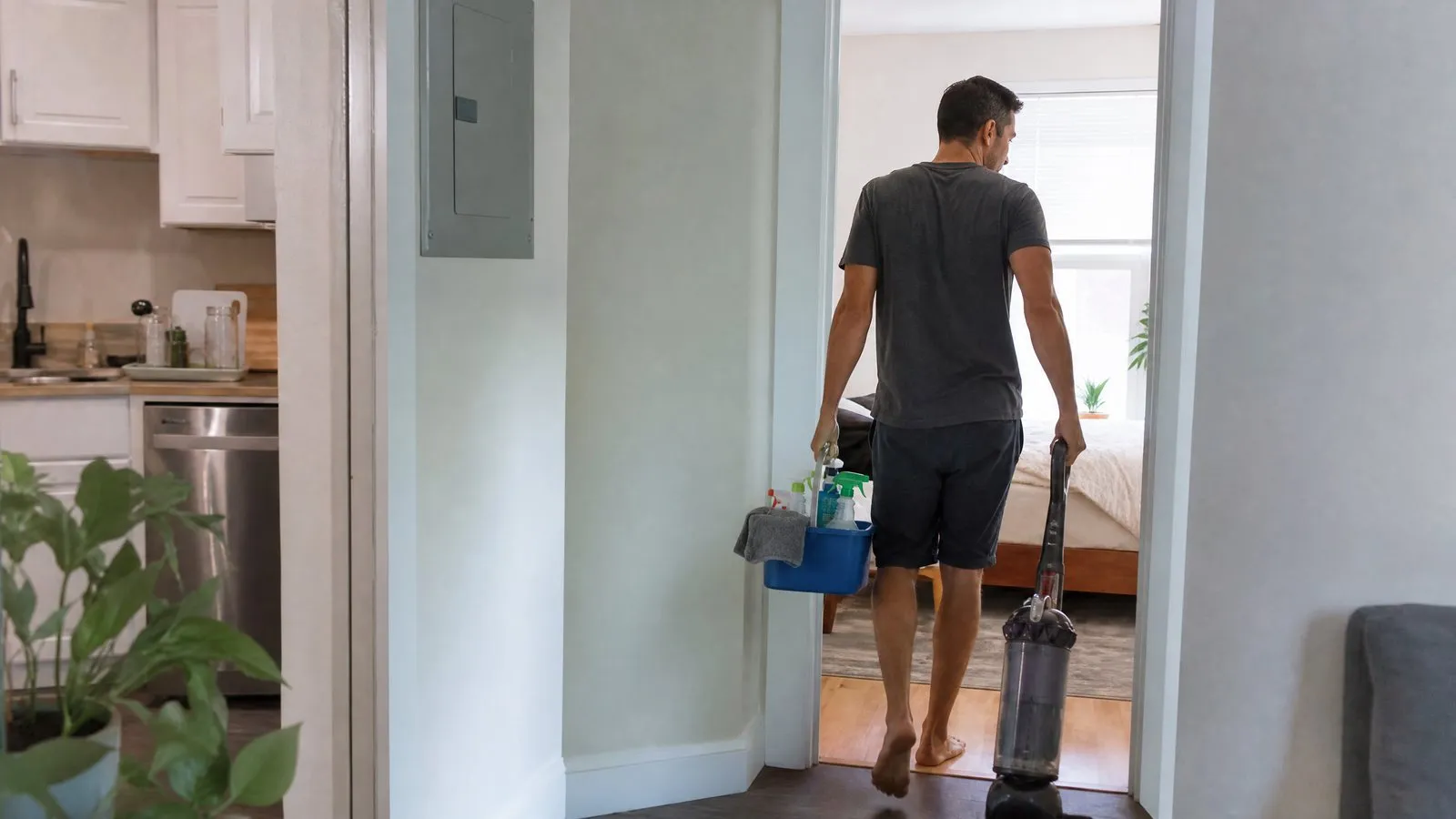
Walking back to the cupboard for supplies is the biggest time-waster in cleaning. Load one caddy or bucket and carry it room to room.
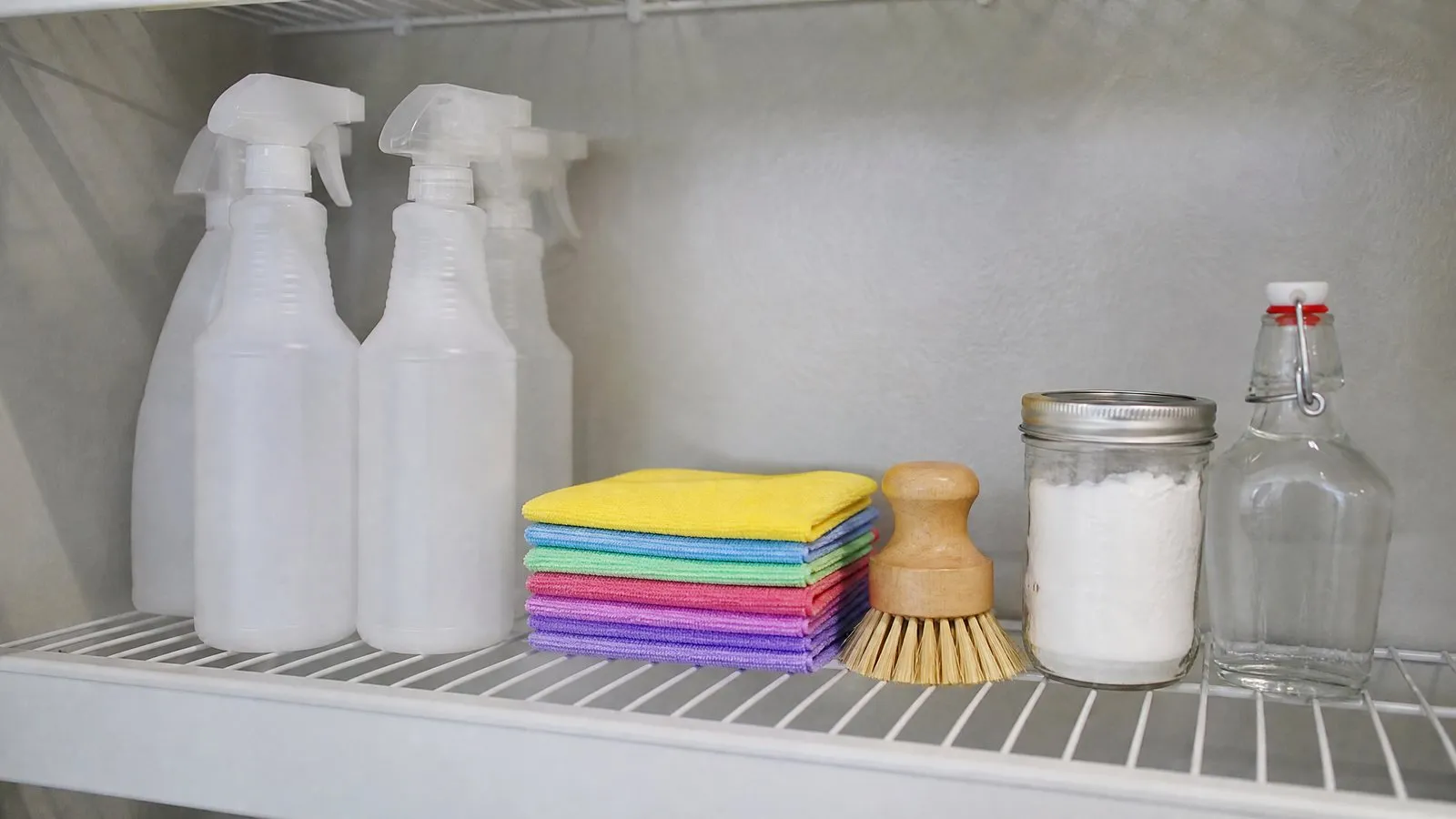
A complete speed-clean caddy holds:
- An all-purpose cleaner (a spray you can use on most sealed surfaces)
- A glass/mirror cleaner, or a microfiber cloth that does glass with just water
- A bathroom cleaner or the same all-purpose, if the label allows
- 4–6 microfiber cloths (color-code: one for bathroom, others for general)
- A couple of clean rags or paper towels
- A scrub sponge
- Trash bags (grab-and-go for emptying bins)
- Rubber gloves
Leave the vacuum and mop/bucket by the door — you’ll do all floors at the end. If you’re still assembling the basics, our starter kit guide covers exactly what to buy and what to skip.
Safety note: Never mix cleaners in the caddy or on a surface. Bleach and ammonia, or bleach and vinegar, release dangerous gases. Use one product, rinse, then another if needed. See cleaning products you should never mix. If you have young kids, keep the caddy with you the whole time and never leave it unattended on the floor — more on safe storage here.
The 10-minute clutter lap first
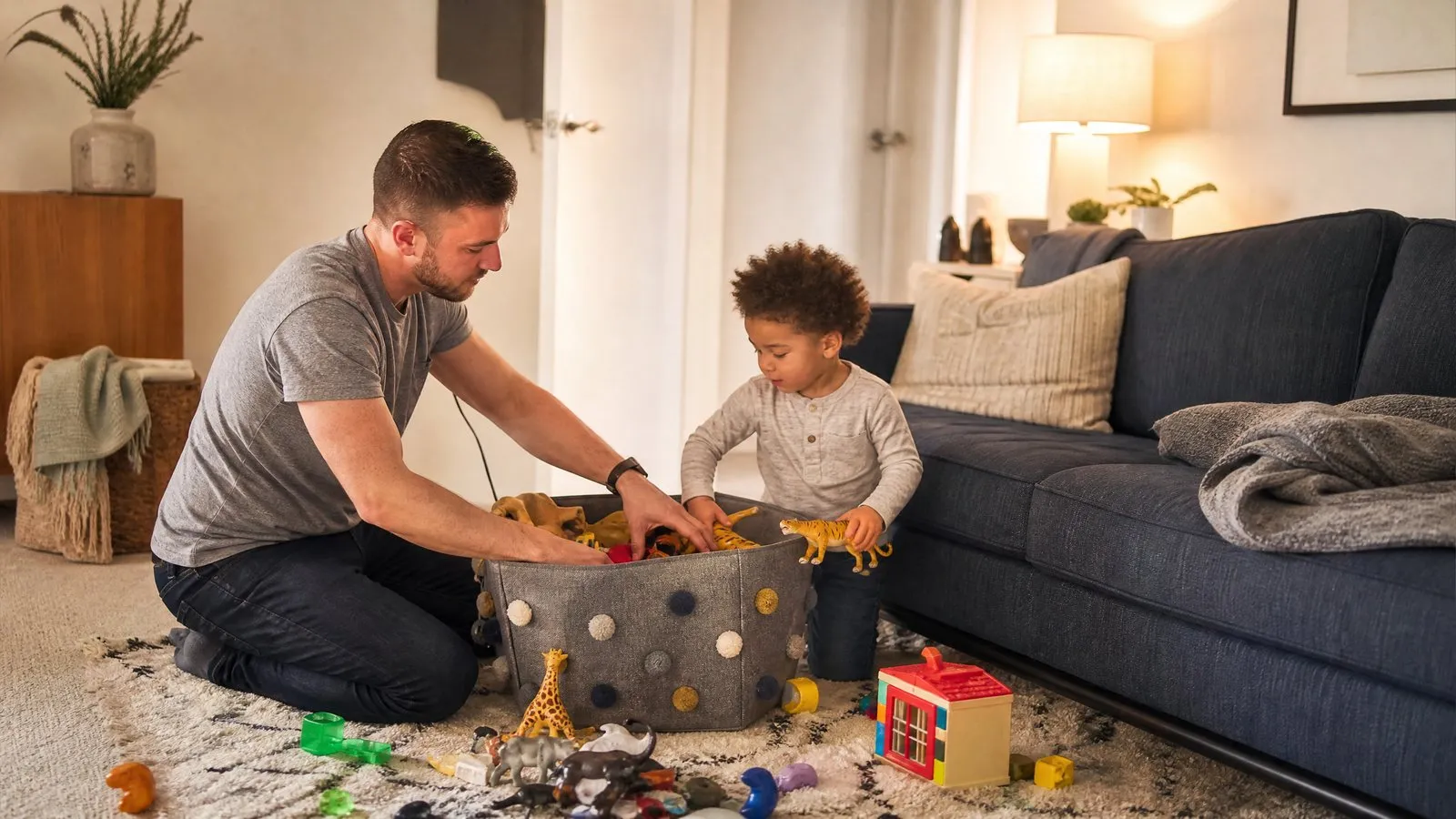
Before you clean anything, do one fast lap of the whole home with a basket or laundry hamper. Pick up anything out of place — mugs, shoes, toys, mail, clothes — and either put it where it lives or drop it in the basket to sort later.
You cannot clean a surface covered in stuff. This lap is what makes the rest of the hour possible. Set a 10-minute timer and move; don’t start organizing drawers. If clutter is a bigger, everyday problem, that’s a separate project — start with how to declutter when you’re overwhelmed.
The 1-hour room-by-room plan
Here’s a realistic hour for a typical one- or two-bedroom home. Adjust the minutes to your space.
| Task / room | Time | What you actually do |
|---|---|---|
| Clutter lap (whole home) | 10 min | Pick up and put away, fill one basket |
| Kitchen | 12 min | Dishes staged, wipe counters, stovetop, sink, appliance fronts |
| Bathroom | 10 min | Toilet, sink, mirror, shower wipe-down |
| Bedrooms | 8 min | Make beds, clear surfaces, quick dust |
| Living areas | 8 min | Dust, tidy cushions, wipe table, glass |
| Floors (all rooms) | 12 min | Vacuum, then spot-mop hard floors |
That’s 60 minutes. Keep the timer running room by room, and when it beeps, move on even if it’s not perfect. You can come back next week.
Kitchen — 12 minutes
- Stack dirty dishes by the sink or load the dishwasher (don’t hand-wash a full sink now — that eats your hour).
- Clear counters, then spray and wipe from the back forward.
- Wipe the stovetop and the fronts of the microwave, fridge, and cabinets where hands touch.
- Scrub and rinse the sink last, then wipe the faucet.
Leave the oven, inside of the fridge, and cabinet interiors for a deeper session — see how to clean a kitchen properly.
Bathroom — 10 minutes
- Squirt toilet cleaner inside the bowl and let it sit while you do everything else.
- Spray the sink, counter, and taps; wipe.
- Do the mirror with glass cleaner or a damp-then-dry microfiber cloth.
- Wipe the shower walls and glass; rinse.
- Come back to the toilet: brush the bowl, then wipe the seat, lid, and outside with a dedicated cloth.
Use a separate, color-coded cloth for the toilet and never use it elsewhere. Full method in how to clean a bathroom in 30 minutes.
Bedrooms — 8 minutes total
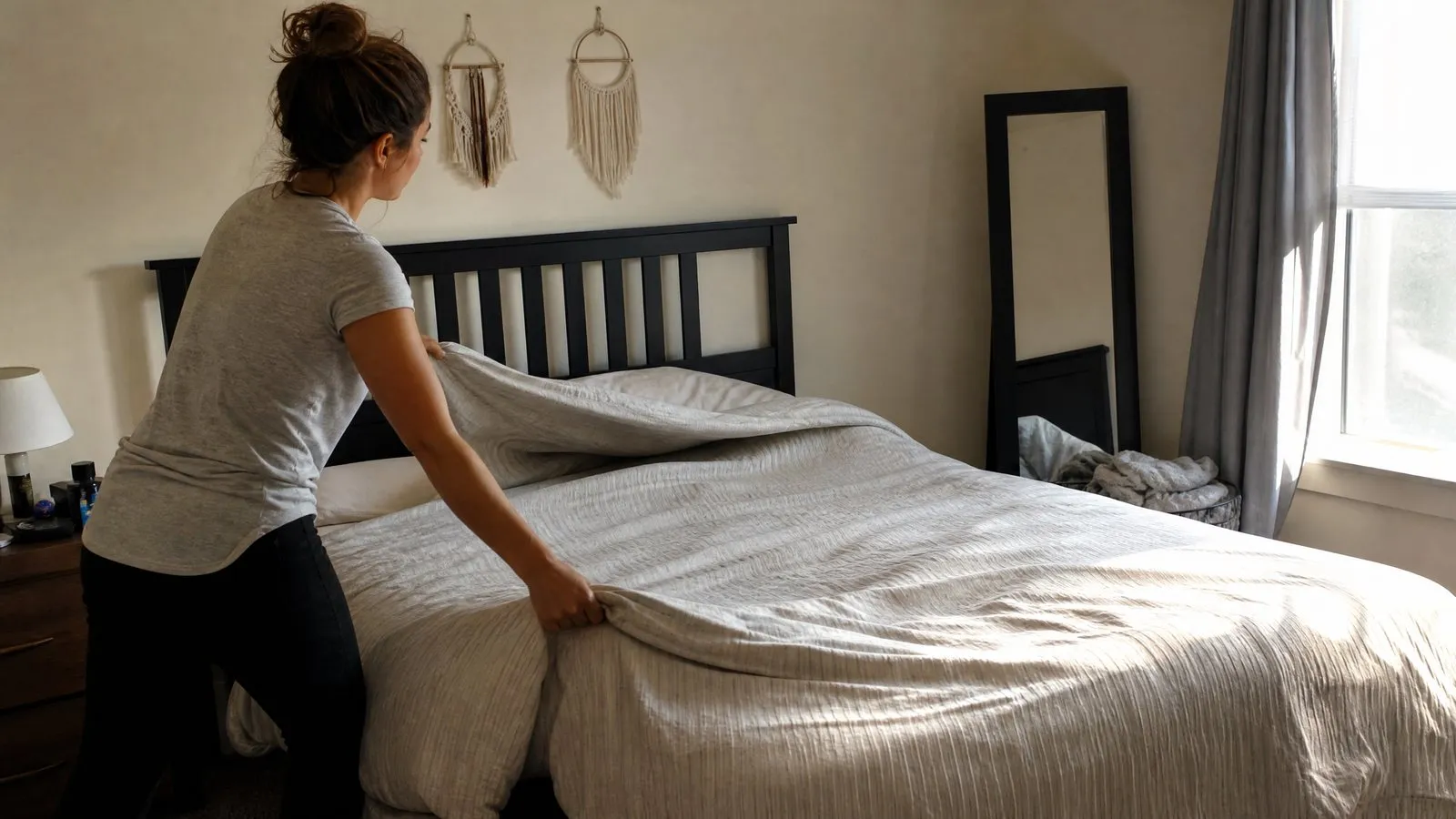
- Make the beds — it instantly makes the room read as “clean.”
- Clear nightstands and dressers of clutter.
- Quick dust of surfaces with a dry microfiber cloth.
Skip under-bed and closet work today.
Living areas — 8 minutes
- Dust surfaces top to bottom: shelves, then TV stand, then coffee table.
- Straighten cushions and fold throws.
- Wipe the coffee table and any glass or screens (screens: dry microfiber only).
Floors last — 12 minutes
Now that every room is dusted and tidy, do all the floors in one pass.
- Vacuum carpets and hard floors throughout.
- Spot-mop hard floors where needed — kitchen and bathroom usually need it most.
Mopping the whole place every time isn’t necessary; target the visible and sticky spots. For wood, go gentle and barely damp — see how to clean hardwood floors without damaging them.
When guests are coming: what to skip
If people are arriving and you’ve got less than an hour, clean what they’ll see and use, and ignore the rest guilt-free. Guests see entryways, the living room, the bathroom they’ll use, and the kitchen if that’s where everyone gathers.
Do these, in order:
- Clutter lap of shared spaces only (5 min)
- Guest bathroom: toilet, sink, mirror, fresh hand towel (6 min)
- Kitchen counters and sink cleared and wiped (6 min)
- Living room: cushions, surfaces, visible floor (6 min)
- Quick vacuum of the main path and shared rooms (5 min)
Safely skip when guests are coming:
- Bedrooms — close the doors
- Inside the oven, fridge, and cabinets
- Baseboards, blinds, and high dusting
- Laundry room and your own bathroom
- Making floors spotless under furniture
A fast trick: empty the bins and run a quick damp cloth over the bathroom faucet and the kitchen sink until they shine. Shiny metal reads as “clean” even when you’ve skipped a lot.
The timer approach, in detail
A timer is the single most useful tool for fast cleaning. It turns an open-ended chore into a game with an end point.
- Set a timer per room, not for the whole hour. One long timer lets you lose track; a per-room timer forces decisions.
- When it beeps, stop and move on. The 20% you didn’t finish is almost always invisible. Perfect is the enemy of done.
- Use the “two-minute override” rule: you’re allowed one two-minute extension per room, once. After that, move.
- Work in the same order every time. Your brain stops deciding and just does, which is faster week after week.
If you’d rather spread this over the week instead of one big push, a little daily works even better — see our weekly cleaning schedule and 10 daily habits that keep a home clean. For households juggling kids and jobs, the routine for working parents is built around short, realistic blocks.
Make next week’s clean even faster
The speed clean gets quicker each time you do it, especially if you keep clutter down between sessions. Two small habits help most:
- A nightly 10-minute reset: one clutter lap, dishes done, surfaces cleared. It’s the difference between a 60-minute clean and a 90-minute one.
- Everything has a home. You can’t tidy fast if items have nowhere to go. If storage is your bottleneck, try small apartment storage ideas.
When you’ve got more time and want to go beyond the surface — baseboards, inside appliances, grout — work through the deep cleaning checklist room by room rather than trying to cram it into your weekly hour.
FAQ
How often should I do a full speed clean?
Once a week keeps most small homes in good shape, especially if you pair it with a quick daily tidy. Larger homes or busy households with kids or pets may need the kitchen and bathroom touched up more often, but the full hour-long round once a week is enough for most people.
Is it better to clean one room completely or all rooms a little?
For a weekly speed clean, do each room completely before moving on — it’s faster and more satisfying, and you work the caddy through the home logically. The exception is floors: vacuum and mop every room in one pass at the very end, after all the dusting is done.
What if my home is bigger than one or two bedrooms?
Add roughly 8–10 minutes per extra room and expect 15–20 minutes for floors. If that pushes you past an hour, split the clean across two days — bedrooms and living areas one day, kitchen, bathrooms, and floors the next — or focus the hour only on the rooms that get used most.
Do I really need microfiber cloths?
They help a lot. Microfiber grabs dust and lifts grime with just water, so you spray less product and rework fewer surfaces. Cheap packs are fine. Color-code one cloth for the bathroom and keep it separate from the others, and wash them all after each clean.
How do I keep it clean between speed cleans?
A 10-minute nightly reset — clearing surfaces, doing dishes, and a quick clutter lap — does most of the work. The less clutter sits out, the faster and easier your weekly hour becomes.