Small Apartment Storage Ideas That Renters Can Use
Smart small-apartment storage ideas renters can actually use: under-bed bins, vertical shelving, hidden-storage furniture, door organizers, and damage-free hooks.
The fastest wins in a small rental are the spaces you already own but don’t use: under the bed, the back of doors, and the vertical wall space above waist height. You can add real storage in an afternoon with bins, over-door organizers, and damage-free hooks — no drilling, no lost deposit. Below is what works, what to skip, and how to protect your lease.
Start by clearing floors and surfaces. Open floor space makes a small home feel bigger and cleaner, and it’s also easier to keep clean in 20 minutes a day.
Under-bed storage: your biggest hidden room
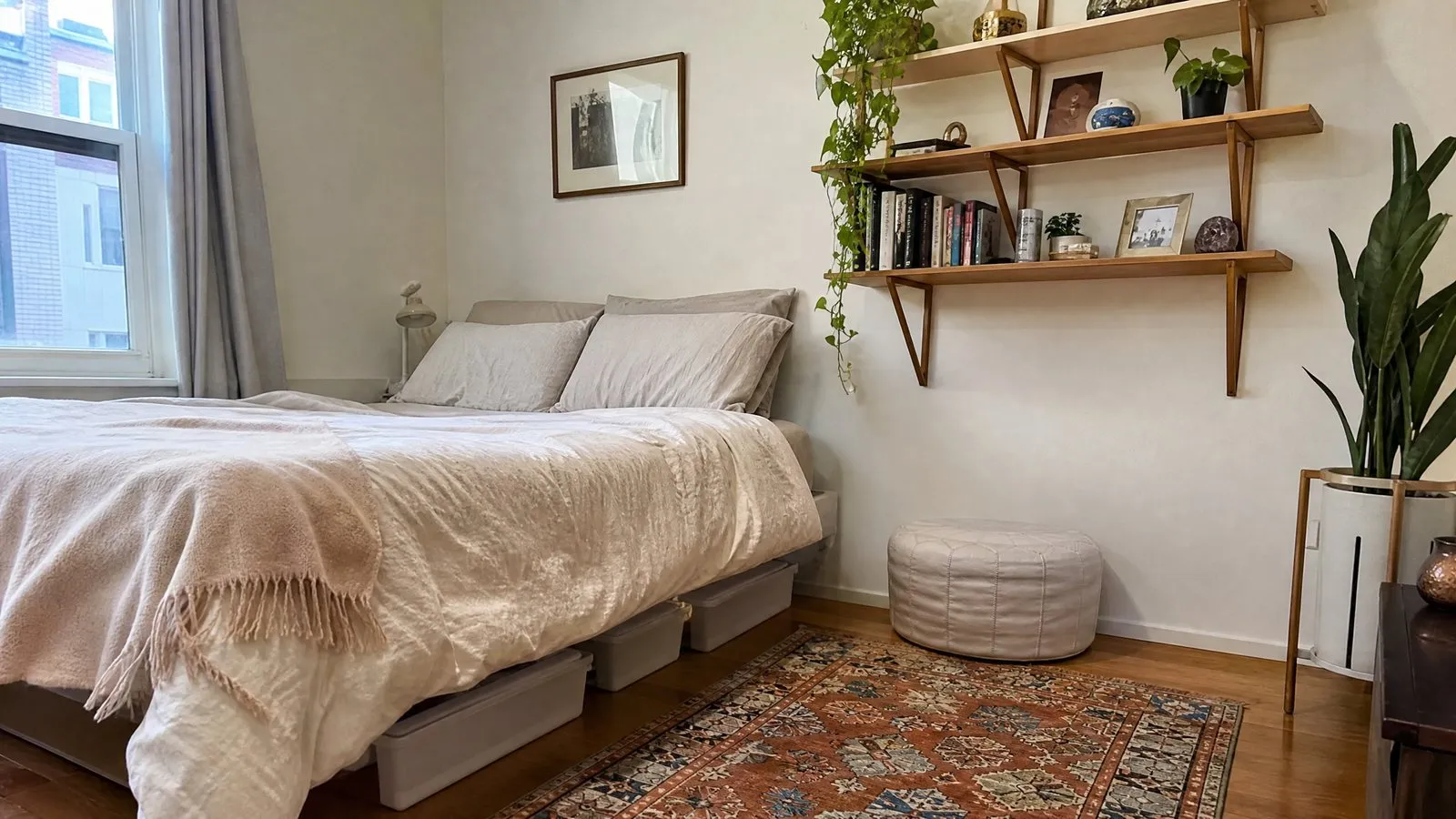
The space under a standard bed is often the largest unused area in an apartment. A typical bed sits 7 to 14 inches off the floor, which fits flat bins, rolling drawers, or vacuum bags.
What to put there: off-season clothes, spare bedding, shoes, luggage, and bulky items you reach for a few times a year. Keep daily-use things elsewhere so you’re not crouching every morning.
How to set it up (about 30 minutes):
- Measure the clearance under your bed frame — height, width, and depth — before buying anything.
- Choose low, flat containers that slide easily. Lidded bins keep out dust; open baskets are faster to access.
- Add wheels or felt furniture sliders to the bottom so bins glide on carpet or hardwood.
- Label each bin on the short end that faces out.
If your bed sits too low, bed risers lift it 3 to 8 inches and instantly create room. Check your frame’s weight rating and don’t over-raise a frame that uses slats — stability matters more than extra inches.
Keep what’s under there clean. Dust and skin cells gather there, so vacuum the floor under the bed when you do a deep clean, and air out the mattress while you’re at it — here’s how to clean a mattress.
Vacuum bags: use with care
Compression bags shrink pillows, duvets, and winter coats to a fraction of their size. They work well for storage, but a few honest notes:
- Down and wool recover better than foam. Memory-foam pillows can stay flat, so skip them.
- Make sure items are fully dry before sealing to avoid musty smells or mildew.
- Don’t leave delicate items compressed for years; fibers can crease permanently.
Go vertical: shelving and wall space
Floor space is limited, but wall space usually isn’t. The goal is to move storage up and off the floor.
Renter-friendly vertical options:
- Freestanding shelving units and bookcases — no wall damage. Tall, narrow units give you lots of storage on a small footprint. Anchor tall units if you have kids or live in an earthquake-prone area (see the tip-over warning below).
- Tension-rod shelving that braces floor-to-ceiling, with no screws.
- Over-toilet shelving that straddles the tank for bathroom storage.
- Stackable cubes and crates you can reconfigure as your needs change.
- Narrow rolling carts that tuck into gaps beside the fridge, sofa, or washer.
If you’re allowed small holes, floating shelves and a stud finder give you the cleanest look. Many leases permit nail holes you fill on move-out — check yours first (more on that below).
For closets specifically, going vertical with a second rod or hanging organizers roughly doubles capacity. We cover this in detail in how to organize a small closet.
Safety note: tip-over hazard. The US Consumer Product Safety Commission warns that unanchored furniture and TVs tip over and injure or kill children every year. Anchor tall or top-heavy units to the wall with an anti-tip strap. These use a small screw or a strong adhesive mount, and landlords rarely object to a safety anchor — ask if unsure.
Furniture that hides storage
In a small home, every large piece of furniture should earn its keep by storing something. This is the single best way to add capacity without adding clutter.
| Furniture piece | What it hides | Best for |
|---|---|---|
| Storage ottoman | Blankets, remotes, games, shoes | Living room, extra seating |
| Bed frame with drawers | Clothes, linens, bulky items | Bedroom (replaces under-bed bins) |
| Lift-top coffee table | Laptop, cables, mail, snacks | Studios, sofa dining |
| Bench with cubbies | Shoes, bags, hats | Entryway |
| Nightstand with drawers | Chargers, medication, books | Bedside |
| Bed headboard with shelves | Books, phone, lamp | Replaces a nightstand |
You don’t have to buy new. A sturdy trunk works as a coffee table and a blanket box. A short bookcase laid on its side becomes a bench with cubbies. Baskets on open shelves hide clutter behind a tidy front.
Keep medication, cleaning products, and anything hazardous out of low, easy-open furniture if young children are around. See how to store cleaning supplies safely with young children.
Behind-the-door organizers
The back of every door is free vertical storage, and most options need zero tools.
Over-the-door racks hook over the top edge — no screws. Use them for:
- Pantry door: canned goods, spices, snacks, foil and wrap.
- Bathroom door: toiletries, hair tools, cleaning spray.
- Bedroom/closet door: shoes, scarves, accessories, small clothes.
- Entry closet: gloves, hats, reusable bags, umbrellas.
A clear shoe organizer with pockets is the most versatile one to buy — it holds far more than shoes. Try it for craft supplies, kids’ small toys, or kitchen odds and ends.
Two things to watch: over-door hooks can scuff the top edge of the door or stop it closing fully, so choose a slim profile and add a felt pad where the metal meets the door. Don’t overload a hollow interior door.
Adhesive hooks and damage-free mounts
Damage-free adhesive hooks and strips are a renter’s best friend. Used correctly, they hold real weight and peel off cleanly, leaving no marks.
Where they shine:
- Keys, bags, coats, and towels by the door or in the bathroom.
- Hanging utensils, mugs, or oven mitts in the kitchen.
- Caddies inside cabinet doors.
- Cable clips to keep cords off the floor.
- Lightweight baskets on a bathroom wall.
How to make them actually stick (5 minutes plus curing time):
- Clean the spot with rubbing alcohol, not an all-purpose cleaner — residue stops the adhesive bonding. Let it dry.
- Press firmly for 30 seconds.
- Wait the full time on the package (often an hour, sometimes 24) before hanging anything. Rushing this is the number one reason hooks fall.
- Check the weight rating and don’t exceed it. Spread load across several hooks for heavier items.
Adhesive hooks struggle on textured or freshly painted walls, unsealed wood, and in very steamy or hot spots. On a flaky or old painted wall, even “damage-free” strips can pull paint, so test one low-stakes spot first.
To remove, pull the tab slowly straight down along the wall — never yank outward, which is what tears paint.
Keep floors clear
Clear floors are the difference between “small and cozy” and “small and cramped.” They also make cleaning far faster — you can run through a 1-hour speed clean without moving a pile of stuff first.
Simple rules that keep floors open:
- Give every item a home up on a wall, shelf, or inside furniture.
- Use a wall-mounted or over-door spot for the things that usually hit the floor: shoes, bags, laundry.
- Choose a tall, narrow laundry hamper over a wide one.
- Hang the vacuum, broom, and ironing board on wall hooks or behind a door.
- Do a two-minute floor sweep each evening — it’s one of the daily habits that keep a home clean without dedicated cleaning days.
Fewer things on the floor also means less dust buildup in corners and cleaner hardwood floors over time.
Make things fit before you buy storage
Storage works better when you own less. Before spending anything, pull everything out of one problem zone and remove what you don’t use. If the sheer amount feels overwhelming, start with our guide on how to declutter when you’re overwhelmed.
Two space-saving habits that cost nothing:
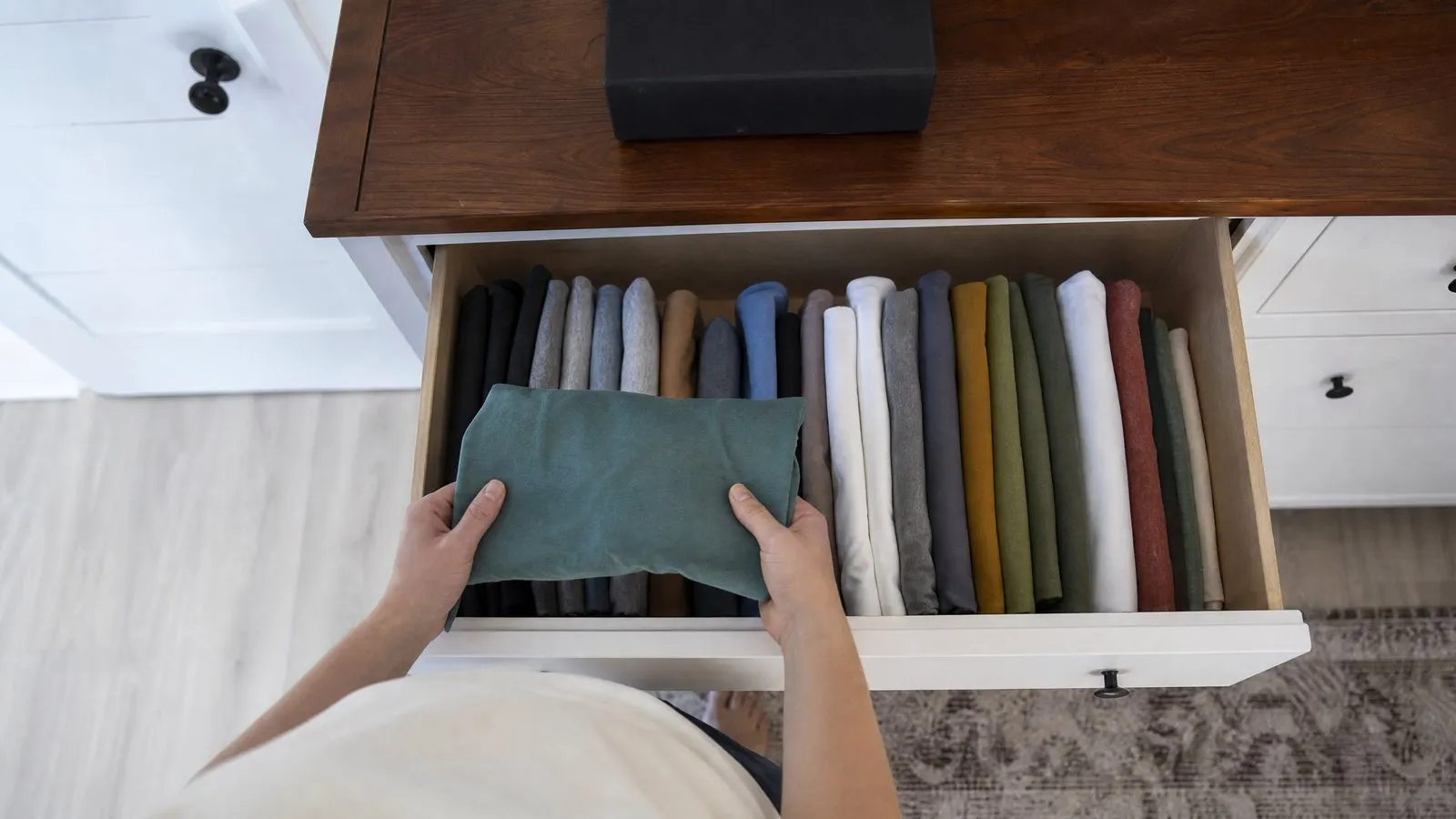
- Fold to stand upright in drawers so you see everything at a glance and fit more in — see how to fold clothes to save drawer space.
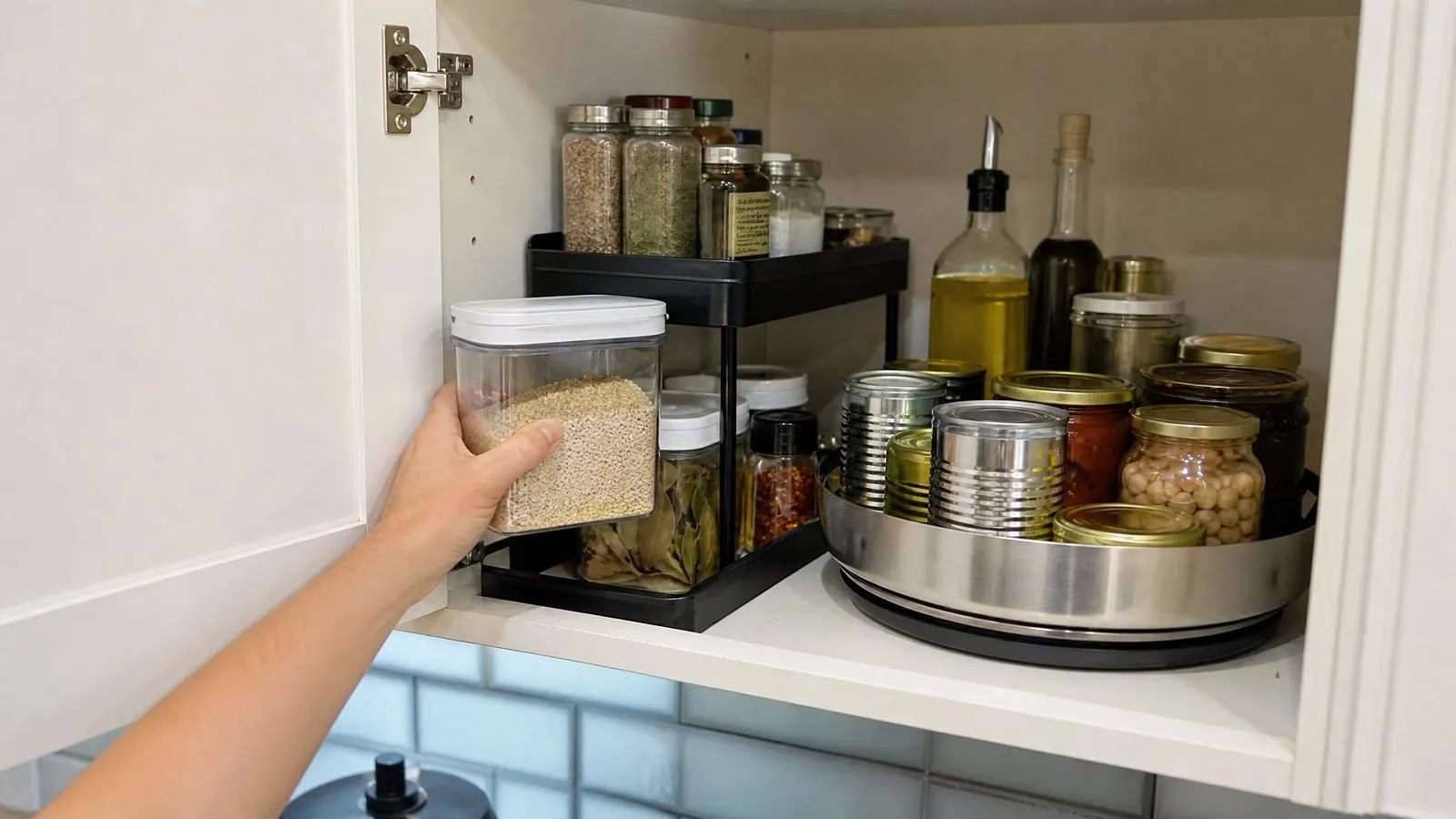
- Reorganize what you have in the kitchen before buying racks; most cabinets hold 20–30% more once sorted. See how to organize kitchen cabinets and pantry.
With kids, storage has to be reachable and quick to reset, or it won’t stick. We cover that in how to keep a home organized with kids.
What to avoid in a rental lease
Before you drill, glue, or mount anything, protect your deposit. Lease rules vary, but these are the common trouble spots.
Usually risky or restricted:
- Drilling holes for shelves, rods, or TV mounts without written permission.
- Permanent wall anchors that leave large holes needing patching and repainting.
- Painting walls or built-ins, even “back to white.”
- Peel-and-stick wallpaper or tiles on walls or floors — these can pull paint or leave glue residue and are a frequent deposit dispute.
- Attaching anything to kitchen cabinets or tile with screws.
- Ceiling hooks for plants or hanging storage.
Usually fine (but confirm in your lease):
- Freestanding furniture and shelving.
- Tension rods and over-door hooks.
- Damage-free adhesive hooks and strips, removed carefully.
- Small nail or pin holes, if your lease allows them and you fill them on move-out.
- Anti-tip furniture anchors, often welcomed as a safety measure.
Three steps that save arguments later:
- Read the “alterations” clause in your lease before you start.
- Ask in writing (a text or email counts) for anything you’re unsure about, and keep the reply.
- Photograph walls and surfaces at move-in and again before you leave, so you have a record of the condition.
When you move out, filling small holes with a little spackle and touching up is usually enough. For a smooth handover, a thorough clean helps too — our deep cleaning checklist covers every room.
FAQ
How much weight can adhesive hooks really hold?
It depends entirely on the product, so follow the weight rating on the package — some small hooks hold a pound or two, while larger strip-based mounts hold several pounds. The bigger factors are surface prep and curing time: clean with rubbing alcohol, press firmly, and wait the full recommended time before loading. Spread heavy items across multiple hooks rather than trusting one.
Will over-the-door organizers damage the door?
They can scuff the top edge or dent a hollow door if overloaded. Choose a slim hook profile, add a felt pad where the metal rests, and keep the weight modest. Make sure the door still closes fully — if it doesn’t, the rack is too thick for that door.
Can I put up shelves in a rental without losing my deposit?
Freestanding and tension-rod shelving need no permission and leave no marks. For wall-mounted shelves, check your lease’s alterations clause — many allow small, filled holes, but drilling without permission can cost you. Ask your landlord in writing and keep the reply.
What’s the best storage for a studio apartment?
Furniture that does two jobs: a storage ottoman, a lift-top coffee table, and a bed with built-in drawers or under-bed bins. These add capacity without adding footprint. Combine them with vertical shelving and door organizers so your limited floor stays clear.
Are vacuum compression bags safe for all bedding?
They work best for down, feather, and wool items, which spring back well. Skip memory foam, which can stay compressed, and make sure everything is completely dry before sealing to prevent mildew. Don’t store items compressed for years, as fibers can crease permanently.